Facebook
 X
X
 Pinterest
 Copy Link
That House That’s Been Sitting Could Be Your Best Shot at a Deal
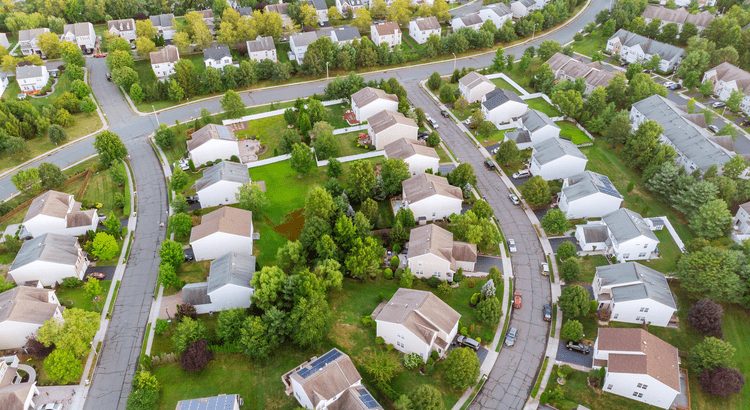
Open up a home search and you’ll notice them right away—homes that have been listed for two, three, or even more months.
Many buyers skip over these properties, assuming there must be an issue. But that assumption could mean missing out on a great opportunity. In many cases, the longer a home stays on the market, the more willing the seller may be to negotiate, creating potential advantages for buyers.
Where Some Buyers Are Finding Better Deals
If affordability has been the biggest obstacle keeping you from buying a home, there’s a simple strategy worth considering: focus on listings that have been on the market the longest. Those homes can often present some of the best opportunities for buyers.
Here’s why. According to data from Realtor.com, homes that spend more time on the market are more likely to sell for less than their original asking price. In many cases, sellers become more open to price reductions and negotiations the longer their property sits unsold, creating potential savings for buyers.
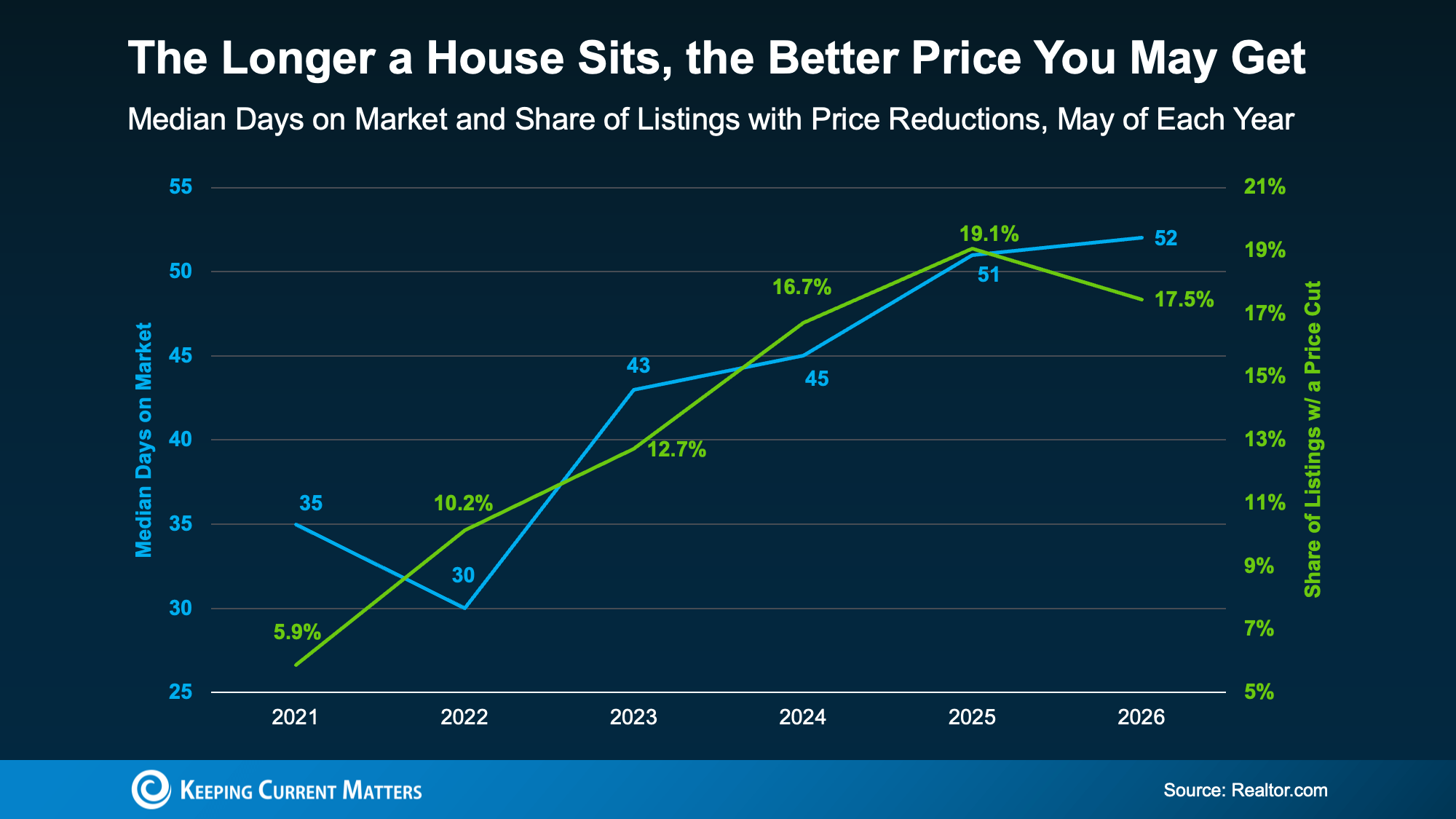
The blue line represents how long homes are staying on the market, while the green line shows the percentage of listings that have had a price reduction. As one rises, so does the other.
That means homes that have been sitting on the market may offer more opportunity than many buyers realize.
According to Redfin, there are currently about $347 billion worth of stale listings on the market—more than at any other point during this time of year. That’s why it can be worthwhile to ask your agent to sort listings from oldest to newest. The home that fits your needs and budget may already be available; it just might be buried further down the list.
A Longer Time on Market Doesn’t Always Mean There’s a Problem
If a home catches your attention but has been listed for a while, don’t automatically assume something is wrong. In many cases, the reason has little to do with the condition of the property.
Redfin points to several common reasons homes linger on the market:
• The home was initially priced too high
• The online photos or marketing didn’t showcase it effectively
• There is a larger inventory of homes in the area, causing the listing to get overlooked
None of these are necessarily dealbreakers. And if there is a legitimate concern with the property, a professional home inspection will help uncover it. That information can often be used as a negotiating tool rather than a reason to dismiss the home altogether.
The bottom line: don’t overlook homes simply because they’ve been on the market longer. They could offer more value, greater negotiating power, and a better opportunity than you expect.
How To Turn a Lingering Listing into a Win
So how do you capitalize on a lingering listing? According to USA Today, you have two main levers to pull.
The first is price. Work with your agent to study what comparable homes recently sold for, then build an offer around that. Coming in below asking price is fair game when a home has been sitting.
The second is concessions. If a seller won’t budge much on price, they may still help in other ways, like covering some closing costs, repair credits, or even a mortgage rate buydown that lowers your monthly payment.
A local agent has the context to tell which homes are the real opportunities and which are skippable.
Bottom Line
A home that’s been on the market for a while isn’t always a warning sign. In today’s market, it could be one of the best opportunities for buyers looking to maximize their budget and gain negotiating power.
If you’re wondering which long-standing listings are worth a closer look, connect with a local real estate professional. An experienced agent can help you identify hidden gems, evaluate potential concerns, and determine whether a property is truly a smart investment.
Two Big Reasons To Move This Summer

A lot of people who are thinking about moving are telling themselves the same thing: “Maybe I’ll wait until later this year when things settle down.”
While that may seem like a smart strategy, there’s something important to consider before putting your plans on hold. Mortgage rates aren’t expected to shift significantly. If that’s the main reason you’re waiting, the payoff may not be what you expect. There could also be opportunities you miss by delaying.
Historically, Summer has been one of the strongest seasons of the year for both buyers and sellers. If you wait until Fall or Winter, some of those advantages may already be behind you.
Why Summer Matters in Real Estate
The Summer housing market typically brings more activity from both buyers and sellers. More homes come on the market, and motivated buyers remain active. That combination can create opportunities that may not be available later in the year.
Buyers: Fresh Inventory Is Your Biggest Summer Opportunity
One of the most common challenges buyers have faced in recent years has been limited inventory. You may have experienced it yourself:
- You find a home you like, but it’s outside your budget.
- You find one that fits your budget, but it doesn’t check the boxes you want.
- Or worse, nothing new comes on the market for weeks.
This is where Summer often creates an advantage.
Looking at market trends from recent years, Summer months consistently bring more sellers into the market than the months that follow. As a result, buyers typically have more homes to choose from.
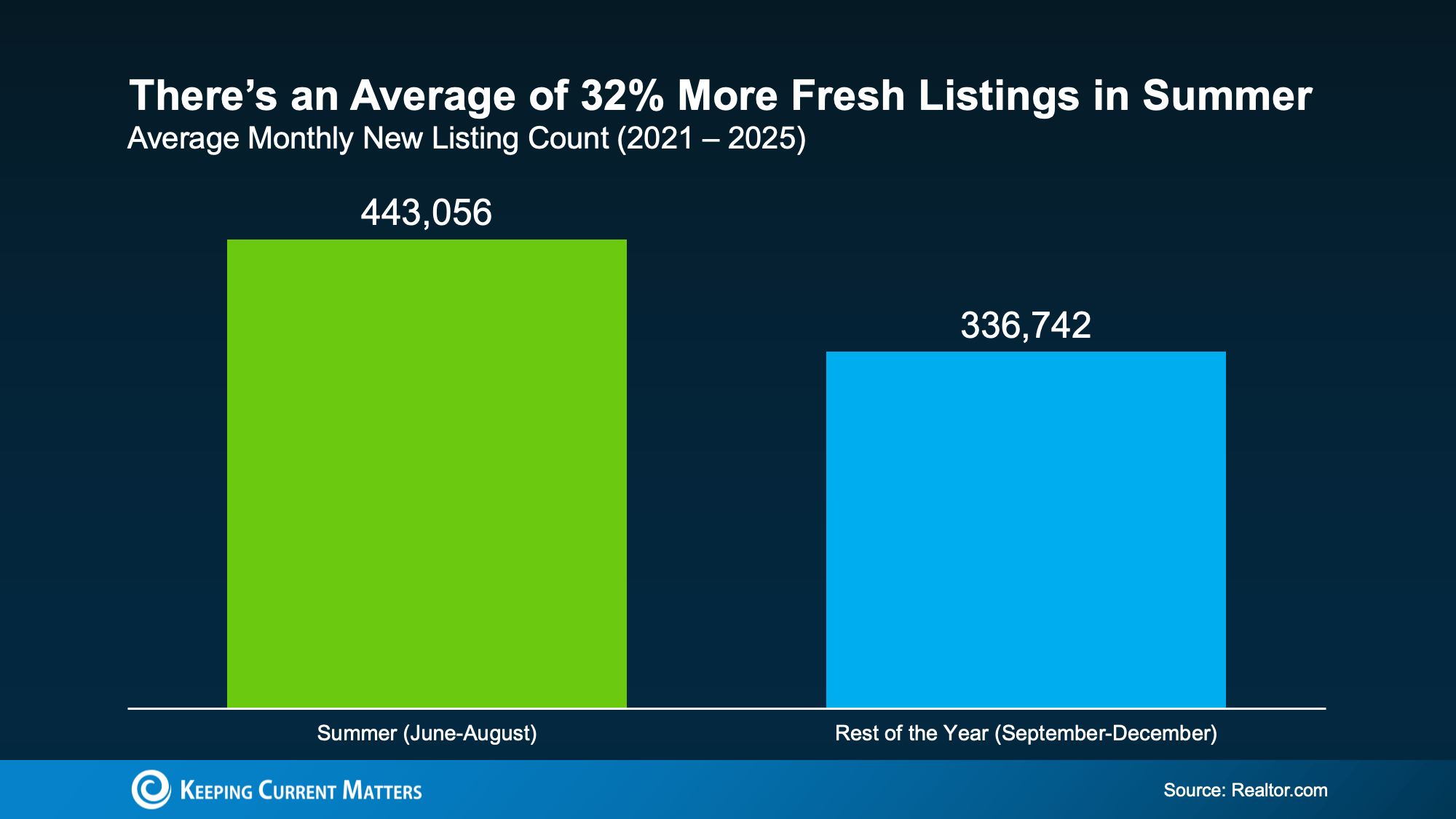
According to Realtor.com, the average Summer month usually offers about 32% more newly listed homes than the average month between September and December.
More Choices Can Change Everything
With more homes hitting the market, your chances of finding one that fits both your needs and budget increase.
Sometimes it only takes one home to completely change your search. When more listings are available, the odds of finding that perfect match improve.
However, this seasonal opportunity doesn’t last forever. New inventory typically slows down once Summer comes to an end.
By that point, many homeowners who planned to sell have already listed their properties. Families hoping to move before the school year begins have often completed their move or are already well into the process. As a result, new listing activity generally eases heading into Fall and Winter.
Every market cycle is different. Still, if your biggest challenge has been finding the right home at the right price, waiting until later in the year may not lead to more choices. Recent trends suggest the opposite could happen.
Sellers: Homes Often Command Higher Prices During Summer
If you’ve been considering selling, you may be tempted to wait because of headlines about price reductions, lower asking prices, or softer market conditions in certain areas. Those headlines don’t always tell the full story. Market conditions can vary greatly from one location to another.
The key takeaway is simple. Even as the housing market becomes more balanced and some areas experience price adjustments, that doesn’t mean your opportunity to sell has passed.
Seasonal Trends Still Favor Sellers
Seasonal trends can still work in your favor. This Summer may offer an excellent opportunity to maximize your home’s value.
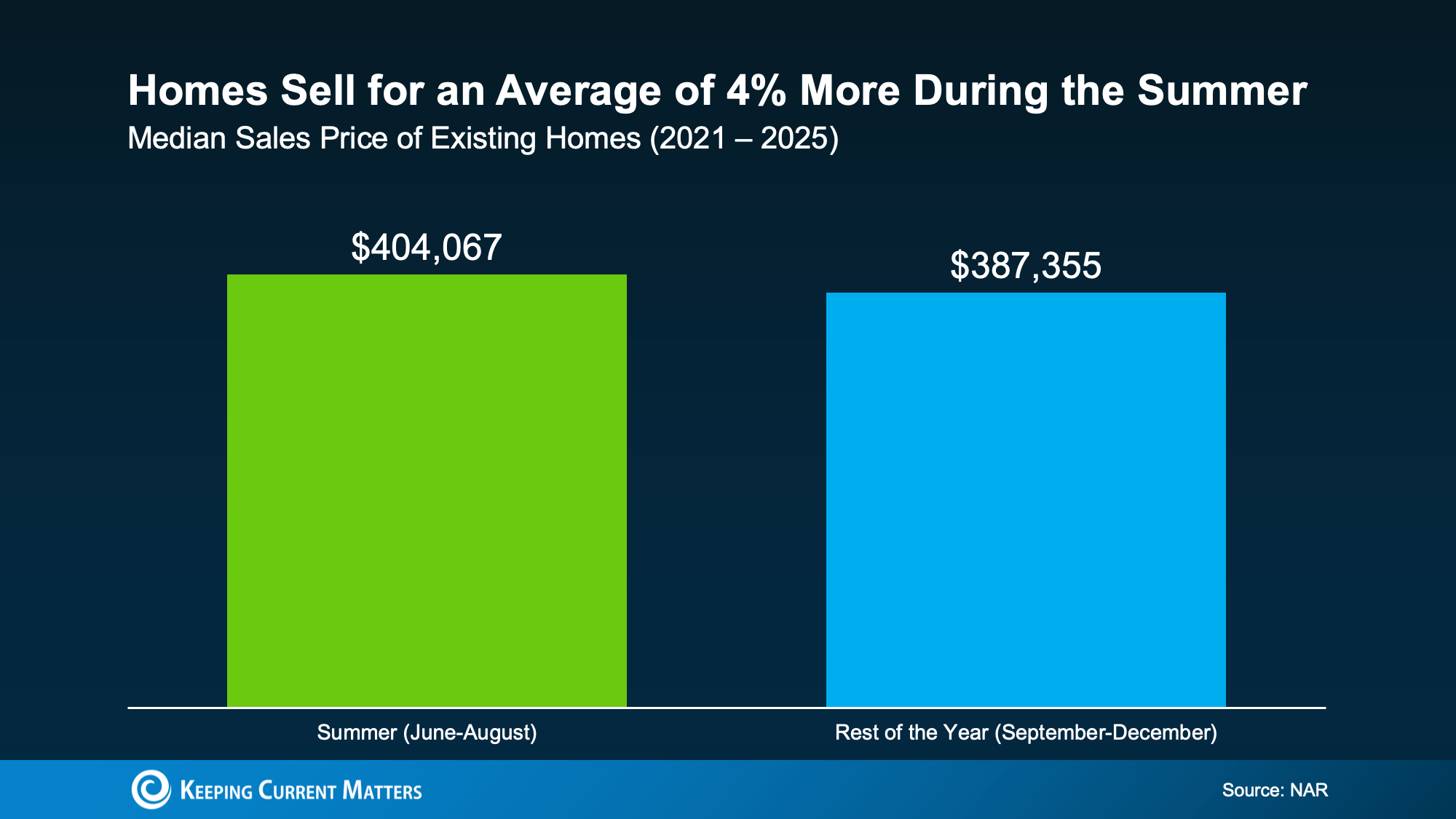
According to the National Association of Realtors (NAR), homes sold during Summer months typically sell for about 4% more than homes sold during the average month from September through December.
Why Summer Buyers Are More Motivated
Summer buyers often work within specific timelines. Many are trying to relocate before a new school year begins. Others are taking advantage of vacation time and favorable weather to tour homes. That added motivation can lead to stronger offers.
Of course, that doesn’t mean you should automatically raise your asking price by 4% this Summer. In today’s market, pricing too aggressively could work against you.
Instead, it suggests that if your goal is to achieve the strongest possible sale price, moving during the Summer may be more advantageous than waiting until later in the year.
Based on typical seasonal patterns, sellers often receive higher offers during Summer than they do in Fall or Winter. Buyer activity generally slows as the year progresses.
If you’re already planning a move, that’s an important factor to consider.
Bottom Line
Could waiting until later this year still work out? Absolutely. However, it’s important to understand the opportunities available right now so you can make a fully informed decision.
If a move is part of your plans for 2026, connect with a real estate professional to discuss your goals and priorities. Depending on what matters most to you, this Summer could be the ideal time to make your move.
The Mid-Year Housing Market Update: Why Forecasts Changed in 2026

If the housing market feels uncertain right now, you’re definitely not alone.
Mortgage rates have remained higher than many expected. Home sales haven’t accelerated the way experts anticipated. And many buyers and sellers are still wondering when the market will become more affordable and easier to navigate.
The reality is that a lot has changed during the first half of this year.
At the end of 2025, economists were forecasting a much stronger housing market for 2026. They expected mortgage rates to decline, affordability to improve significantly, and home sales to gain momentum.
However, persistent inflation, economic uncertainty, and ongoing geopolitical tensions around the world kept mortgage rates elevated. Because rates stayed higher for longer than anticipated, many buyers chose to remain on the sidelines.
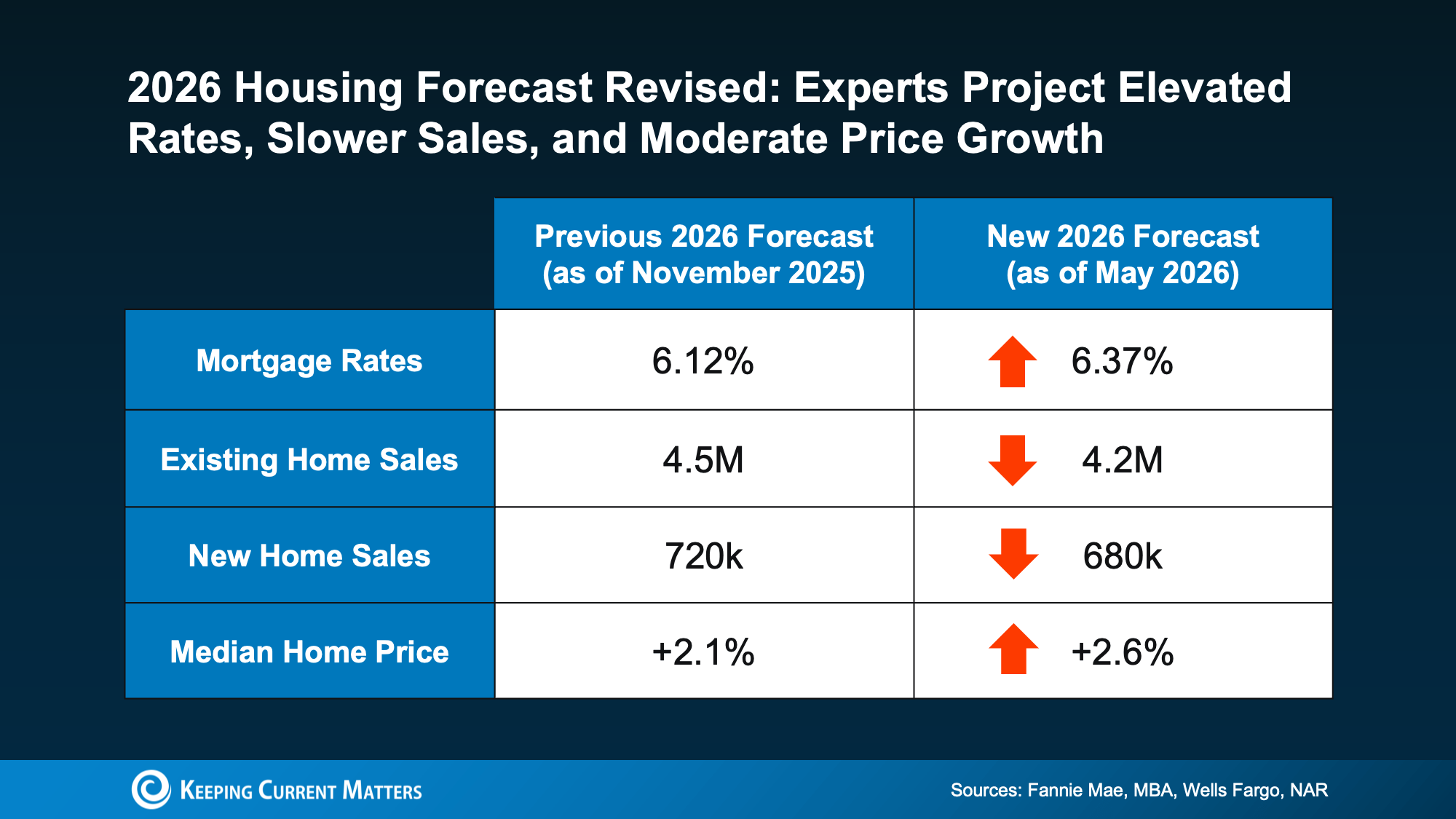
As a result, housing experts have adjusted their forecasts for the remainder of the year (see graph below):
a graph of sales and sales
So, what does all of this mean for you? Let’s take a closer look.
Mortgage Rates May Stay Higher for Longer
While many buyers are hoping mortgage rates will return to the high-5% or low-6% range seen earlier this year, most experts no longer expect that to happen in 2026.
Instead, forecasts have been revised upward from the low-6% range originally projected. Many leading housing organizations now expect rates to remain in the mid-6% range throughout the year. The positive news is that rates are still lower than they were a year ago.
Of course, forecasts can change. If inflation eases or global conflicts begin to settle, rates could move lower. But if you’re delaying your plans solely in hopes of significantly lower rates, the payoff may not be as large as expected.
Existing Home Sales Forecasts Have Been Lowered
At the end of 2025, economists projected approximately 4.5 million existing-home sales in 2026. Today, that forecast has been adjusted closer to 4.2 million.
This tells us that affordability challenges continue to impact buyer activity.
Higher mortgage rates have increased monthly housing costs, making homeownership more difficult for many households—especially first-time buyers. While the pace of the market has slowed compared to earlier expectations, experts still anticipate more homes will sell this year than last year.
Many economists believe that once geopolitical concerns ease and mortgage rates stabilize, a large number of waiting buyers will return to the market. As Lawrence Yun, Chief Economist at NAR, explains:
“There is sizable pent-up demand that could be released into the market.”
There have already been encouraging signs in recent months. Pending home sales have shown month-over-month improvement despite higher borrowing costs.
If purchasing a home is financially comfortable for you today, buying now may still be worth considering. Waiting could mean facing increased competition and fewer available homes when more buyers decide to re-enter the market.
New Home Sales Have Also Slowed
Homebuilders entered 2026 expecting a stronger sales environment. Earlier projections suggested new-home sales would exceed 700,000 this year. Current forecasts now place that figure slightly below that mark.
Once again, mortgage rates are a major factor behind the slowdown.
However, this creates potential opportunities for buyers. Builders may be more motivated to attract purchasers through incentives, price adjustments, and flexible negotiations. In areas with significant new construction activity, this can be a major advantage.
Builders may be willing to offer concessions or negotiate more aggressively, giving buyers additional leverage when making a purchase.
Home Prices Are Still Expected To Increase
This remains one of the most important points in the entire forecast.
Even though sales activity has cooled, experts have largely maintained their projections for home price growth. They still expect home prices to rise nationally throughout the year.
The reason is simple: while demand has softened somewhat, housing inventory remains relatively limited in many markets. That supply-and-demand imbalance continues to support home values, even as overall activity slows.
Naturally, real estate is local, and market conditions vary from one area to another. Some regions are experiencing more cooling than others. But on a national level, experts are still forecasting steady appreciation rather than significant price declines.
That should provide reassurance to both buyers and sellers.
Sellers generally want to protect the value of their homes, and buyers often feel more confident making a major investment when values are expected to remain stable or increase over time.
Bottom Line
The housing market has not rebounded as quickly as many experts originally expected. But that doesn’t mean the market has stopped moving.
Inflation, higher mortgage rates, and ongoing economic uncertainty have led economists to revise their forecasts for 2026. However, many industry experts believe momentum will return once these challenges begin to ease.
Rather than viewing these forecast revisions as a warning sign, think of them as a reflection of current economic conditions.
If you’re curious about what’s happening in your local market and how it may affect your plans for the remainder of the year, connect with a local real estate professional who can help you understand your options.
The Real Reason Some People Are Still Moving Right Now

You may be telling yourself that you’re going to wait before making a move. Maybe you’re hoping mortgage rates will come down, home prices will soften, or the market will feel a little less competitive.
A lot of people are thinking the same thing right now. But here’s what many are beginning to realize.
Waiting doesn’t usually solve the reason you wanted to move in the first place.
Your growing family may still need more space. Your empty nest may still feel a little too quiet.
Your parents or grandparents may still need you closer by.
Maybe you recently got married… or went through a divorce.
Maybe your retirement plans still include living somewhere new.
At some point, staying put can feel more difficult than making a move.
That’s why many people are still choosing to buy or sell in today’s market. Not because conditions are perfect, but because the life events driving their decision haven’t gone away.
And perhaps that’s where you are too. If so, you’re far from alone.
The Real Reasons People Move
According to the National Association of Realtors (NAR), one out of every five buyers last year said they felt they needed to purchase a home at that particular time, regardless of market conditions.
That’s an important perspective to keep in mind. While the financial side of a move certainly matters, major life changes don’t wait for mortgage rates or home prices to reach the ideal level.
In fact, NAR reports that approximately 22.5 million people experience significant life changes over a typical two-year period (see graph below).
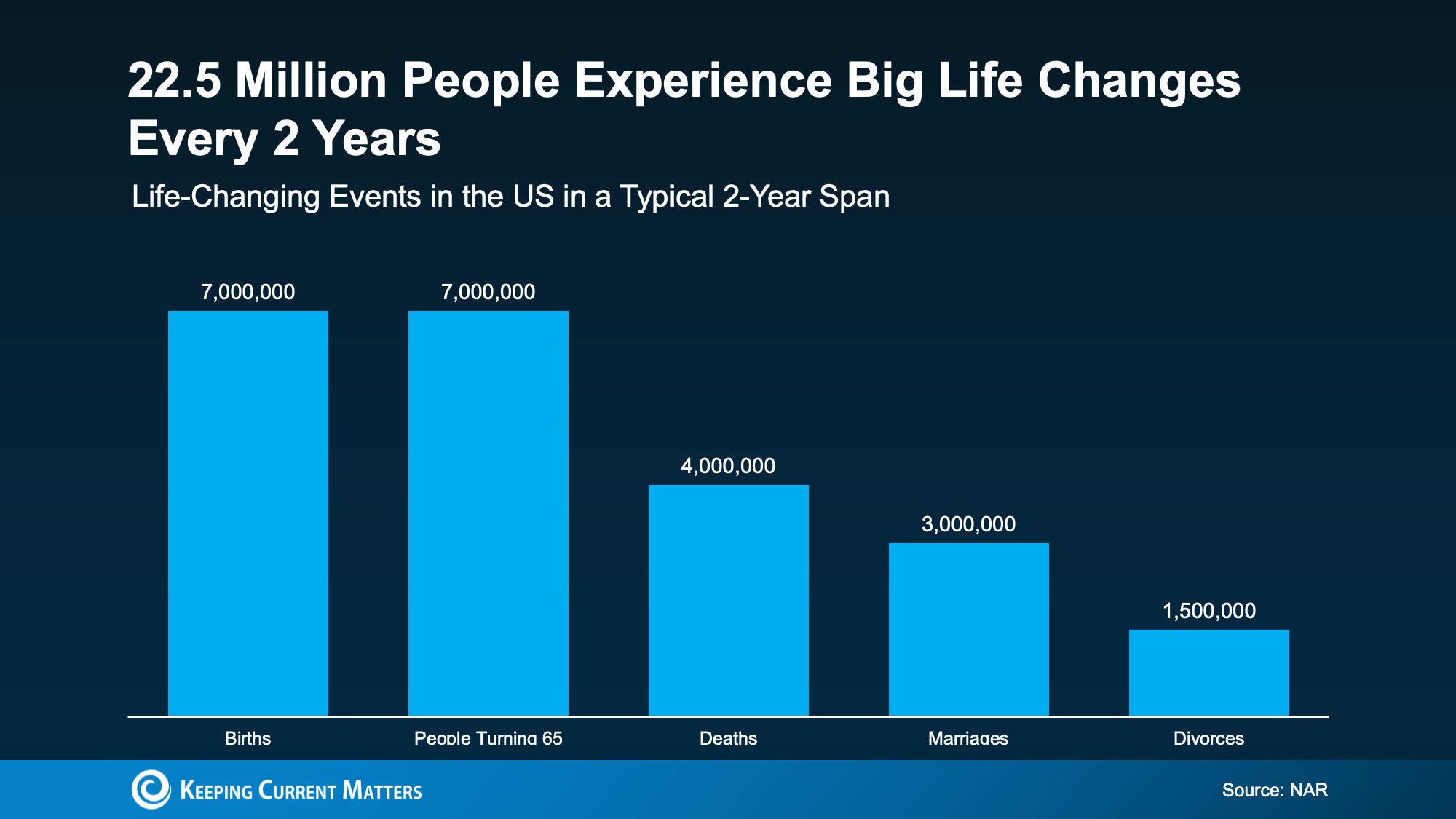
These are the kinds of events that often impact how much space you need, where you want to live, and what type of lifestyle fits your current stage of life. As Chen Zhao, Head of Economics Research at Redfin, explains:
“Life doesn’t stand still—people get new jobs, grow their families, downsize after retirement, or simply want to live in a different neighborhood.”
And that’s exactly why waiting can be so challenging. Every month spent hoping for different market conditions is another month living in a home that may no longer fit your needs. Feeling stuck can be frustrating, and that feeling often doesn’t simply fade away.
There May Be More Opportunity Than You Think
While affordability remains a concern for many buyers, opportunities may still exist to help you make your move.
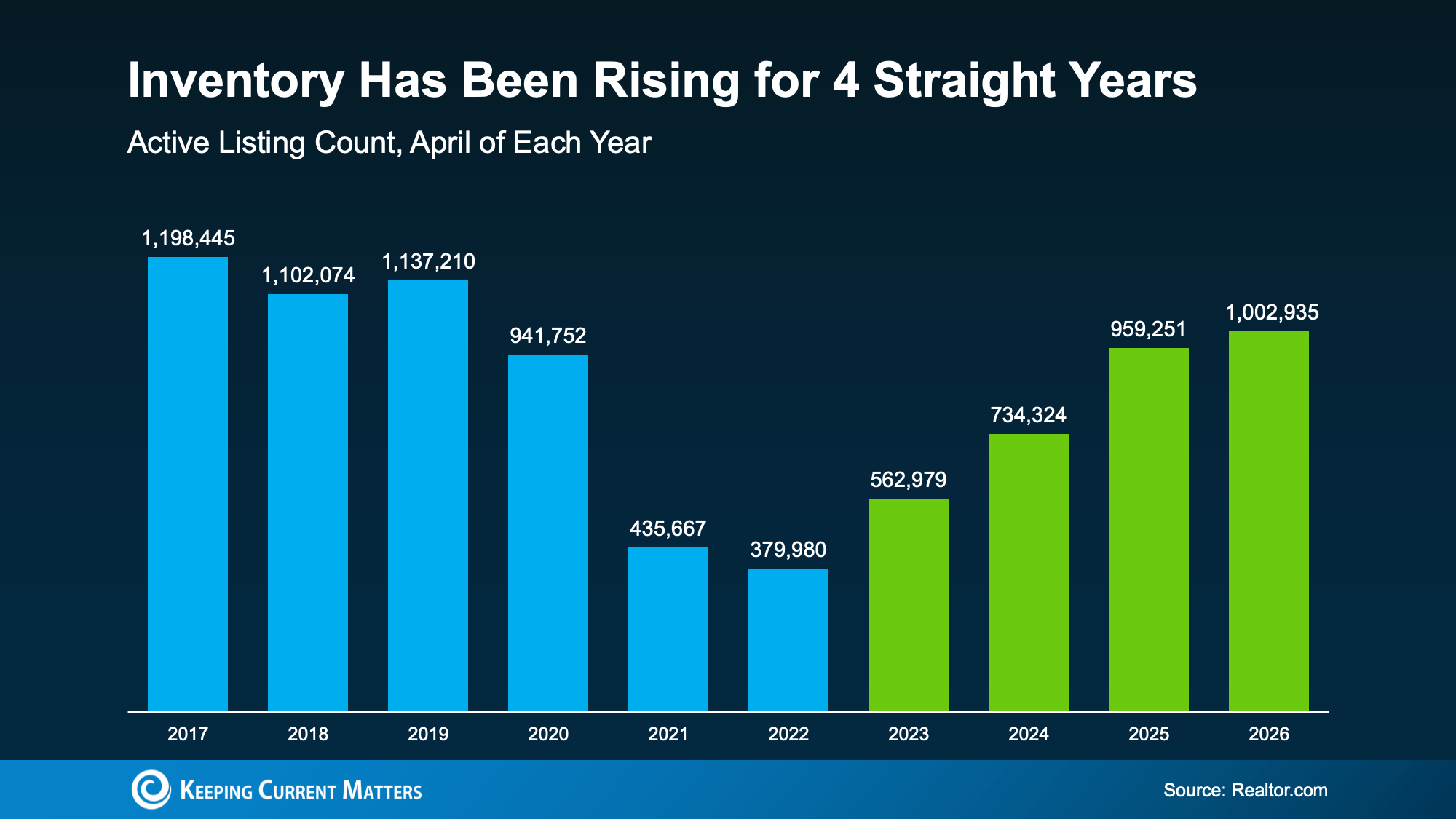
The number of homes available for sale has been increasing for four consecutive years (see graph below). That means buyers have more options to choose from and, in many markets, more negotiating power than they had just a few years ago.
That doesn’t mean moving is effortless. But it does mean more people are finding ways to make their plans work.
So, if you’ve been putting your move on hold, perhaps the question isn’t only:
“What’s the market doing?” or “When will conditions improve?”
Maybe it’s also worth asking:
“Can my current home still support the life I want to live?”
If the answer is no, it may be time to explore what your options look like right now, regardless of where rates or prices are headed. With more inventory available, you may find a home that better fits both your lifestyle and your budget.
Bottom Line
Life changes. Priorities evolve. Families grow. Children move out. Careers shift. And eventually, the home you’re living in may no longer fit the life you’re building.
If that’s something you’ve been thinking about lately, connect with a real estate professional to discuss what your options might look like today, no matter where mortgage rates or home prices are.
Life doesn’t always wait for perfect market conditions. Your next move may not have to either.
Newly Built Home Prices Hit a 5-Year Low
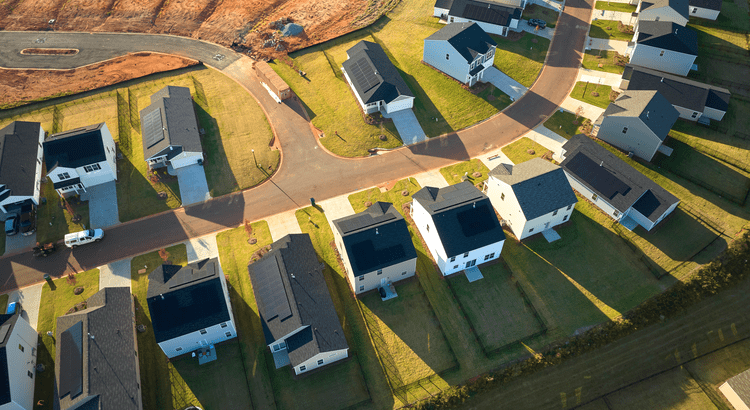
If you’ve always assumed a newly built home is just not in your budget, you should know the math just got a little friendlier.
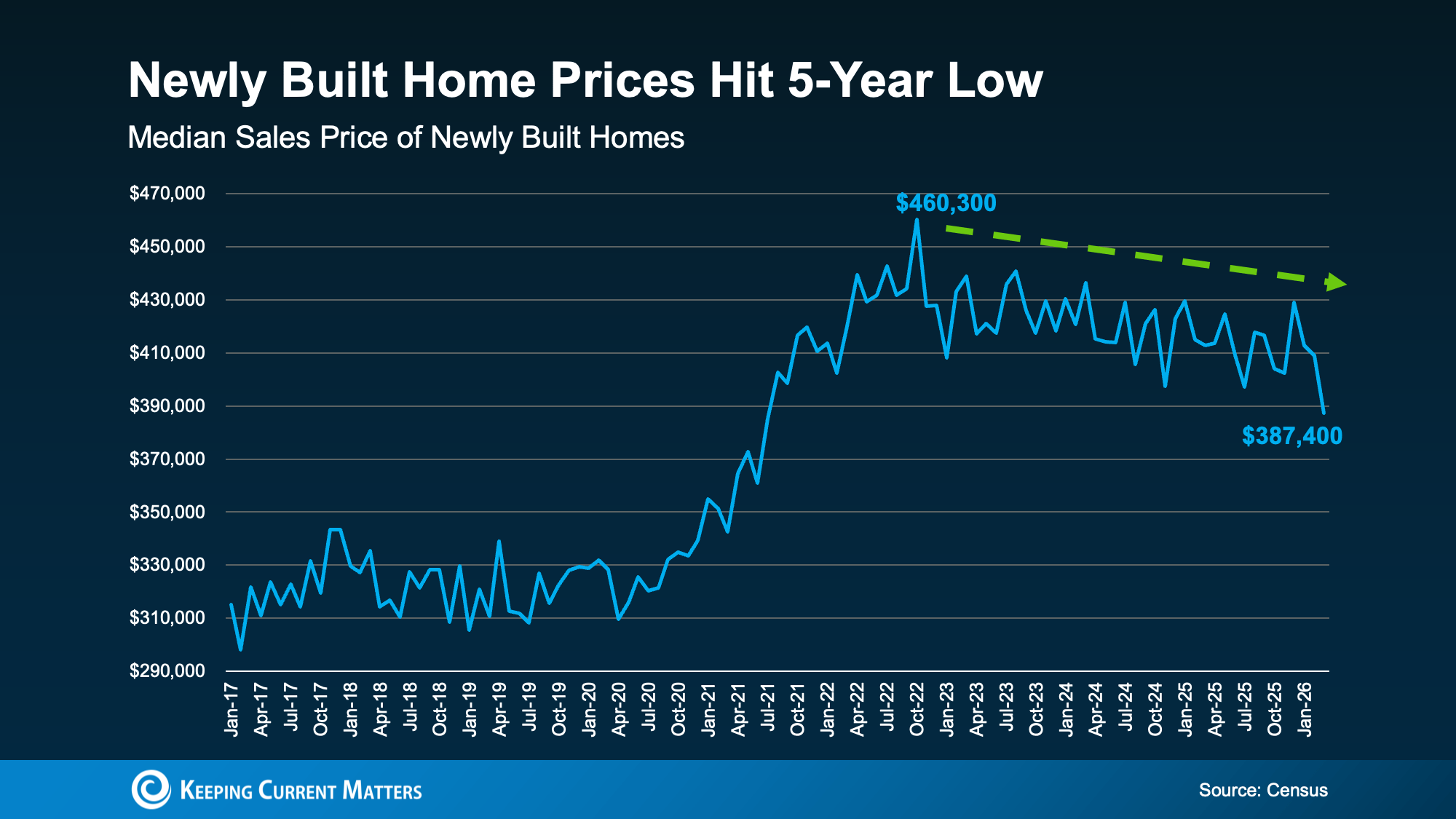
The median sale price of a newly built home is now at its lowest level since 2021, according to the latest data from the Census. And on top of that, builders are still rolling out incentives to bring buyers through the door.
Here’s what’s happening, and what it means if you’re shopping right now.
Prices on Newly Built Homes Have Come Down
After a steep climb during the pandemic years, prices have eased a bit. The median sale price of newly built homes is sitting at about $390,000. That’s the lowest it’s been in nearly five years (see graph below):
 While local markets vary, the national trend is moving in your favor, especially if you’re a first-time buyer. According to Zonda, prices in the entry-level price range have dropped roughly 2.7% over the past 12 months – more than any other price tier.
That doesn’t mean every home in every market is suddenly affordable. But it does mean that, broadly, you’ll see the best prices on new builds since 2021, if you’re buying now.
Why This Isn’t a Repeat of 2008
And just in case you’re thinking it, lower prices don’t mean the new home market is in trouble. Builders today are being intentional about how much inventory they have, so it doesn’t pile up the way it did in 2008.
If you look back up at the graph, you’ll see that even after the recent improvement in new home prices, they’re still higher than pre-pandemic norms. So, this isn’t a crash. It’s a builder strategy to keep inventory moving.
Homebuilders Are Still Sweetening the Deal
Lower sticker prices aren’t the only break buyers are getting. According to the National Association of Home Builders (NAHB), 60% of builders are currently offering some form of incentive to attract buyers. Those typically include:
- Help with closing costs: Some builders are covering thousands of dollars in fees to reduce the upfront cost of buying.
- Extra upgrades: Think premium finishes, appliance packages, and designer features, often added at no extra cost.
- Mortgage rate buydowns: When the builder pays to lower your mortgage rate, which reduces your monthly payment.
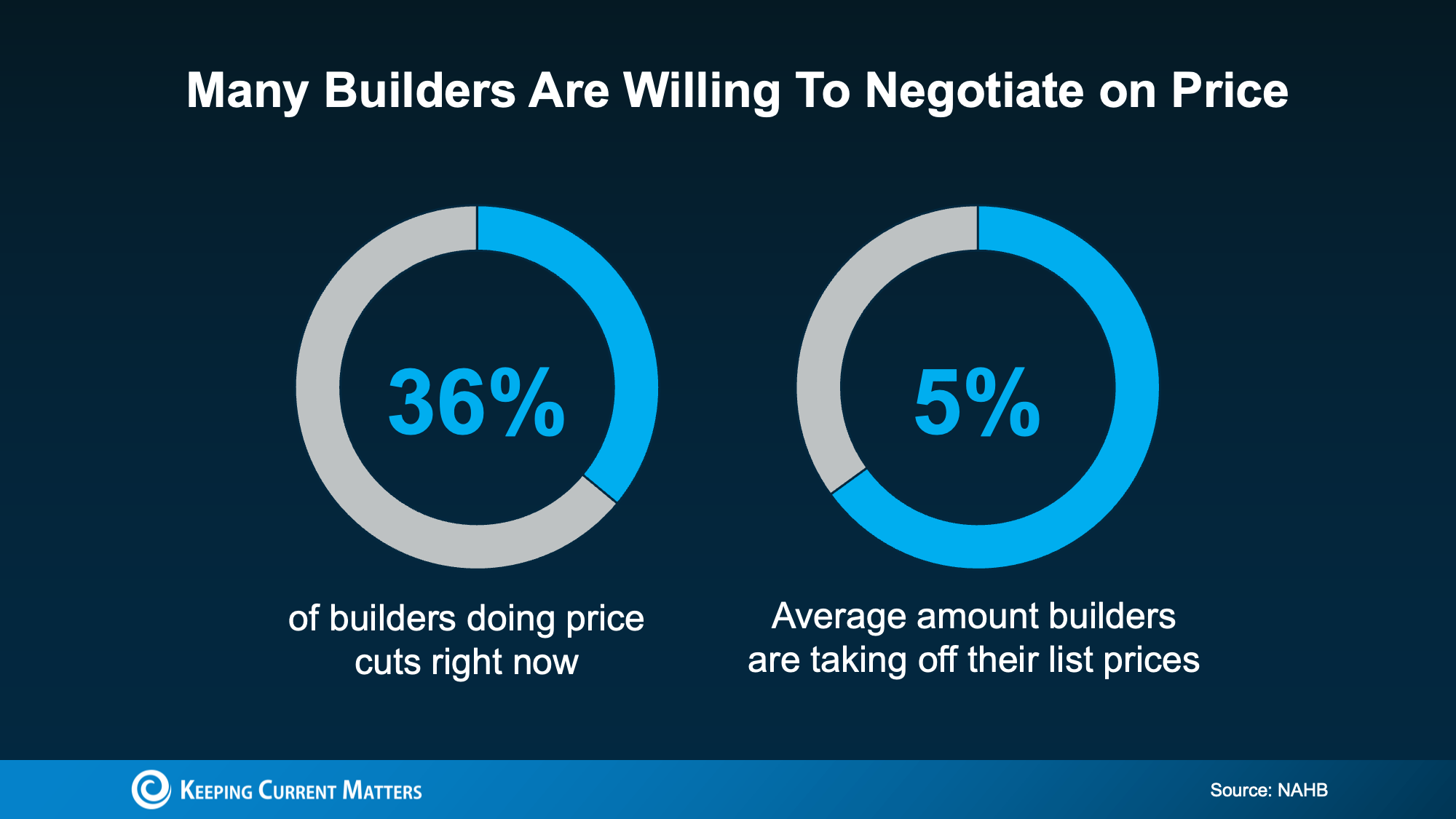
- Price cuts: Over one in three builders (36%) are cutting prices right now, averaging about 5% off list price (see graph below):
 That last point catches a lot of buyers off guard – most assume that builders won’t budge on price.
But builders need to move what they’ve built. That’s a different mindset than a homeowner deciding whether to budge on price. So, you may find they’re more open to adjusting the price than you’d think. As Joel Berner, Senior Economist at Realtor.com, puts it:
“. . . many existing-home sellers resort to taking down their listing instead of taking less than their desired price, but builders are more motivated to sell their inventory than owner-occupants . . .”
And if you use the version of the graph that shows 2008 prices, you can even reference that in this explainer.
And if here, should I change the last sentence of the lede?
Bottom Line
Builder incentives and lower new home prices are working to your advantage in a way they haven’t in years. Connect with a local real estate agent to see what’s available in your area and what kind of deal a builder may be willing to make.
Are Home Prices Going To Fall?
It’s one of the biggest concerns many buyers have right now: “What if I buy a home and prices drop afterward?”
With so much uncertainty in the headlines, it’s understandable to feel cautious. No one wants to make a major financial decision at the wrong time. But it’s important not to focus too heavily on the few areas experiencing small price declines right now.
When you step back and look at the bigger picture, home values have historically trended upward over time.
What the Data Really Shows
Take a look at the visual below. Using data from Case-Shiller and Bilello, it highlights how home prices have performed year after year dating back to the 1950s.
Here’s the most important takeaway.
Aside from the housing crash, home prices have remained stable or appreciated in nearly every year over the past several decades (see visual below):
a chart of percentages and numbers
That’s an incredibly consistent pattern — and one that many headlines tend to overlook.
While short-term fluctuations can happen, it’s the long-term growth that matters most.
Why Prices Typically Increase Over Time
There are several key reasons home prices generally continue to rise:
People will always need housing. Life changes like new jobs, growing families, marriages, and relocations mean there will always be buyers in the market. Demand may shift at times, but the need for housing never disappears.
Inventory is still limited. Although more homes have come onto the market recently, there still aren’t enough available homes nationwide to meet buyer demand. That imbalance continues to support home prices.
Inflation plays a role. As the cost of goods and services rises over time, home values tend to rise as well.
What That Means for You as a Buyer
It’s easy to worry about where prices may go next month or even next year — especially if you’re buying your first home and making a significant financial commitment. But historically, the overall trend has been clear: home prices tend to appreciate over time.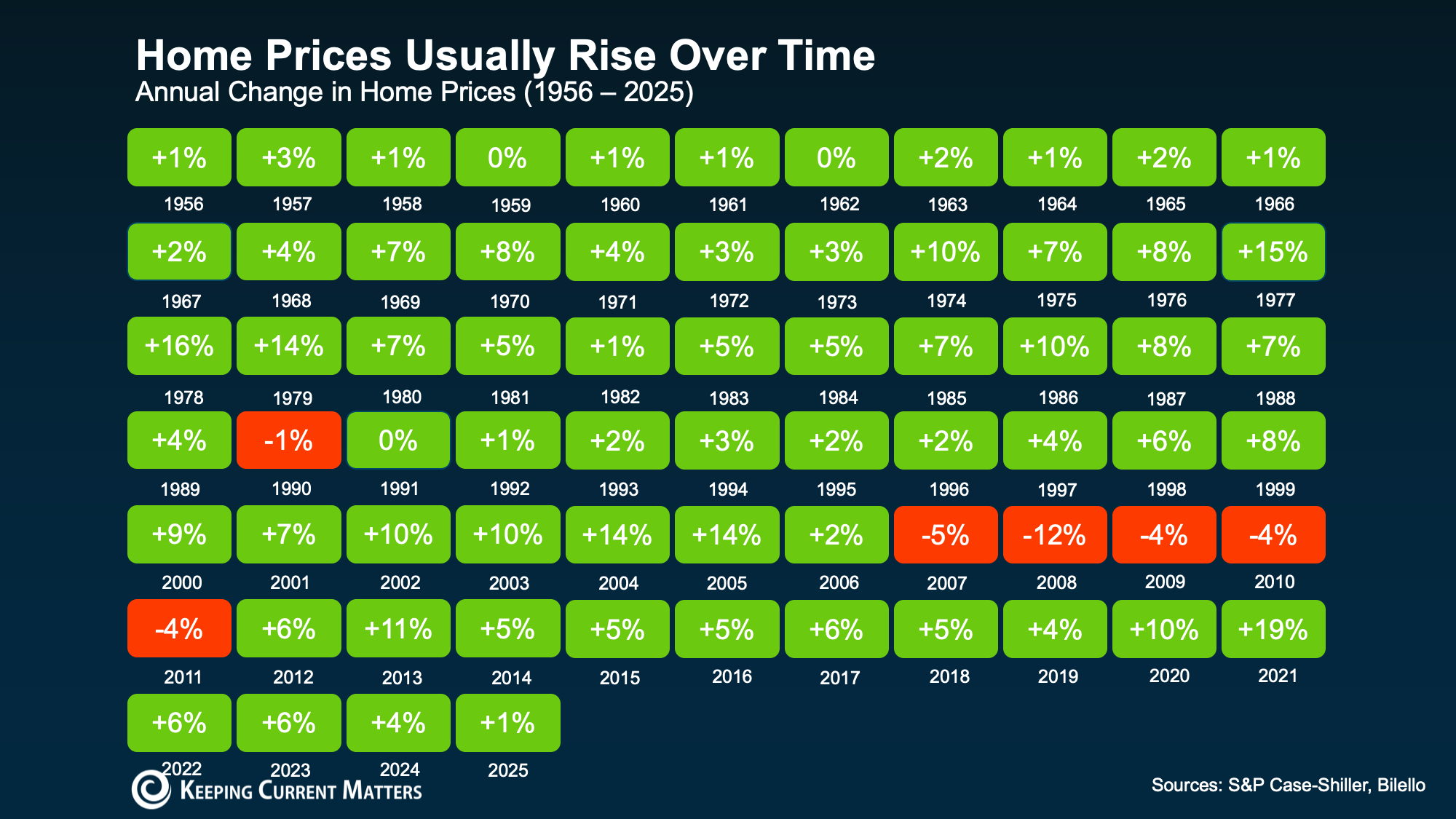
Of course, that doesn’t mean every market rises every single year. Real estate is local, and short-term changes can happen. We’re seeing some of that in certain markets today. You can even spot a few temporary declines in the visual above.
But historically, those downturns haven’t lasted forever.
That’s why buying a home is usually recommended when you plan to stay put for several years — often at least five. That timeframe can help you build equity and ride out any temporary market shifts.
And over time, rising home values can strengthen your net worth and help build long-term wealth.
The best decision isn’t about perfectly timing the market. It’s about making a move that fits your goals and staying long enough to benefit from the long-term trend.
Bottom Line
Home prices have consistently increased over the long run, which is why real estate is often viewed as a strong long-term investment.
That doesn’t mean you need to buy right now. The right time to move is when it makes sense for your situation and future plans.
But if you’ve been feeling uncertain, let this offer some reassurance. And if you’d like to talk about what’s happening in our local market, your goals, or your timeline, connect with a trusted local real estate professional.
Stay or Sell? How To Make the Right Call as You Age

Thinking Ahead About Your Long-Term Housing Plans
At some point, as you begin thinking about the years ahead, this question often comes up:
“Can I comfortably stay here long-term… or would moving make more sense?”
It’s not always an urgent thought. Often, it comes up during everyday moments — walking up and down the stairs, keeping up with home maintenance, or simply wondering what the next chapter of life may look like in your current home.
For many people, the answer is clear: they want to stay.
The USC Leonard Davis School of Gerontology found that nearly 90% of adults over 65 would prefer to remain in their homes as they age (see below).
But even when staying feels like the right choice, it’s still important to think ahead about what that could realistically look like over time. That’s where having the right real estate agent by your side can make a difference.
What To Consider If You Plan To Stay in Your Home
Aging in place is absolutely possible. However, having a plan in place can make the process much easier.
The reality is, the home that once fit your lifestyle perfectly may need adjustments as your needs change over the years. Planning ahead can help you better prepare for those future costs and avoid feeling overwhelmed later on.
In some cases, the updates are simple, like installing grab bars in the bathroom. In other situations, they may involve larger changes, such as modifying layouts or relocating essential living spaces to the main floor.
While some improvements are relatively minor, others may require a more significant investment. Thinking about these things early is valuable because it gives you time:
- Time to understand what changes your home may need
- Time to explore different options
- Time to connect with trusted contractors
- Time to spread out the cost of improvements over time
According to ElderLife Financial, here’s a general estimate of what certain updates could cost depending on the work involved (see below).
If staying in your home is important to you, but the costs feel overwhelming, there may be options available. Depending on your circumstances, financial assistance programs or tools like home warranties could help offset unexpected expenses.
Before starting major updates, it’s also a smart idea to have a conversation with a local real estate agent. They can help you understand which improvements make the most sense for your goals and how those changes could affect your home’s value in today’s market.
When Moving May Make More Sense
At the same time, staying isn’t always the best solution for everyone. According to Pegasus Senior Living:
“While most seniors hope to age in place, practical considerations sometimes make selling a home the wiser choice.”
Sometimes, it comes down to recognizing when the home that once made life easier begins to create new challenges.
Those challenges may include:
- Maintenance or yardwork becoming harder to manage
- Stairs or home layouts becoming less practical day-to-day
- Needing more support, care, or closer proximity to loved ones
For some homeowners, it’s simply about lifestyle. Many people don’t want to take on major renovations. Others are ready to simplify, downsize, or move somewhere that better supports this next stage of life — whether that’s a smaller home, a 55+ community, or a location closer to family.
In many situations, moving is simply about making everyday life more comfortable and manageable.
Bottom Line
There’s no one-size-fits-all answer.
Some homeowners choose to stay and make updates over time. Others decide to move and simplify their lifestyle. Both can be the right decision depending on your needs and goals.
The important thing isn’t making a decision today. Instead, it’s understanding your options early so, when the time comes, you can move forward feeling informed and confident instead of rushed.
And if you ever want someone to help you think through what your future options may look like, a trusted local real estate agent is there to help.
3 Things That Are Not Going To Happen in Today’s Housing Market

There’s a lot of uncertainty right now, and that’s fueling some pretty dramatic headlines. If you’re thinking about buying a home, it can leave you feeling unsure about your next move.
A recent study by CNBC asked homebuyers what concerns them most, and three key themes came up repeatedly:
Mortgage rates
The number of homes for sale
Home prices
But much of what you’re hearing about these topics is driven more by misconceptions than facts. Let’s break it down and separate reality from the noise.
Misconception #1: “I’ll Wait Because Mortgage Rates Will Drop Dramatically”
There’s a common belief circulating that mortgage rates are about to fall significantly, making it smarter to hold off on buying.
But is that actually likely?
While mortgage rates have eased slightly in recent weeks, forecasts don’t point to a major drop anytime soon. The most probable outlook is that rates will hover in the low 6% range throughout the year.
That’s not a significant shift from where they are today.
Of course, this could change depending on inflation and the broader economy. But based on current data, waiting for a big drop may not pay off the way some expect. As U.S. News & World Report notes:
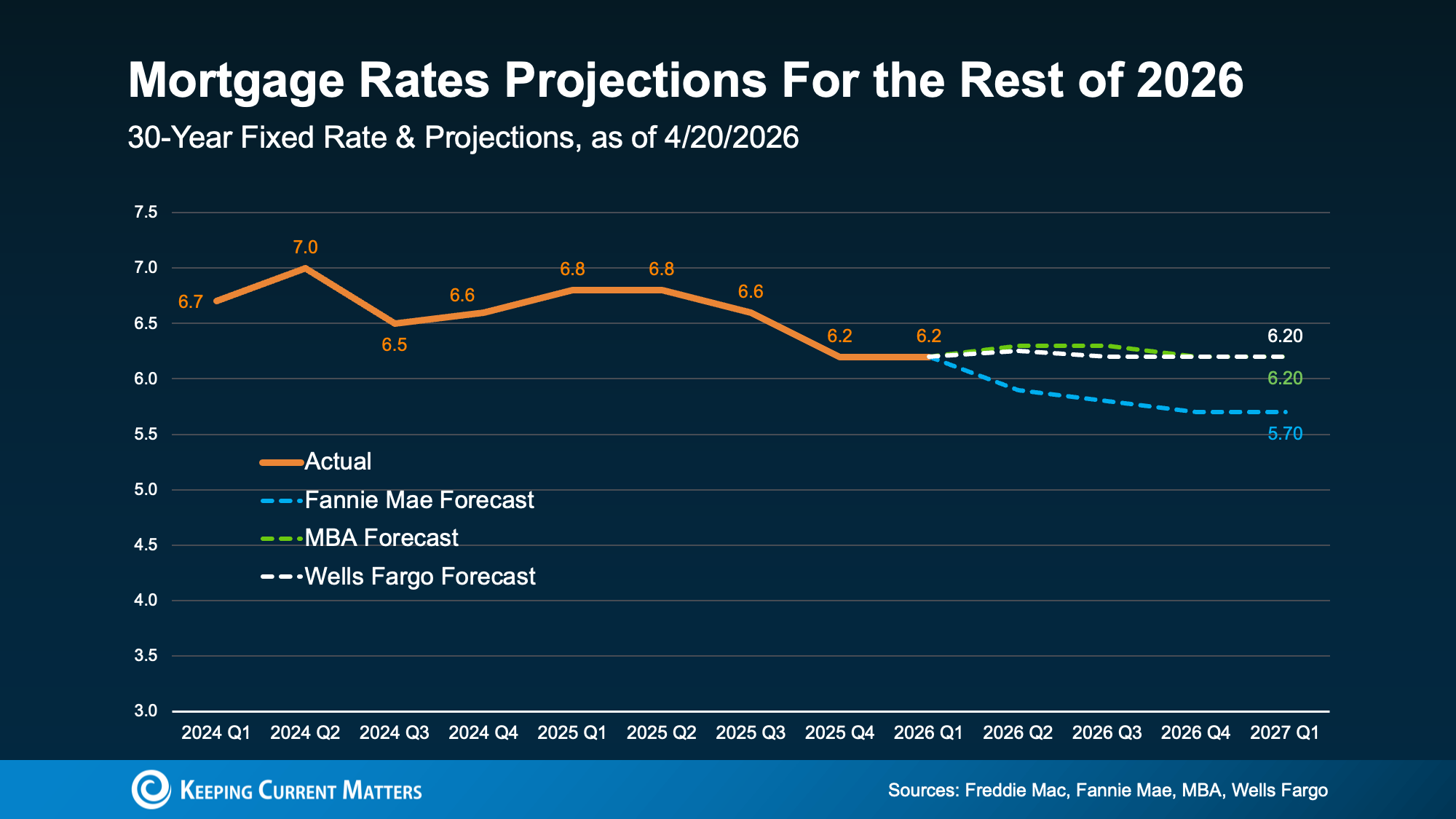
“Mortgage rates aren’t expected to change much over the next several quarters . . .”
It’s also worth noting that affordability has already improved compared to last year. So even if rates remain relatively stable, conditions are still better than they were.
Misconception #2: “There Are Too Many Homes for Sale Right Now”
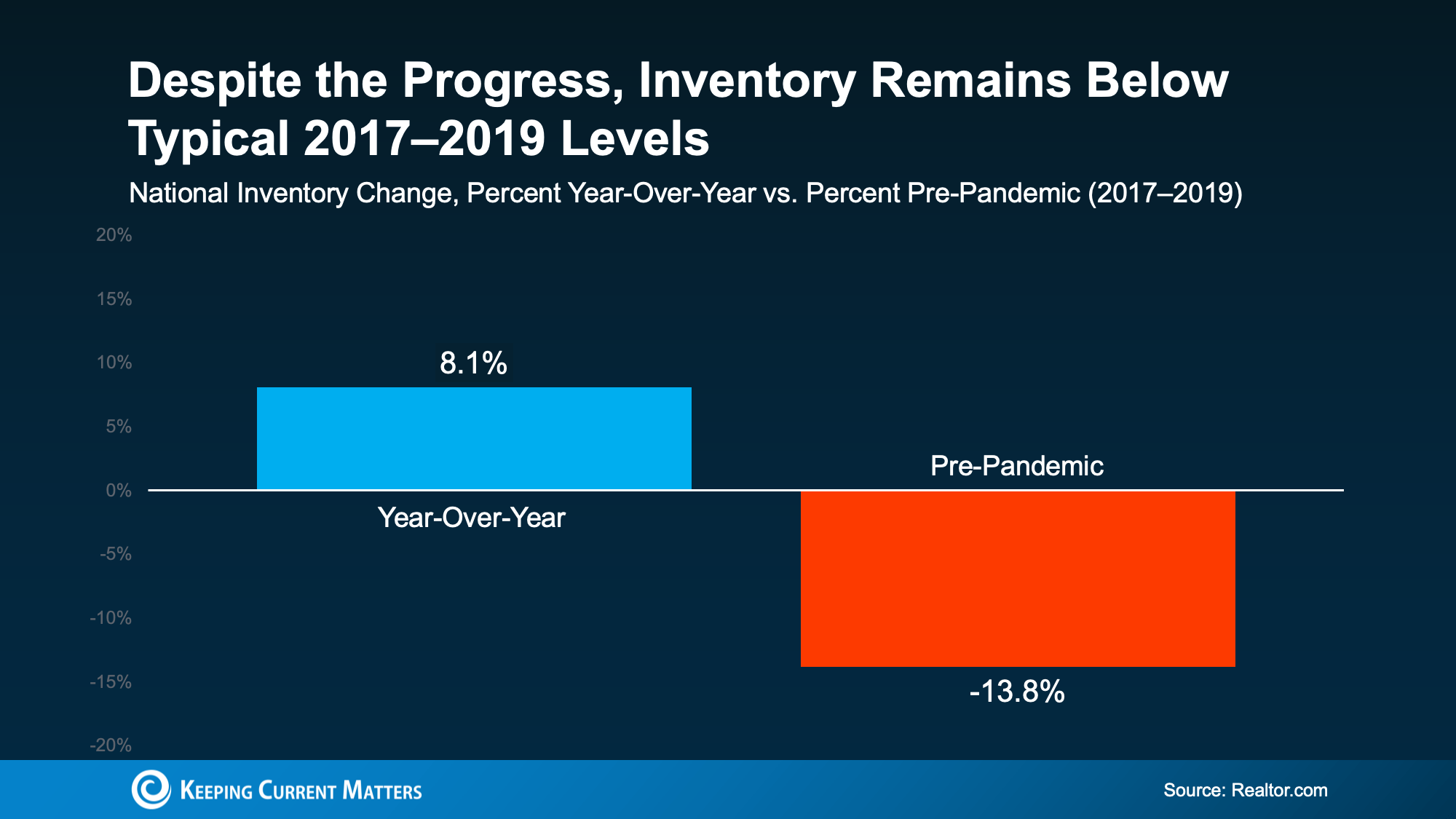
You may have heard that inventory is rising—and nationally, that’s true. The number of homes for sale is up about 8% compared to this time last year. But that’s actually a positive development, giving buyers more options and flexibility.
The issue is how headlines frame the story. They highlight that inventory is at its highest level since 2019 or emphasize new construction, making it seem like supply is surging out of control.
But the bigger picture tells a different story.
Data from Realtor.com shows that while inventory has increased year over year, it’s still nearly 14% lower than typical pre-pandemic levels (2017–2019).
While conditions vary by location, only a small number of states currently have more inventory than they did before the pandemic. That’s a major reason why today’s market doesn’t have the oversupply needed to trigger a crash like in 2008.
Misconception #3: “Home Prices Are About To Crash”
You’ve likely seen claims that home prices are about to drop sharply. This confusion often comes from certain markets experiencing slight price declines, which are then exaggerated into broader predictions of a crash.
But that’s not what the data shows.
In most areas, home prices are still increasing. And here’s why:
Many homeowners are holding onto their properties because they secured historically low mortgage rates in recent years, limiting new listings.
Inventory remains below pre-pandemic levels, which helps support pricing.
Even in markets with more listings, some sellers are choosing to withdraw their homes rather than reduce prices significantly.
These factors are why a widespread price crash isn’t expected.
Even in areas where prices are softening slightly, the declines are modest and don’t erase the substantial gains homeowners have seen over the past five years.
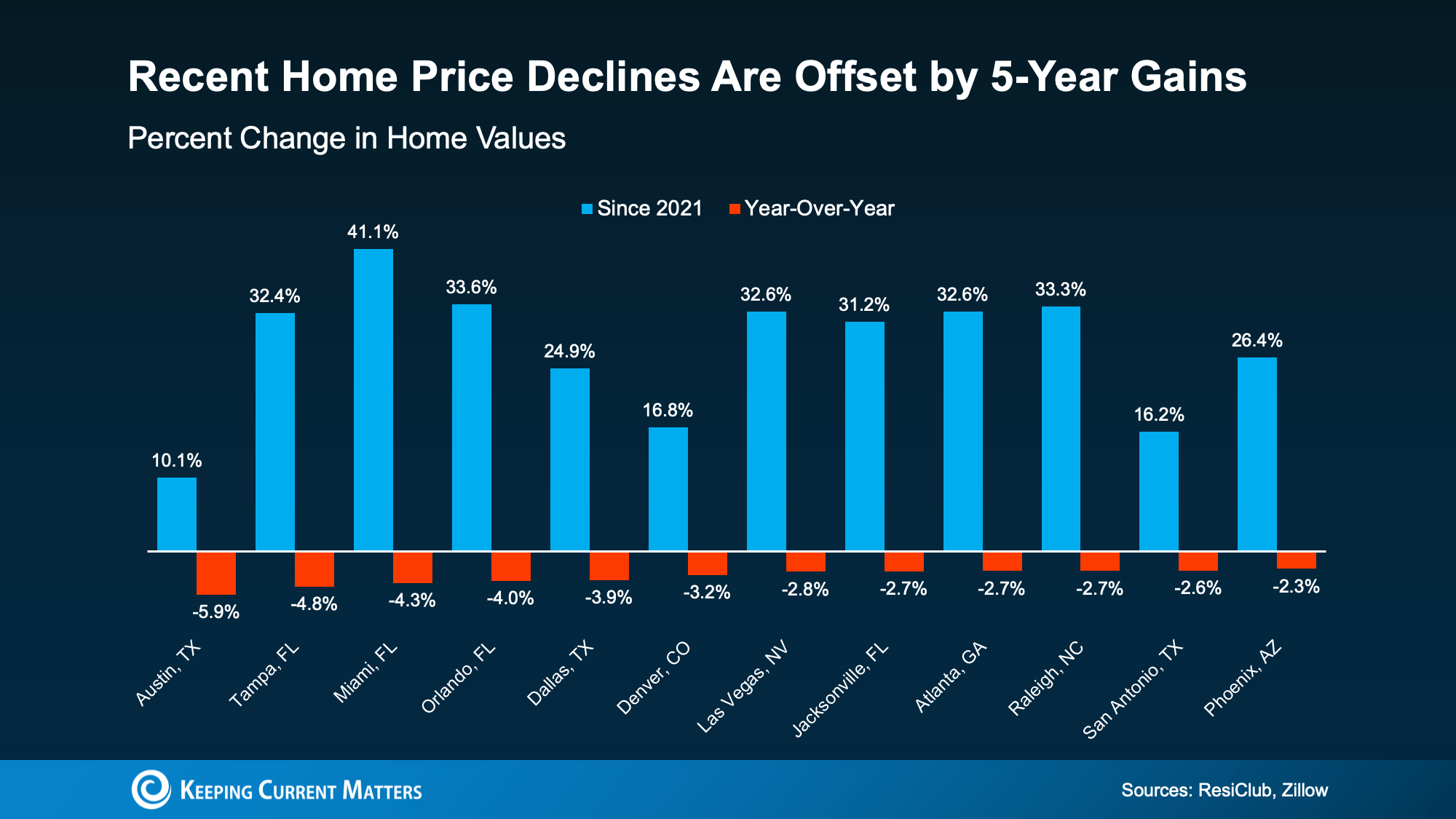
That’s not a crash—it’s simply the market normalizing after a period of rapid growth.
Bottom Line
Online headlines can often make the situation seem more alarming than it really is. For a clear, data-driven understanding of today’s housing market, it’s best to work with a real estate professional.
Connect with a local agent who can help you separate fact from fiction and guide you with accurate insights.
Rent or Buy? The Real Tradeoff Most People Don’t Talk About
You’ve probably found yourself wondering lately: Is buying a home even worth it right now? It’s a question more and more people are asking.
With current home prices and mortgage rates, renting can feel like the simpler route. In some situations, it might even seem like the only practical choice for now. And if that’s where you are, that’s completely okay.
But if you’re trying to decide, there’s one important part of the conversation that often gets overlooked.
It’s how each option impacts your future.
What Renting Really Offers (And What It Doesn’t)
Depending on your situation, renting does come with some advantages:
Lower upfront expenses.
Less maintenance and responsibility.
Greater flexibility to move when needed.
But even with those perks, a Bank of America survey shows that 70% of future homeowners are concerned about what long-term renting means for their future. And that concern comes down to one key issue: you’re not building anything over time. As Yahoo Finance puts it:
“Paying rent doesn’t build equity. You get a place to live, but no ownership stake, no price appreciation, and no asset to leverage for future borrowing or investment.”
So while renting may feel more convenient, that flexibility often comes at a long-term cost.
How Homeownership Builds Wealth Over Time
On the other hand, owning a home remains one of the most reliable ways to build wealth. Why? Because as a homeowner, you build equity—the difference between your home’s value and what you still owe on it.
That equity grows with every payment you make. It can also increase as property values rise over time—and it adds up faster than many people expect.
According to the National Association of Realtors (NAR), the average homeowner’s net worth is 43 times higher than that of a renter:
a graph of a number of people
The numbers speak for themselves. On average, here’s how net worth compares:
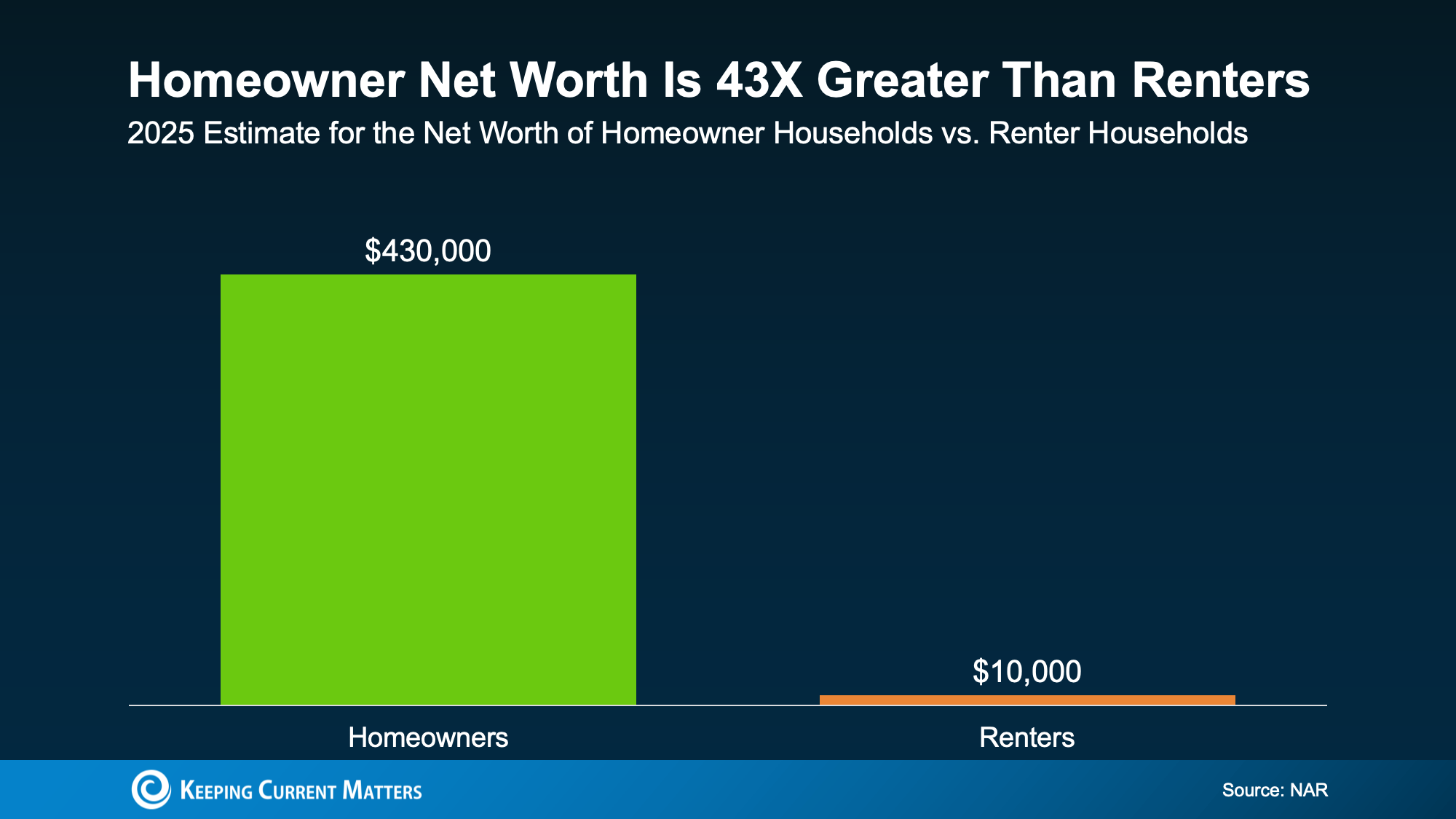
Homeowners: $430k
Renters: $10k
It’s not because homeowners make drastically different day-to-day choices. It’s because over time, one path builds wealth—and the other doesn’t.
So yes, buying comes with upfront costs and added responsibility. But it also functions like a savings account you live in.
The Gap Continues to Grow
There’s another important point to consider. The net worth gap between homeowners and renters has been increasing over time—not shrinking.
Looking at historical data, the gap keeps widening as homeowners continue building wealth while renters remain in place (see graph below):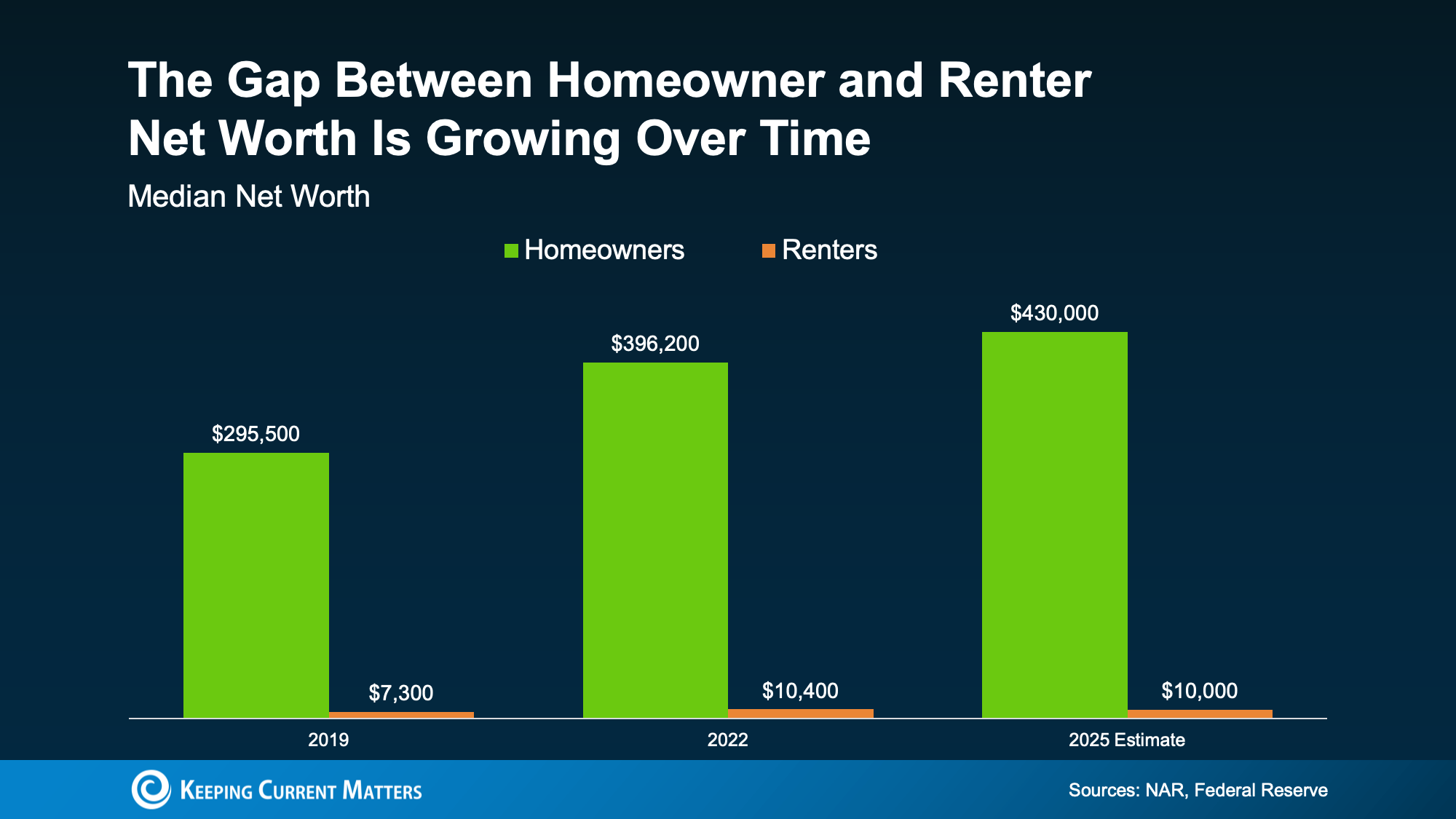
a graph of green and blue bars
Even in 2025, when home price growth slowed, homeowners still gained ground. And that highlights something important:
When you’re financially ready and able to take on the responsibility, history shows that buying is typically worth it in the long run. Because either way, you’re contributing to a mortgage—just not always your own.
When you rent, you’re paying your landlord’s mortgage. When you own, your payments build your own equity.
So the real question becomes: whose investment do you want to support—yours or someone else’s?
So, Should You Buy a Home Now?
The honest answer is: it depends on your situation.
While the long-term advantages of homeownership are clear, that doesn’t mean it’s the right time for everyone. And that’s perfectly fine. You should only buy when you’re financially ready and comfortable with the commitment.
Whether you’re ready now or planning ahead, the first step is the same. Have a quick conversation with a local real estate agent about your goals, timeline, and budget.
They can help you break down the numbers and see what’s possible. You might find that buying is more within reach than you expected. And if not, you’ll walk away with a clear plan to get there.
Because having a plan puts you in control—instead of constantly wondering if or when it will happen.
Bottom Line
Renting may feel more manageable today—but over time, it could cost you.
If your goal is to move beyond renting and start building for your future, it begins with a simple conversation. Connect with a real estate agent to discuss your goals and explore your options—so you’re ready when the timing is right.