Facebook
 X
X
 Pinterest
 Copy Link

One of the most powerful advantages you can give yourself as a homebuyer right now is surprisingly simple: keeping your wish list flexible.
Think about it this way. Your wish list and your budget act as the guardrails for your home search. And when your budget needs to stay put, there’s still another lever you can adjust. That’s taking a closer look at whether you truly need every feature on your list. Because often, making a small compromise can be the difference between feeling stuck and holding the keys to your next home.
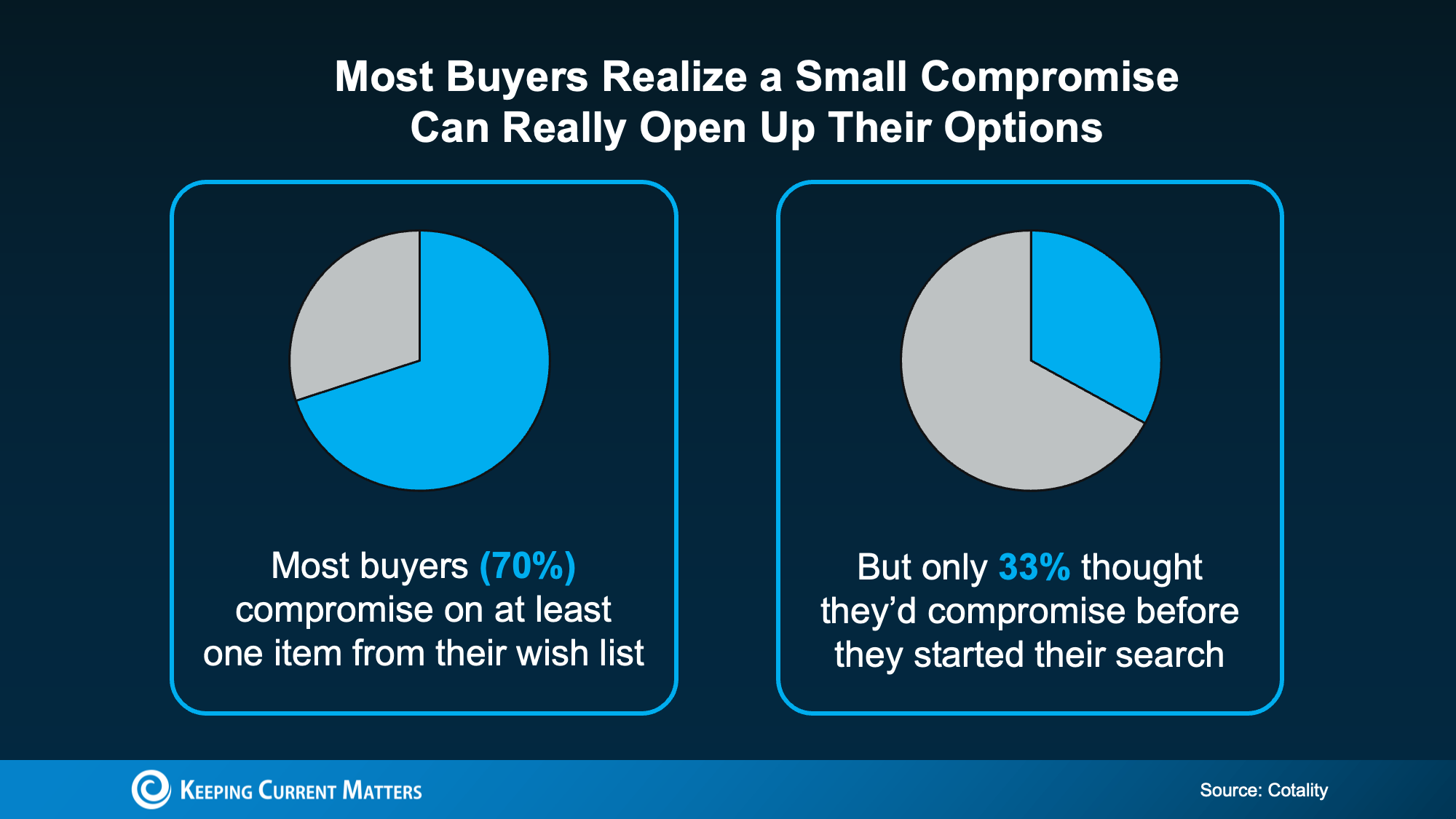
The data shows many buyers are already doing this to overcome affordability challenges in today’s market. A recent study from Cotality found that most buyers (70%) ended up compromising on at least one item from their original wish list. But before they began searching, only 33% thought they’d need to compromise at all:
 What changed? Buyers discovered something important during the search. The features you can’t change matter far more than the ones you can update later.
You can:
Install hardwood floors
Add marble countertops
Upgrade bathrooms over time.
You can’t as easily:
Add more land
Create extra bedrooms or bathrooms
Move the home closer to the people you care about
In the end, factors like location, layout, and the home’s overall bones matter far more than cosmetic details you can change later. And realizing that gives you real power as a buyer.
A Simple Step That’ll Open More Doors
If you’re feeling stuck in your search or scrolling through listings without seeing “the one,” here’s a simple exercise that can completely reset your approach. Write down everything you want in a home, then sort it into three categories:
Must-Haves: These are your non-negotiables. The essentials that make everyday life work—such as the number of bedrooms, commute time, accessibility needs, safety, or proximity to family or your support system.
Nice-to-Haves: Features you’d really enjoy but don’t absolutely need. Think things like a fenced yard, double closets in the primary suite, or a decorative patio.
Dream Features: The true extras. These are the “someday” items—the features you’d love to have but don’t need right now. If you get them, great. If not, that’s okay for now.
Once you sort your list, something becomes clear. Your wish list can either restrict your options or expand them.
Sometimes “nice-to-haves” are being treated like “must-haves.” Loosen that distinction just a bit, and suddenly more homes fit your budget—homes you may have previously skipped over but that could actually suit your lifestyle.
Small Flexibility, Big Payoff
Your next home doesn’t have to check every single box. It just needs to check the ones that truly matter.
That might mean looking at a home that needs some minor cosmetic updates. Or choosing a slightly smaller yard to get a better location.
These aren’t sacrifices. They’re smart trade-offs that help you move forward. Remember, cosmetic features can be improved over time. But finding the right layout, the right structure, and the right location is what sets you up for long-term success.
An Agent Helps You See the Possibilities
If you’re unsure where to stay firm and where you can be flexible, that’s where a trusted agent makes all the difference. They can help you identify real opportunities, clarify which features are worth holding out for, and show you what can be added later—when the timing is right.
Bottom Line
If you’re ready to find a home that works for both your budget and your lifestyle, connect with an agent and review your wish list together. With a knowledgeable local expert by your side, a little flexibility can open the door to a lot more possibilities.