Facebook
 X
X
 Pinterest
 Copy Link
Thinking About an Adjustable-Rate Mortgage? Here’s What You Need To Know.

If you’ve been searching for a home recently, you’ve probably noticed how challenging affordability still is. That’s exactly why more buyers are turning to adjustable-rate mortgages, or ARMs.
Here’s what you should know about how they work—and whether they might be right for you.
What Is an Adjustable-Rate Mortgage?
Since many people aren’t as familiar with this type of loan, let’s start with a simple explanation. Here’s how Business Insider describes the key difference between a fixed-rate mortgage and an adjustable-rate mortgage:
“With a fixed-rate mortgage, your interest rate stays the same for the entire life of the loan, keeping your monthly payment consistent over time . . . adjustable-rate mortgages work differently. You begin with a set rate for a few years, but after that, your rate can change at regular intervals. This means your payment could go up if rates rise, or go down if rates fall.”
In short, one remains stable over time.
And the other can fluctuate—sometimes slightly, sometimes significantly.
Of course, factors like taxes or homeowner’s insurance can still impact a fixed-rate loan. But overall, the base mortgage payment tends to stay consistent. With an ARM, however, your monthly payment can change as rates adjust.
Why Adjustable-Rate Mortgages Are Getting More Attention
So why are more buyers considering this option? It comes down to upfront savings. Business Insider explains: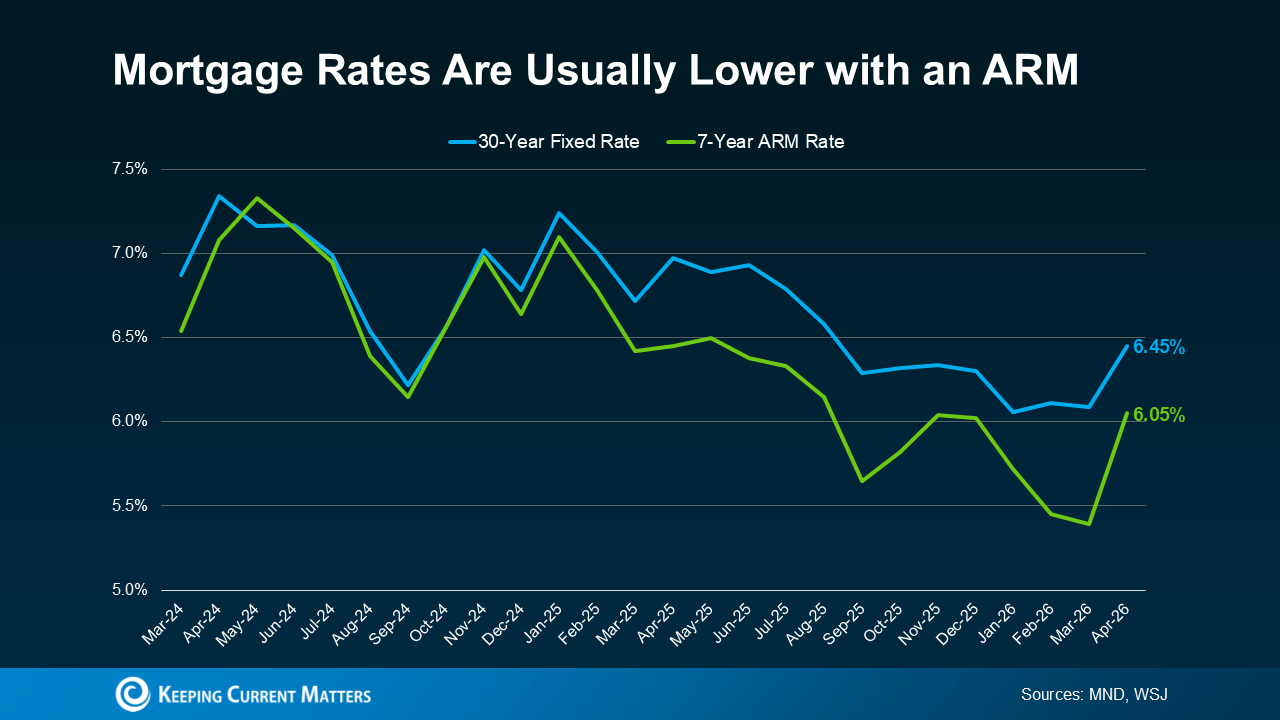
“Because ARM rates are typically lower than fixed mortgage rates, they can help buyers improve affordability when rates are high. A lower ARM rate can mean a smaller monthly payment or the ability to afford a more expensive home compared to a fixed-rate loan.”
Right now, based on data from Mortgage News Daily and the Wall Street Journal, initial ARM rates are lower than those for a 30-year fixed mortgage.
If you’re wondering what that looks like in real numbers, Redfin reports that the average buyer could save about $150 per month by choosing an ARM over a 30-year fixed loan.
For many, that difference can be meaningful.
More Buyers Are Choosing Adjustable-Rate Mortgages Today
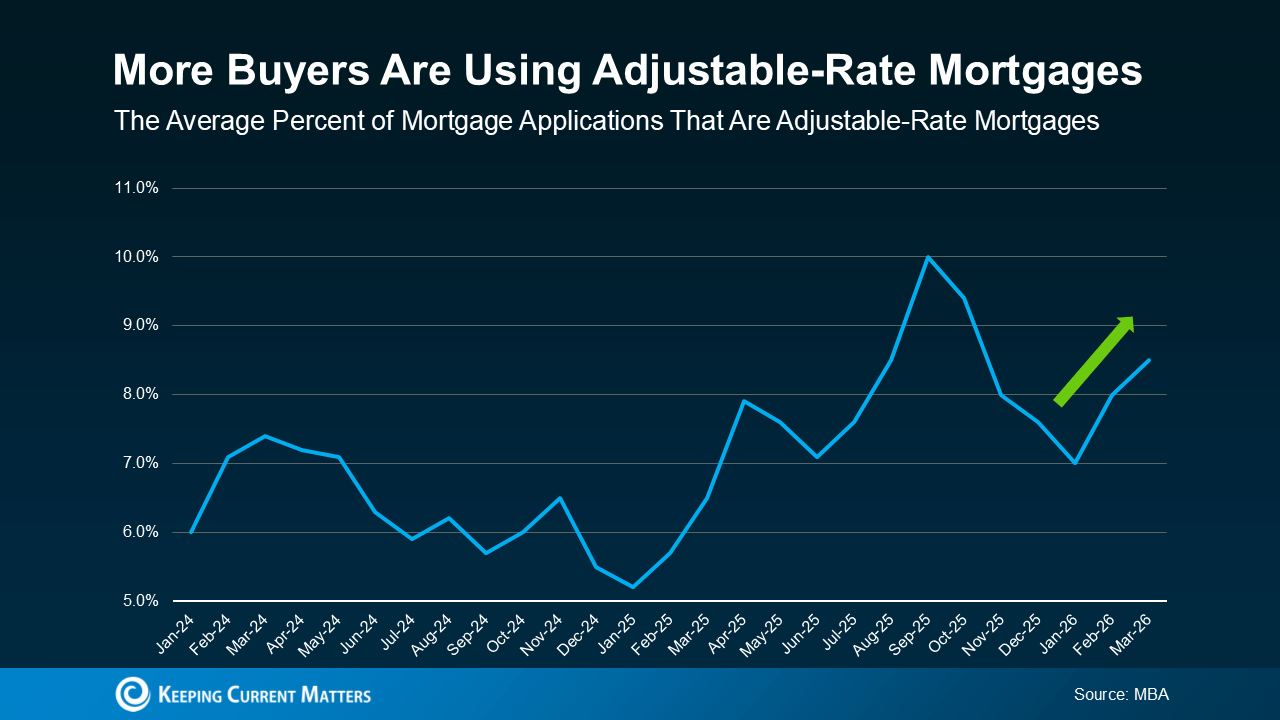
An increasing number of buyers are willing to accept some future uncertainty in exchange for lower payments today. Data from the Mortgage Bankers Association (MBA) shows that the share of buyers choosing ARMs has risen, particularly in recent years.
That doesn’t mean ARMs are becoming the default choice—it simply shows that some buyers are using them as a strategy to make homeownership more attainable right now.
If you remember the housing crash, this trend might sound concerning. But today’s ARMs are very different.
In the past, some borrowers were approved for loans they couldn’t afford once rates adjusted.
Now, lending standards are much stricter. Lenders assess whether borrowers can still manage payments if rates increase. So, the renewed interest in ARMs doesn’t signal another crisis—it reflects how buyers are adapting to today’s affordability pressures.
The Trade-Off – What You Need To Consider
If you’re thinking about an adjustable-rate mortgage, it ultimately comes down to your personal situation and comfort with risk.
An ARM might make sense if you plan to move before the rate adjusts, or if you expect your income to increase over time. Still, there are important trade-offs to consider.
Once the fixed-rate period ends, your rate can change—and your monthly payment could rise, potentially by a significant amount depending on market conditions.
Also, there’s no guarantee that mortgage rates will drop in the future, which means refinancing may not always be an option. That’s why it’s essential to have a clear plan, understand your long-term financial outlook, and work closely with a trusted lender before choosing this type of loan.
Bottom Line
ARMs are gaining attention again because they can offer lower payments upfront, making homeownership more accessible in the short term. But they aren’t the right fit for everyone.
The key is understanding how they work, weighing the risks, and deciding whether they align with your financial goals. That’s why it’s important to consult with a trusted lender and financial advisor before making any decisions.
You Can’t Control What’s Happening with Mortgage Rates. But You Can Control This.

Mortgage rates have been fluctuating lately, and if you’re thinking about buying a home, that can make planning feel more challenging. The good news? There are still steps you can take to secure the best rate possible in today’s market—it all starts with understanding what’s going on.
So, what’s behind the recent rate swings? And what can you do about it? Let’s break it down.
Mortgage Rate Volatility Is Normal
Recent data from Freddie Mac highlights the ups and downs. After steadily declining for over a year, rates have ticked up this month (see graph below):
a graph showing a line of a moving rate
While it’s easy to focus on short-term changes, here’s what really matters.
It’s completely normal for mortgage rates to move up and down from time to time. Looking back over the past year, there have been several moments when rates briefly increased. We’re simply in one of those periods again—and it’s important to recognize that.
Periods of economic uncertainty or major global events often contribute to this kind of movement. As Investopedia explains:
“Mortgage rates don’t move in isolation. When global events create uncertainty in financial markets, it can impact borrowing costs… mortgage rates can shift quickly in response to geopolitical developments. As long as uncertainty stays elevated, rate fluctuations are likely to continue.”
That’s why trying to perfectly time the market usually isn’t the best strategy.
While you can’t control where mortgage rates go, you can control several key factors that influence the rate you’re offered. Here’s where to focus:
Your Credit Score
Your credit score is a major factor in determining your mortgage rate. Even a slight improvement can lead to meaningful savings on your monthly payment. As Bankrate notes:
“Your credit score is one of the most important factors lenders evaluate—not just for loan approval, but for the terms. Generally, higher scores qualify for lower interest rates and better conditions.”
Be proactive about maintaining or improving your credit. If you’re unsure where you stand, a trusted loan officer can help guide you.
Your Loan Type
There are several types of home loans, each with its own requirements, benefits, and interest rates. The Consumer Financial Protection Bureau (CFPB) explains:
“Common mortgage categories include conventional, FHA, USDA, and VA loans. Each comes with different eligibility criteria, and rates can vary significantly depending on the loan type.”
This is why it’s so important to review your options with a lender—and even compare offers from multiple lenders.
Your Loan Term
The length of your loan also plays a key role. Most lenders offer 15-, 20-, or 30-year terms. According to Freddie Mac:
“When selecting a home loan, consider the loan term—the time it will take to repay the loan in full. The term impacts your interest rate, monthly payment, and the total interest paid over time.”
To find the best fit for your financial goals, have a lender walk you through how each option affects your budget.
Bottom Line
If you’re thinking about buying a home right now, the key is to accept that mortgage rates are out of your control.
What you can control is how prepared you are. By working with a trusted lender and focusing on the factors that influence your rate, you can put yourself in the best possible position.
When you’re ready to make a move, connect with a real estate agent and a lender. Stay focused on what you can control—and that’s where you’ll see the biggest impact.
3 Must-Do’s for First-Time Home Buyers

Buying Your First Home Doesn’t Have to Feel Overwhelming
Buying your first home is exciting—but it can also feel overwhelming since it’s something new. Keeping track of everything may seem like a lot at first. But here’s the good news:
You don’t have to figure it all out on your own, and you don’t have to do everything at once. Take it one step at a time.
Here are three key areas to focus on to help you get started:
1. Assemble Your Team: Don’t Do This Alone
Buying a home works best when you have the right team supporting you. The right professionals can guide you and help you avoid costly mistakes.
A local real estate agent will guide you from your first showing to closing day. They explain each step clearly so you can make confident decisions.
A trusted lender will walk you through your loan options, estimate your monthly payments, and help you understand what fits your budget. Getting this information early gives you a strong advantage.
2. Prep Your Finances: Build a Strong Foundation
Your financial preparation shapes what you can afford, how competitive your offer will be, and how confident you feel during the process.
Start by checking your credit score. Your score affects your loan options and interest rate, so reviewing it early gives you time to improve it if needed.
Save for both your down payment and closing costs. Many buyers focus only on the down payment, but closing costs matter just as much. Preparing for both helps you avoid last-minute stress.
Explore assistance programs available to first-time buyers. These programs can boost your savings and make homeownership more achievable.
Talk to a lender about your mortgage options. Fixed-rate, adjustable-rate, FHA, VA, and conventional loans all offer different benefits. Understanding them helps you choose what works best for your goals.
Get pre-approved. This step shows how much a lender is willing to lend you, helps define your budget, and allows you to act quickly when you find the right home.
Create a realistic budget. Include not just your mortgage, but also utilities, insurance, maintenance, and daily expenses. This helps keep your finances comfortable—not stressful.
3. Gather Your Documents: Save Time and Reduce Stress
When you’re ready to move forward, lenders will review your financial history. Preparing your documents early helps speed up the process and prevents delays.
Gather your W-2s and tax returns from the past two years to show income consistency.
Collect recent pay stubs from the past 1–2 months to confirm your current income.
Prepare bank statements from the past 2–3 months to show your savings and spending habits.
Include investment account statements if they apply to your financial situation.
Provide a copy of your driver’s license to verify your identity.
List your residential history from the past two years to show stability.
Gather statements for any outstanding debts, such as credit cards, student loans, or car loans.
Include proof of additional income like bonuses, commissions, or side work if applicable.
Note: Requirements may vary depending on the lender, but this list gives you a solid starting point.
Bottom Line
You don’t need to have everything figured out to buy your first home—you just need a clear plan.
When you prepare your finances, organize your documents, and build the right team, you set yourself up for success.
If you want more guidance or need help getting started, reach out to a trusted real estate professional.
The #1 Reason Buyers Walk Away (And How To Get Ahead of It)

You may have seen headlines on social media saying the number of buyers backing out of home contracts is rising, reaching levels not seen since 2017. While that might sound concerning, the reality is that this trend can vary greatly depending on the local market.
More importantly, there is often one main reason deals fall apart — and it is something sellers can actually prepare for and manage.
The Biggest Dealbreaker: Home Inspection Issues
According to a survey from Redfin, more than 70 percent of recently cancelled contracts happened because problems were uncovered during the home inspection.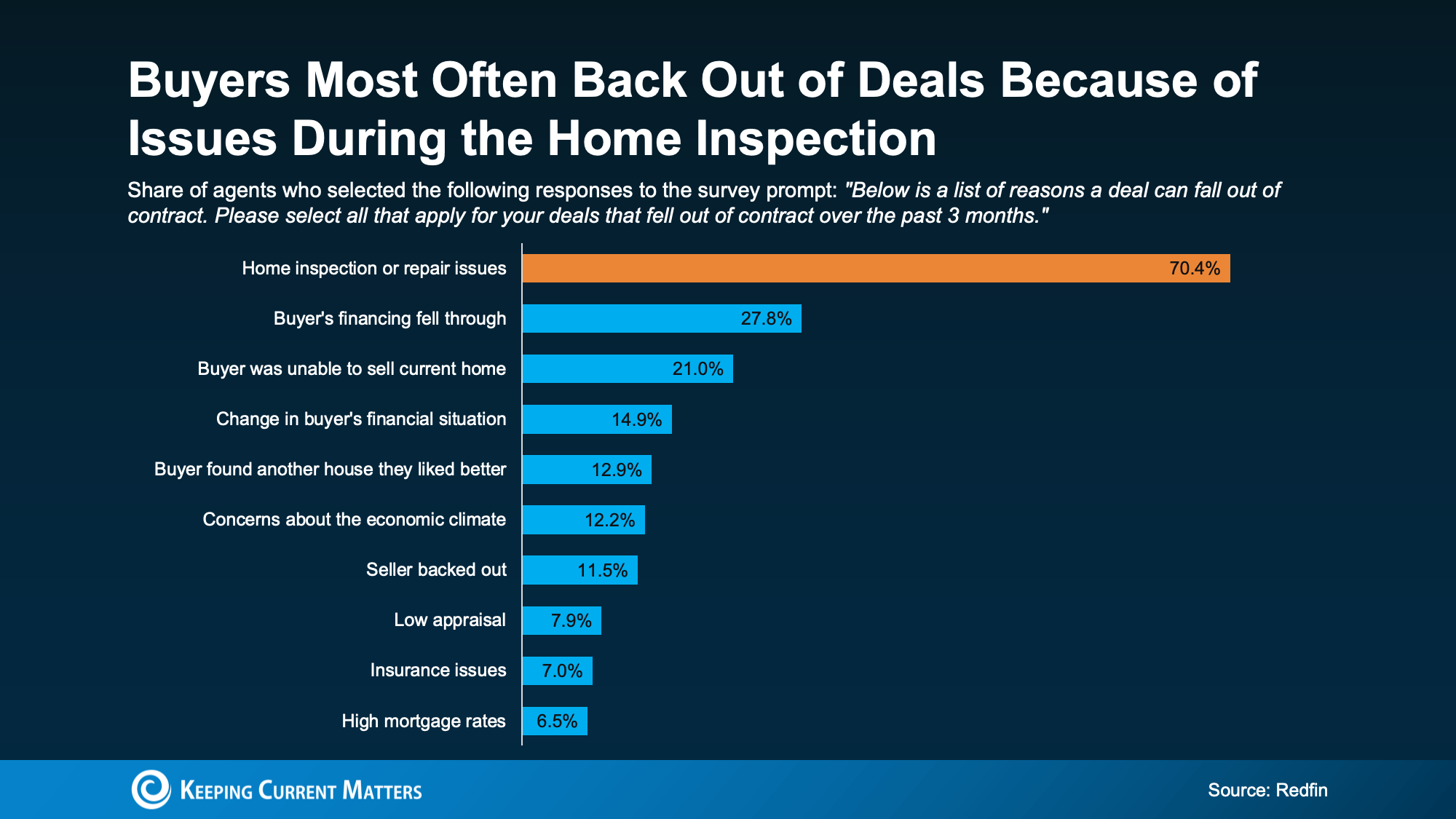 This makes sense in today’s market. Buyers now have something they did not have a few years ago — more options.
Why Repairs Matter More in Today’s Market
During the peak of the competitive market, buyers often overlooked certain issues because there were so few homes available. Many felt pressured to move quickly.
Today, that dynamic has shifted.
With more inventory on the market, buyers can afford to be selective. If a home feels like it may come with costly repairs, hidden issues, or potential risks, many buyers will simply move on to another property.
This is why addressing key maintenance items before listing your home can make a significant difference.
How a Real Estate Agent Can Help
A knowledgeable local agent can walk through your home and help identify which repairs or improvements may be worth addressing before you list. Their experience in the local market can help you prioritize the updates that matter most to buyers.
According to Zillow, some of the issues buyers pay the closest attention to include:
-
Roof damage or leaks
-
Plumbing problems such as leaks or water damage
-
Electrical concerns like outdated wiring or missing GFCI outlets
-
HVAC systems that are not functioning properly
-
Pest or insect damage, including termites
-
Hazardous materials such as mold, lead, or asbestos
-
Safety or code violations
-
Structural concerns like foundation cracks or sagging floors
Of course, not all of these issues apply to every home. In some cases, there may only be one or two items to address — or none at all. The key is knowing what buyers in your market are most likely to notice.
The Value of a Pre-Listing Inspection
For buyers, inspection findings are not just about repairs — they are about trust. Once buyers start wondering what other problems might be hiding behind the walls, it can be difficult to regain their confidence.
This is why some agents recommend a pre-listing inspection. It allows sellers to see potential concerns before a buyer does.
With that information, you can:
-
Make necessary repairs before listing
-
Disclose issues upfront
-
Avoid last-minute negotiations under pressure
-
Plan repairs without rushing before closing
That said, you do not need to fix every single item. The goal is to focus on the issues that are most likely to impact the sale.
A trusted agent can help you decide:
-
Whether a pre-listing inspection makes sense in your market
-
Which inspector to work with
-
What repairs are worth making
-
When offering a credit might make more sense than completing repairs
Bottom Line
Inspection issues are one of the most common reasons home sales fall through — but the good news is that many of these problems can be addressed before your home even hits the market.
Being proactive with key repairs can help build buyer confidence and keep your sale moving forward.
If you want guidance on where to focus before listing your home, connecting with a knowledgeable agent can make all the difference.
Should You Wait for Lower Mortgage Rates?

Many homebuyers wonder if they should wait for lower mortgage rates. Mortgage rates have already dropped into the upper 5% range twice this year, only to tick back up into the low 6% range shortly after. If you saw that and thought, “Great, I missed it,” you’re not alone.
A lot of buyers are treating the 5s like some kind of magic number. As if moving from 6.1% to 5.99% suddenly changes everything. And from a mindset perspective, it does feel different.
But here’s the part most people don’t actually run the math on.
The Payment Difference Isn’t What You Think
Let’s say you’re looking at a $500,000 home loan. At 6.1%, generally speaking, your principal and interest payment is roughly $3,030 per month. At 5.9%, it’s about $2,966 per month.
That’s a difference of only $64 a month.
Not $300.
Not $500.
Sixty dollars.
Let that sink in for just a moment.
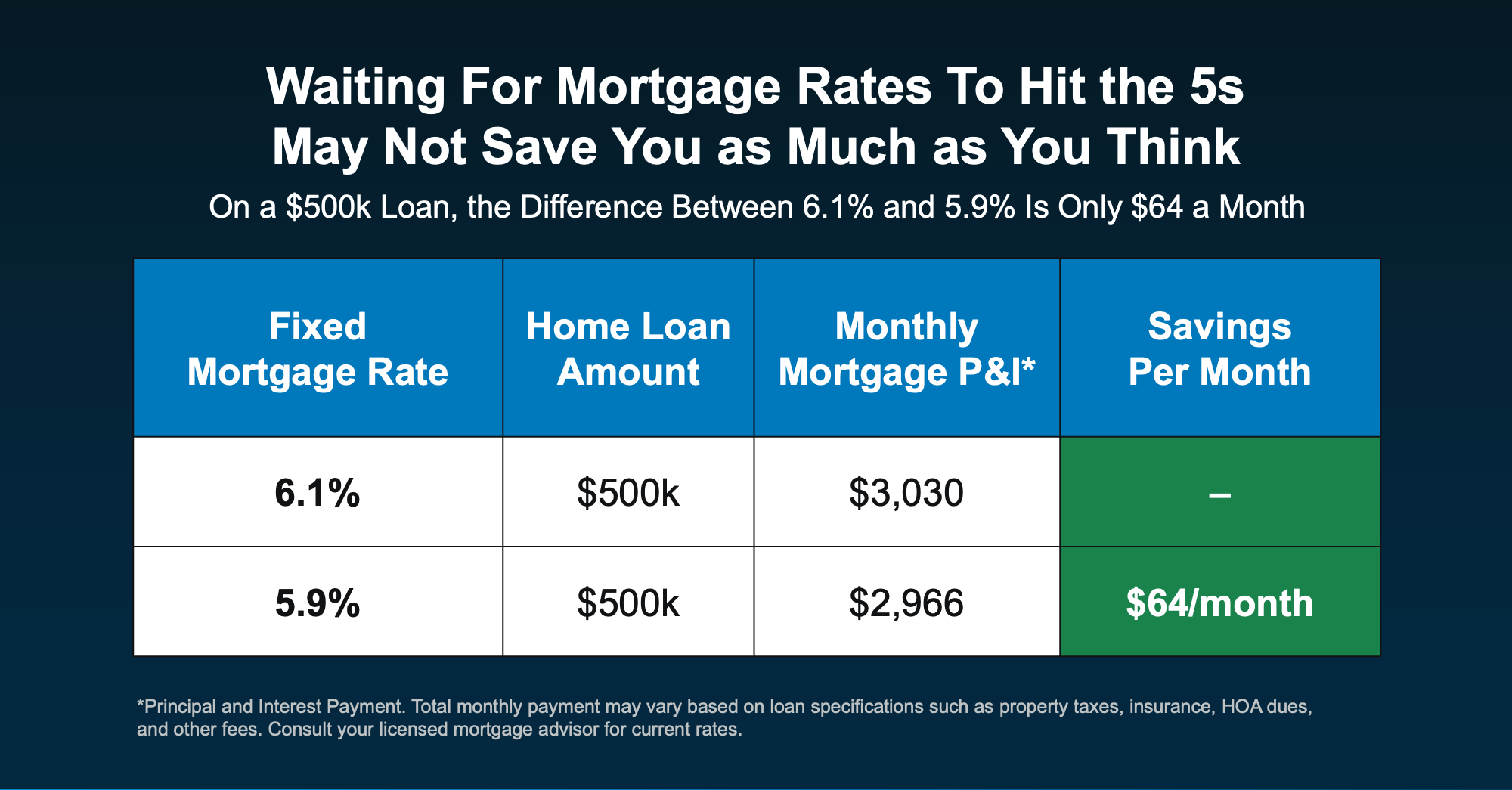
Yes, over time that $64 a month can add up. But it’s far from the dramatic swing many buyers imagine when they say they’re “waiting for the 5s.”
The psychological impact of seeing a 5 in front of your rate can feel big. The financial impact? It might be something you don’t even notice when it’s all said and done.
Experts Aren’t Predicting a Big Drop
Another important piece to think about: most housing economists aren’t forecasting a long-term return to 5% territory anytime soon.
While rates will move up and down, likely hitting the high 5s here and there, the broader expectation is for mortgage rates to hover in the low 6% range this year, not stay in the 5’s or decline much more.
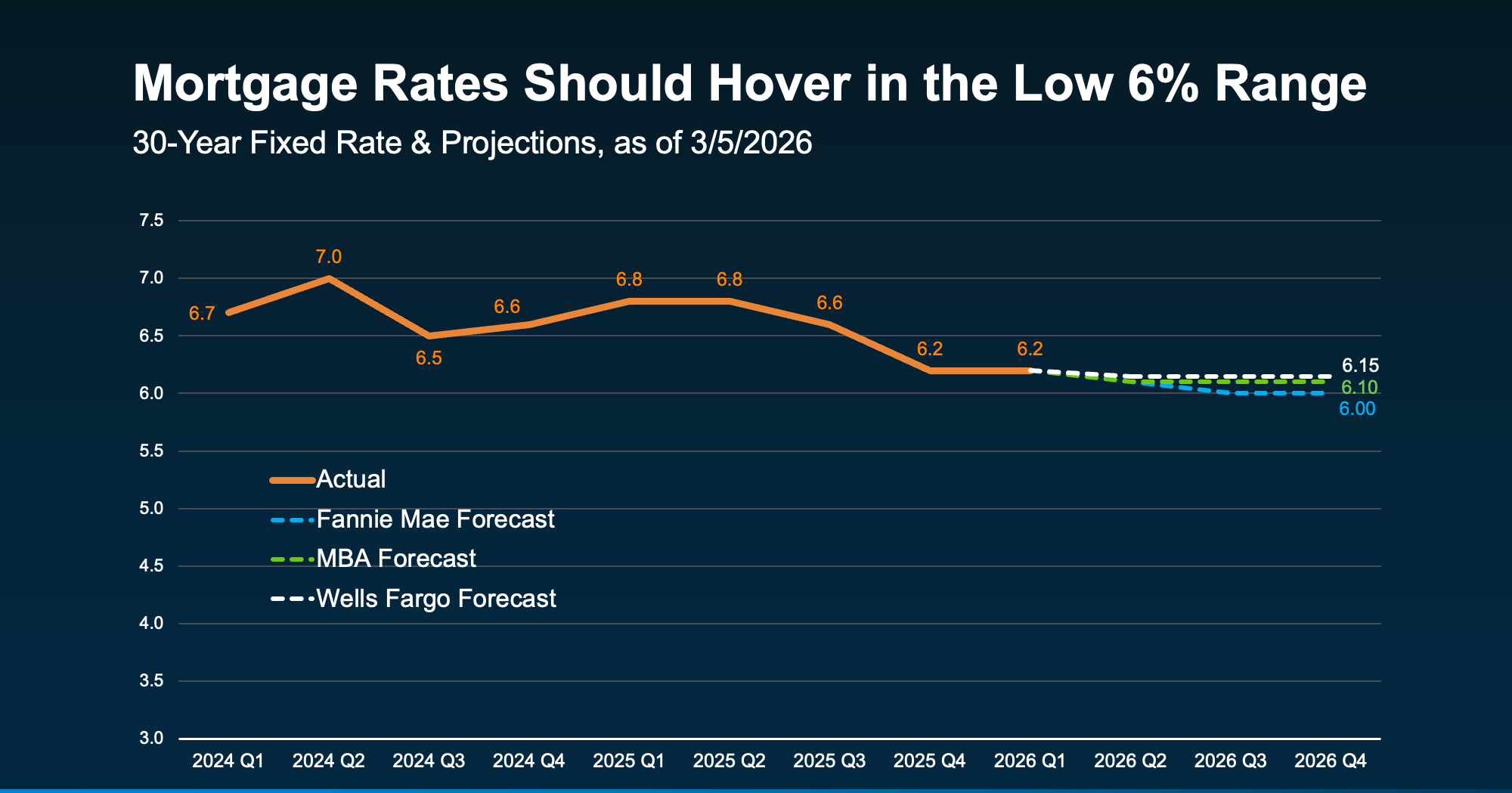
While it certainly could happen, the reality is, waiting for a deep drop may not deliver the payoff you’re hoping for, if you’re holding out
The Bigger Question to Ask
Instead of asking, “Did I miss the 5s?” A better question is: “Does today’s payment work for me?”
If the monthly payment fits comfortably in your budget, and you’ve found a home that meets your needs, the difference between 6.1% and 5.9% likely isn’t the deciding factor. It might be one of them, but it shouldn’t be everything.
And remember, mortgage rates aren’t permanent. If they drop meaningfully later, refinancing is always an option. But you can’t refinance a home you didn’t buy.
Waiting Might Feel Safe, But It Isn’t Always Strategic
It’s natural to want the best possible rate. Everyone does. But sometimes buyers overestimate how much a rate in the high 5s will change things in today’s market. Many people ask themselves if they should wait for lower mortgage rates, thinking that a small drop will dramatically improve their monthly payment.
Don’t miss the fact that rates have already come down. A year ago, they were in the 7s. Now? They’re hovering in the low 6s. And for a lot of people, that percentage point difference that’s already here is the real game changer.
If you paused your plans when rates were higher, now may be the right time to re-run your numbers. Not because rates are “perfect.” But because the monthly payment math might work better than you think, even with rates in the low 6s.
Before assuming you’ve missed your moment, take another look at the numbers.
You may find it never disappeared.
Bottom Line
If you’ve been sitting on the sidelines waiting for that magic five number for rates, that strategy may not pay off as much as you’d expect.
Reference: https://www.keepingcurrentmatters.com/2026/03/09/should-you-wait-for-lower-rates/
Repeat Home Buyers And Their Hidden Advantage Today

What if you didn’t have a mortgage payment on your next home? For many repeat home buyers, that’s not as unrealistic as it sounds.
Nearly 3 in 10 homes purchased today are bought in cash, according to the National Association of Realtors (NAR). That’s far more than the pre-pandemic norm (see graph below):
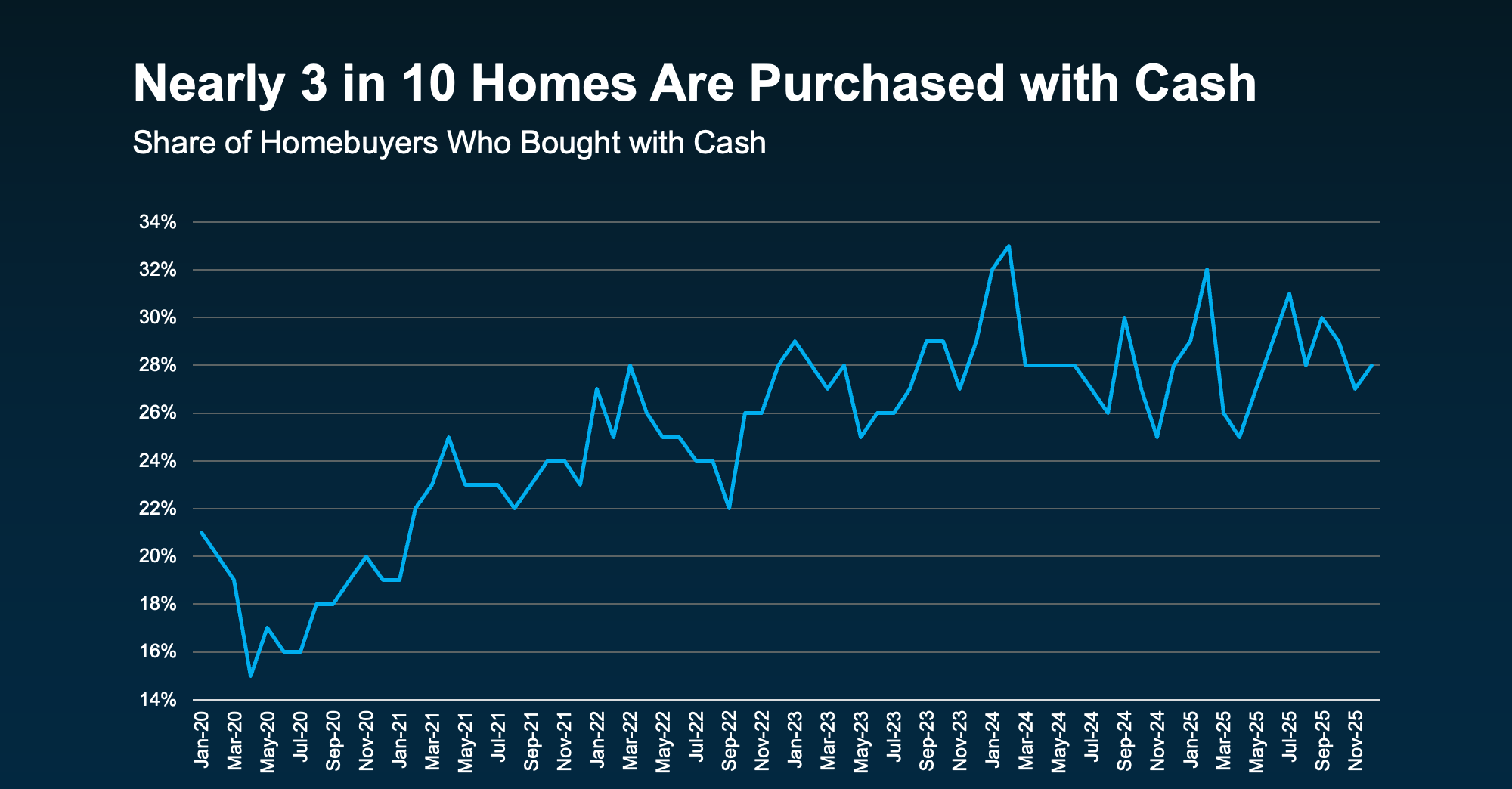
So, how are so many repeat home buyers making that happen? The answer is simple: home equity.
Back in 2020-2021, mortgage rates and the number of homes for sale were both at all-time lows. And that combination pushed home prices up, fast.
If you owned a home during that time, it likely gained significant value – maybe even enough to buy your next house in cash. NAR explains:
“. . . rising home equity has armed many existing homeowners with the financial leverage to make cash offers, allowing them to convert years of price appreciation into immediate purchasing power.”
Here’s why you may want to go that route yourself, if you have enough equity to do it.
1. Your Offer Becomes More Attractive
Sellers value certainty. And an all-cash offer removes one of the biggest unknowns in a transaction: financing. As Rocket Mortgage explains:
“Cash offers are attractive to sellers. Sellers often prefer to work with cash buyers if they can because they don’t have to worry about a buyer’s financing falling through at the last minute.”
In many markets, an all-cash offer can give you a serious edge.
2. You Can Close Faster
And since you don’t have to worry about underwriting, lender approvals, and loan processing, the time it takes to close shrinks. Cotality puts it this way:
“Cash buyers have always enjoyed an edge over borrowers. They remove financing risk, reduce delays, and often close in days rather than weeks.”
If the owner of the house you’re buying is already under contract on their next home or they just need to move fast (like for a new job), that speed is a real draw.
3. You Won’t Have Monthly Mortgage Payments
When you buy in cash, you don’t have to finance your purchase. That means you don’t have to worry about what today’s mortgage rates are and you own the house outright from the day you close. And that’s a big deal.
No mortgage.
No monthly payment.
Full ownership.
That financial freedom opens the door for other big lifestyle benefits. Zillow explains:
“Paying in cash means you own your home outright. This eliminates the need for monthly mortgage payments, freeing up your finances for other priorities like savings, travel, or home improvements.”
4. You May Get a Better Deal
And here’s one more thing that surprises a lot of homeowners: cash buyers often pay less for the house.
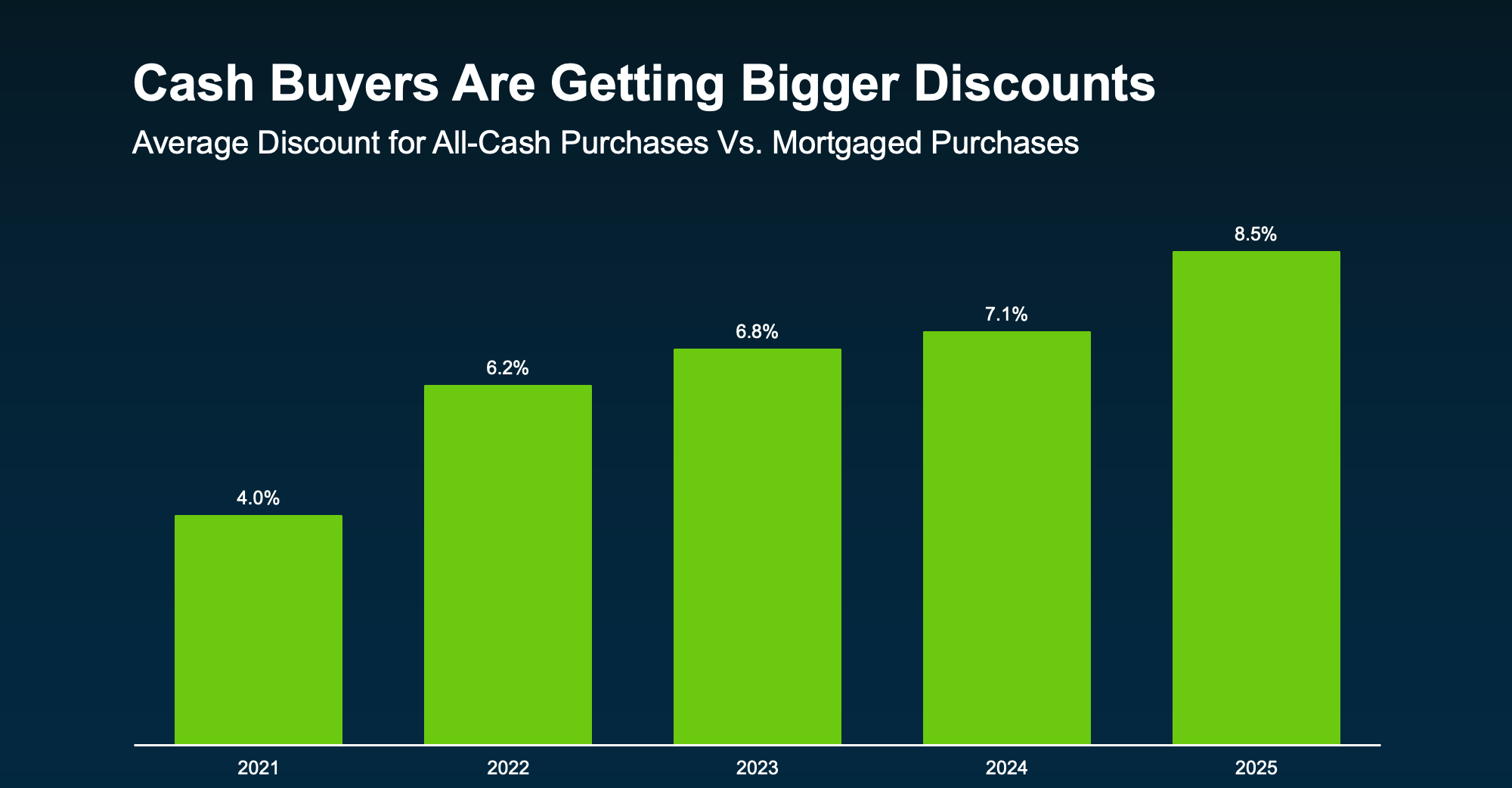
According to Cotality, all-cash buyers tend to spend roughly 9% less on the house than buyers who use a mortgage. That’s because some sellers are willing to accept lower offers to get a deal done quickly, with more certainty of closing, and fewer financing hoops to jump through. As Cotality explains:
“From a seller’s point of view, a lower but reliable offer can feel preferable to a higher one that may collapse weeks later.”
And that advantage grows with each passing year (see graph below):
Is an All-Cash Move Realistic for You?
Not every homeowner will buy their next house outright in cash. And that’s okay.
But the bigger takeaway is this: the equity you’ve built may give you more options than you think.
Whether that means downsizing and eliminating a mortgage entirely, or just relocating with stronger negotiating power, your current house may be what makes it possible.
Bottom Line
Before assuming you’ll need another traditional mortgage, it’s worth asking one simple question: How much equity do you really have? Because the answer might change what you thought your next move could look like.
Reference: https://www.keepingcurrentmatters.com/2026/03/02/the-hidden-advantage-repeat-buyers-have-right-now/
Why Your Asking Price Matters When Selling Your Home

There’s one decision you’re going to make when you sell that determines whether your house sells quickly or sits on the market. Whether buyers make an offer or scroll past, and whether you walk away with the maximum return or end up cutting the price later. That decision is your asking price, and it plays a critical role in the success of your home sale.
The #1 Mistake Sellers Make Today: Trusting the Wrong Number
If you’re thinking of moving and trying to figure out what your house may sell for, it’s tempting to start with an online home value tool. They’re fast, free, and easy. And you don’t have to talk to anyone. But here’s the problem: they don’t know your house.
And that can be a bigger drawback than you realize.
Where Online Estimates Fall Short
Online tools often lag behind the market. They look in the rearview mirror, relying on closed sales and delayed information. And in that sense, they’re using incomplete data.
That’s not a miss in how these systems are built. Some information just isn’t available online. Bankrate explains:
“While these tools can be a useful starting point, keep in mind that they typically do not provide the most accurate pricing. Algorithms can only rely on the information available; they can’t account for things like a home’s condition or renovations made since the last public information was updated.”
They can’t see:
- The unique features that make your house special
- All the work you’ve put in to keep it in good condition
- Or, how in-demand your specific neighborhood is right now
So, while they may do a good job in some cases, they can’t be as accurate as a local agent who has boots on the ground day in and day out.
In a market where buyers have more options, a seemingly small margin of error can cost you thousands if you price too low, or weeks of lost momentum and time if you price too high.
If you want to sell for the most money and in the least amount of time, you don’t want the fast answer on how to price your house. You want the right one.
That’s why the savviest homeowners today don’t rely on algorithms when it actually matters. They rely on people, specifically trusted local agents.
What an Expert Agent Brings to the Table
According to 1000WATT, sellers overwhelmingly believe real estate agents have the best sense of a home’s true value, far more than any automated tools.
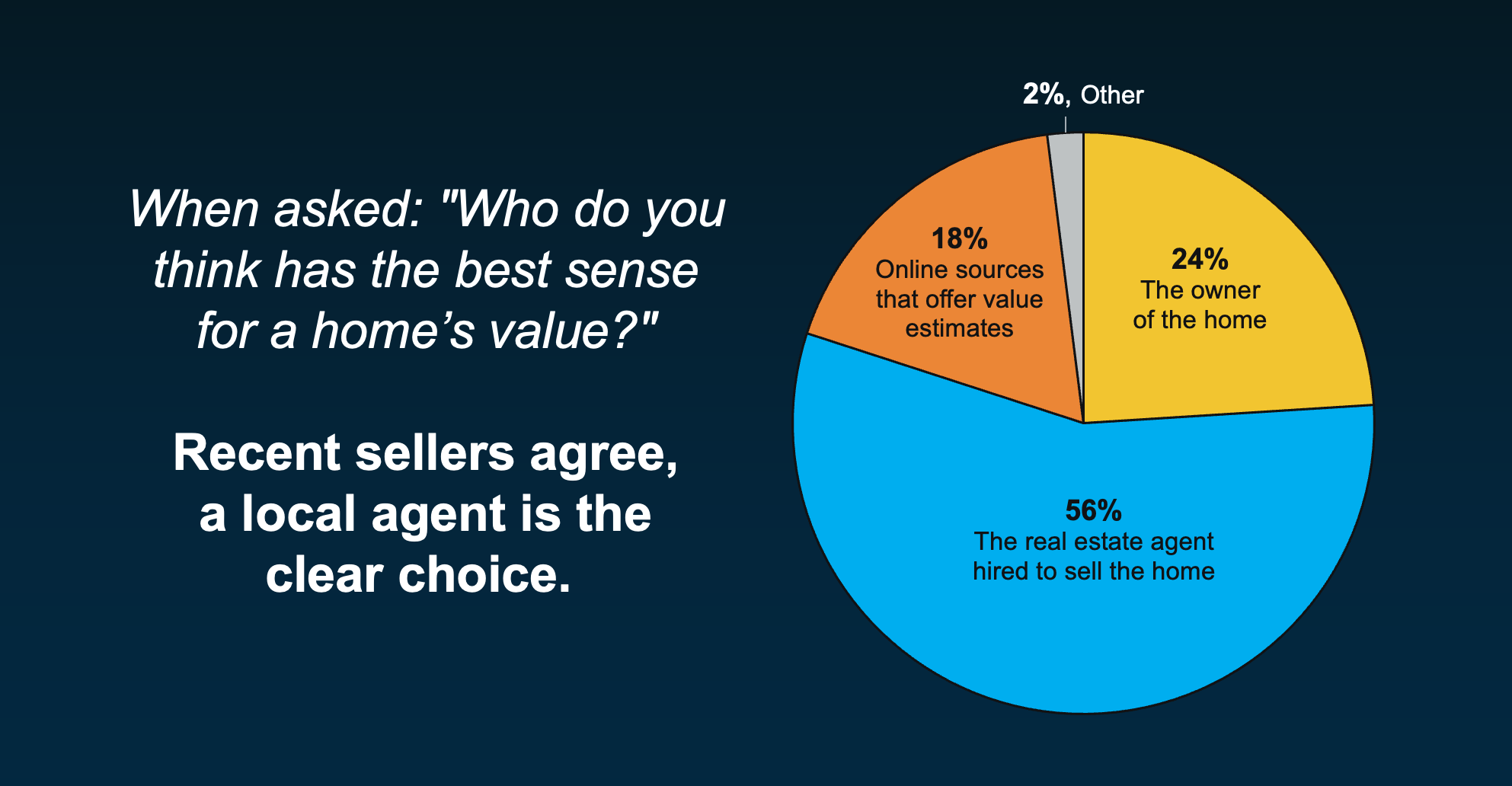
That confidence isn’t accidental. As Bankrate puts it:
“A professional appraiser or real estate agent can visit the home in person, assess the neighborhood as a whole as well as the individual property, perform more thorough market research, and consider subjective details.”
And those details matter. A skilled local agent doesn’t just pull reports. They know what’s happening right now:
- What buyers are paying this month, not last month, or even last year
- How your home compares to the current competition in your neighborhood
- Which features add value based on what buyers are willing to pay for today
- How to price your house to create urgency in this market
And once an agent steps foot in your house, they may even find your online estimate undershot your value. So, if you stuck with the estimate you got online, you’d actually be leaving money on the table. And no one wants that.
Bottom Line
While online tools can give you a rough starting point, only a local expert can give you a price that actually works.
Reference: https://www.keepingcurrentmatters.com/2026/02/19/the-price-you-set-can-make-or-break-your-sale/
Four Ways Your Home Equity Can Work for You

Home equity is one of the most powerful financial tools homeowners have today. You may have heard that many homeowners have built up a significant amount of home equity in recent years, but what does that really mean? Let’s break it down.
Because your equity isn’t just a number, it’s a powerful asset that can help you take your next big step in life.
How Much Equity Does the Typical Homeowner Have?
Here’s how it works. As you pay down your loan and home prices rise through the years, the share of your home that you own free and clear grows. That’s your equity.
And according to data from the Census and ATTOM, two-thirds of homeowners have a substantial amount of it today.
39% own their home outright without owing anything on it. And another 27% have at least 50% equity in their homes (see chart below):
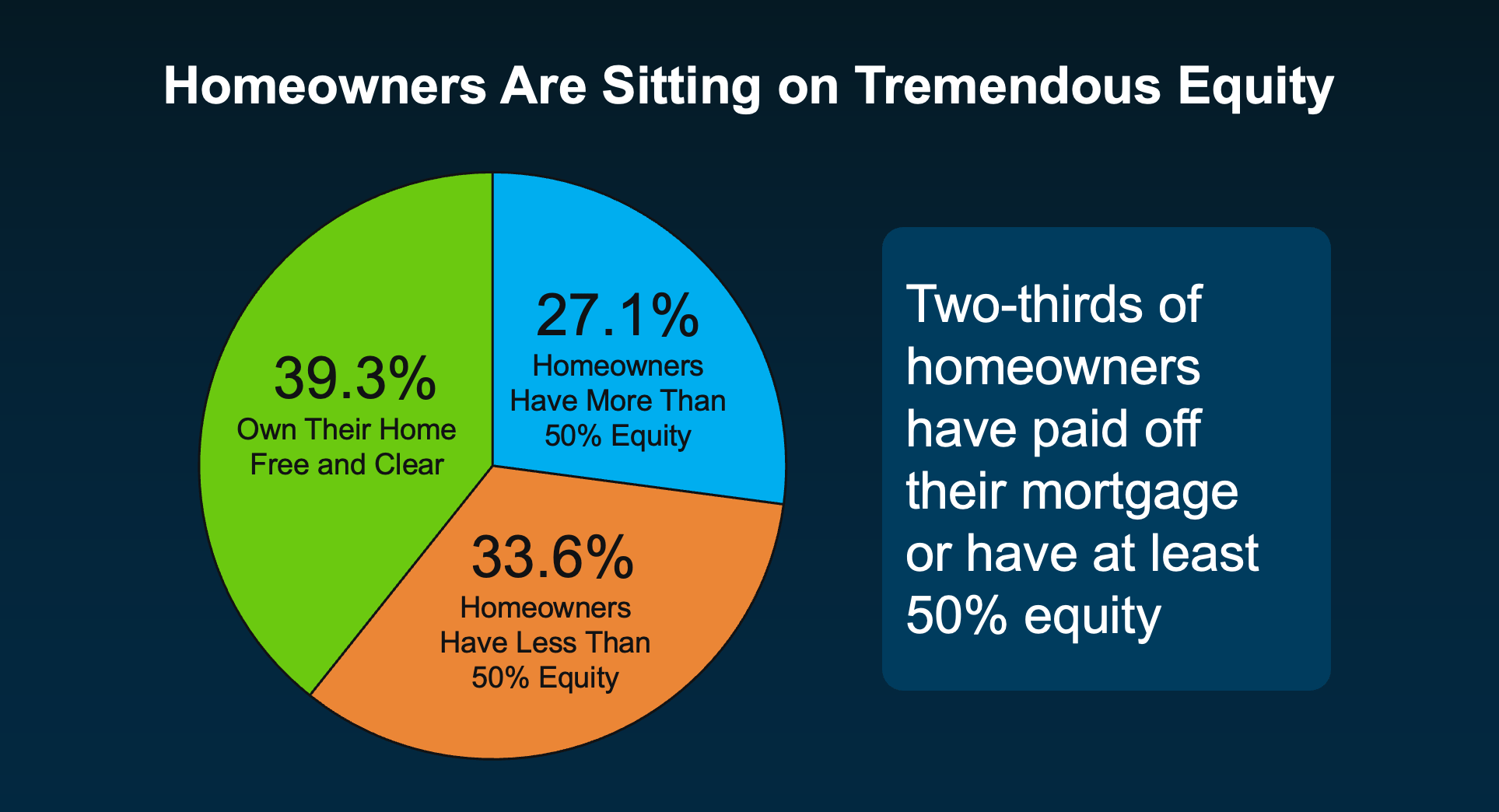
That’s a big deal. And just in case you’re wondering how that translates into real dollars, Cotality says the typical homeowner has almost $300k in equity today. That’s six figures.
And whether you have that much, even more, or a bit less, here are a few examples of how you can use it.
Ways You Could Use Your Home Equity
1. Move Into a Home That Better Fits Your Life
Your needs change over time. Maybe your home is starting to feel cramped, or maybe you have more space than you need now that your adult children have moved out. Either way, you can use your equity as a down payment on a home that’s a better fit for what you need now, and going forward. You may even have enough equity to buy your next house in cash.
2. Upgrade Your Current Home
And if you’re not ready to move just yet, you could reinvest it in your current home instead. Renovations like a kitchen refresh or updated bathrooms could add value when it’s time to sell down the line. Just be sure to talk to a real estate agent before you tackle your project list, so you can prioritize updates that’ll give you the biggest return later on.
3. Fund a Major Life Goal
Equity can also help fund your life goals – whether it’s starting a business, saving for retirement, covering education costs, or helping out someone you love. Some homeowners are even passing down some of that wealth to help fund a loved one’s down payment on a home.
4. Avoid Foreclosure in Tough Times
If you’re struggling with payments, your equity can also be a lifeline. Many homeowners who hit financial hardships can sell their homes and walk away with money in their pockets instead of facing foreclosure. If that’s something on your mind, talk to a real estate expert about your options and how your equity can help.
Your Next Steps
If you’re interested in using your equity for one of the reasons above, here’s what to do:
- Step 1: Ask a local agent for a personalized equity assessment on your home.
- Step 2: Meet with a financial advisor if you’re interested in using that equity.
Because when it comes to tapping into this resource, there are a few things you’ll want to keep in mind – like making sure you still have a good loan-to-value ratio (LTV) even if you use some of your equity.
That means, as a general rule of thumb, you want to maintain at least 20% equity in your home as a financial cushion – something many homeowners didn’t know back in the crash of 2008.
The good news is, according to the Intercontinental Exchange, most of today’s equity meets that guideline:
“As of Q4, mortgage holders have $17.3T in home equity, including $11.2T in tappable equity ‒ accessible via cash-out refinances or home equity lines while maintaining 20% equity in the property.”
Bottom Line
Your home equity is one of the biggest financial assets you have. Whether you’re thinking about moving, remodeling, or working toward a big goal, it’s worth exploring your options.
Reference: https://www.keepingcurrentmatters.com/2026/02/12/four-ways-your-home-equity-can-work-for-you/
Why Townhomes Are a Smart Choice for First-Time Buyers
Buying your first home can feel frustrating when the numbers don’t line up the way you expected. Townhomes are increasingly becoming the solution for many first-time buyers who know they’re ready to own but struggle to find something that fits both their lifestyle and budget.
Townhomes are becoming a bigger part of today’s housing supply, and that shift is opening doors for first-time buyers in a way we haven’t seen in years. That’s because they offer a more realistic path to step into homeownership without stretching yourself too thin, especially in a market where affordability can still feel tight.
There Are More Townhomes To Choose From
Builders are building more townhomes than they have in decades. In fact, when you look at data from the National Association of Home Builders, nearly 1 in 5 new single-family homes being built today is a townhome. That’s the highest share on record (see graph below):
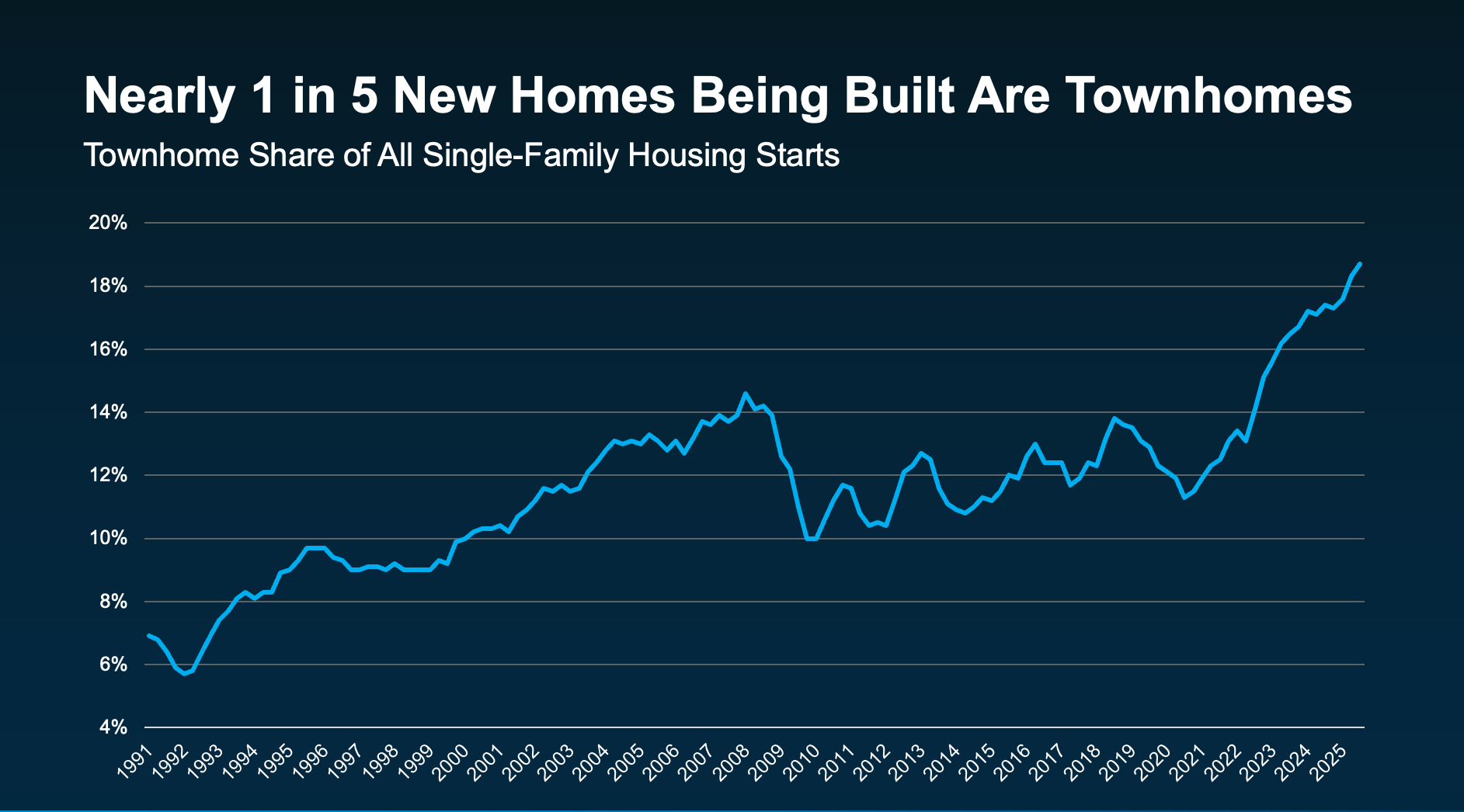
To put that in perspective, just a decade ago, townhomes made up closer to 1 in 10 new construction homes.
That gives today’s buyers far more townhome options than they had in the past. And that’s a really good thing.
Townhomes are one of the best ways for first-time buyers to finally get their foot in the door. And seeing that there’s more available for sale means one thing: you may have more opportunity to break into the market than you think.
Here’s why they’re such a popular choice for buyers like you.
Townhomes Tend To Be More Affordable
While prices vary by market, Redfin data shows townhomes are typically priced lower than detached single-family homes nationally. And that gap has grown in recent years as the supply of this type of home has grown too (see graph below):
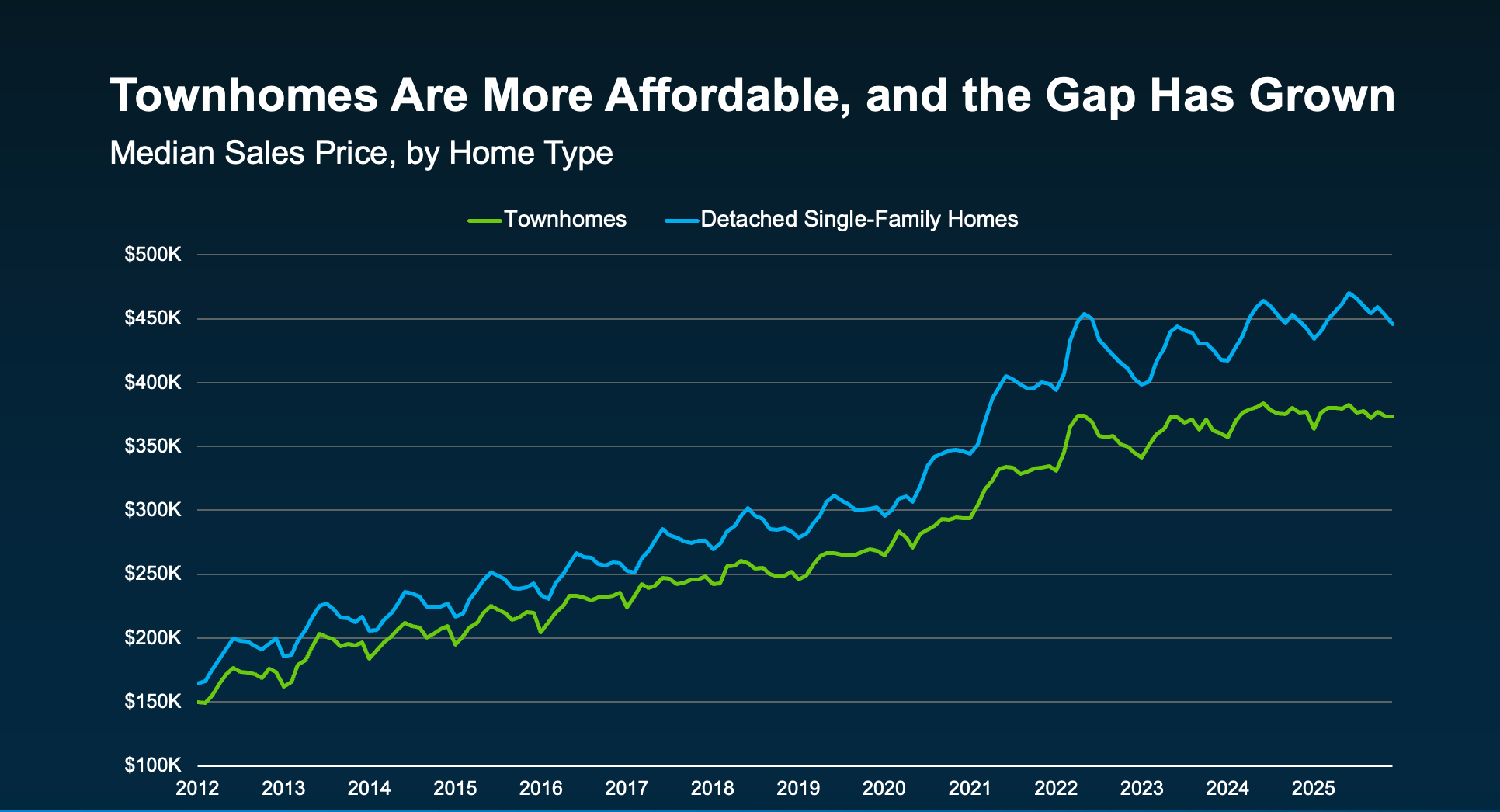
There are two main reasons you may find a better deal on a townhome today.
Reason #1: Size
Townhomes are usually smaller by design. Most modern townhomes fall in the 1,300–1,500 square foot range, which helps keep prices, and monthly payments, lower. Basically, it works like this. Since they usually have a smaller footprint, they’re cheaper to build, and that makes them less expensive to buy, too. Ali Wolf, Chief Economist at NewHomeSource, explains how this helps buyers:
“With the high cost of housing across the country, townhomes have emerged as a vital, more accessible entry point into homeownership. They are often priced lower than detached houses, offering buyers – especially first-timers, young professionals, and those downsizing – the chance to build equity without breaking the bank.”
Reason #2: Builder Motivation
And here’s another thing working in your favor. With more inventory than in recent years, homebuilders are motivated to sell what they’ve already built.
So, many may be more willing to negotiate, whether that means price flexibility, closing cost help, or potentially throwing in upgrades. According to the National Association of Realtors:
“. . . home builders say they’re ready to attract more first-time home buyers. They’re responding to affordability pressures through lower cost homes and builder incentives. About 40% of builders cut prices on newly built homes at the end of last year . . . Roughly two-thirds of builders also offered additional incentives, like mortgage rate buydowns.”
Bottom Line
If buying your first home feels just out of reach, the right option might not be a different timeline. It might be a different type of home.