Facebook
 X
X
 Pinterest
 Copy Link
It’s one of the biggest concerns many buyers have right now: “What if I buy a home and prices drop afterward?”
With so much uncertainty in the headlines, it’s understandable to feel cautious. No one wants to make a major financial decision at the wrong time. But it’s important not to focus too heavily on the few areas experiencing small price declines right now.
When you step back and look at the bigger picture, home values have historically trended upward over time.
What the Data Really Shows
Take a look at the visual below. Using data from Case-Shiller and Bilello, it highlights how home prices have performed year after year dating back to the 1950s.
Here’s the most important takeaway.
Aside from the housing crash, home prices have remained stable or appreciated in nearly every year over the past several decades (see visual below):
a chart of percentages and numbers
That’s an incredibly consistent pattern — and one that many headlines tend to overlook.
While short-term fluctuations can happen, it’s the long-term growth that matters most.
Why Prices Typically Increase Over Time
There are several key reasons home prices generally continue to rise:
People will always need housing. Life changes like new jobs, growing families, marriages, and relocations mean there will always be buyers in the market. Demand may shift at times, but the need for housing never disappears.
Inventory is still limited. Although more homes have come onto the market recently, there still aren’t enough available homes nationwide to meet buyer demand. That imbalance continues to support home prices.
Inflation plays a role. As the cost of goods and services rises over time, home values tend to rise as well.
What That Means for You as a Buyer
It’s easy to worry about where prices may go next month or even next year — especially if you’re buying your first home and making a significant financial commitment. But historically, the overall trend has been clear: home prices tend to appreciate over time.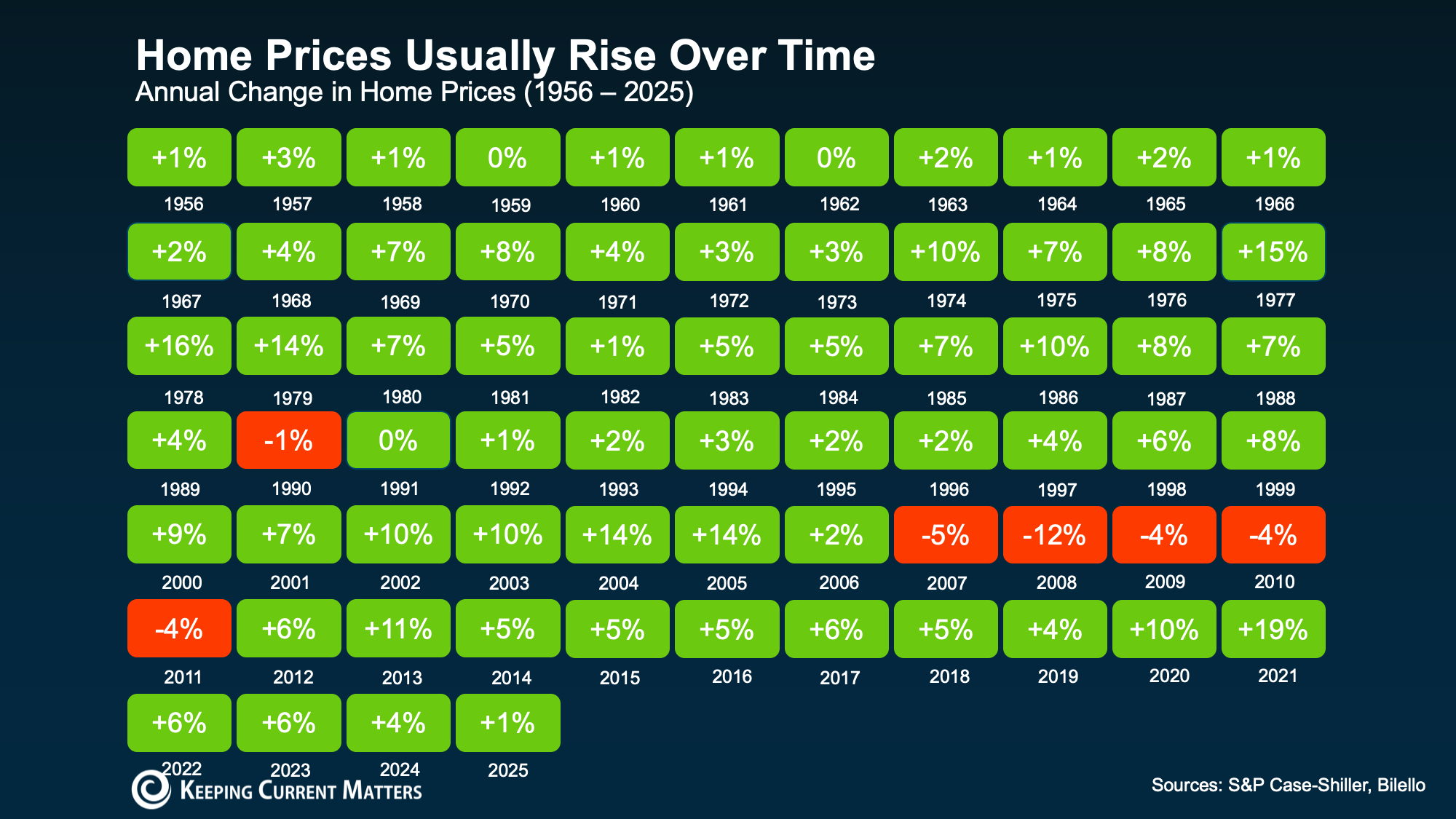
Of course, that doesn’t mean every market rises every single year. Real estate is local, and short-term changes can happen. We’re seeing some of that in certain markets today. You can even spot a few temporary declines in the visual above.
But historically, those downturns haven’t lasted forever.
That’s why buying a home is usually recommended when you plan to stay put for several years — often at least five. That timeframe can help you build equity and ride out any temporary market shifts.
And over time, rising home values can strengthen your net worth and help build long-term wealth.
The best decision isn’t about perfectly timing the market. It’s about making a move that fits your goals and staying long enough to benefit from the long-term trend.
Bottom Line
Home prices have consistently increased over the long run, which is why real estate is often viewed as a strong long-term investment.
That doesn’t mean you need to buy right now. The right time to move is when it makes sense for your situation and future plans.
But if you’ve been feeling uncertain, let this offer some reassurance. And if you’d like to talk about what’s happening in our local market, your goals, or your timeline, connect with a trusted local real estate professional.