Facebook
 X
X
 Pinterest
 Copy Link
The Top 2 Things Homeowners Need To Know Before Selling
Here’s something every homeowner should know before selling: in today’s market, the sellers who win aren’t the ones sitting on the sidelines—they’re the ones who set the right strategy from the very beginning.
Many sellers this year didn’t get the results they hoped for. But it wasn’t because the market failed them. It was because their expectations didn’t match today’s reality.
Realtor.com reports that 57% more homes were taken off the market this year compared to last. That means they listed… but never sold. And the truth is, most of those missed sales came down to two things: pricing and timing.
Here are the top lessons you can take from those sellers:
1. Price It Right from the Start
Pricing is the biggest factor that makes or breaks a sale.
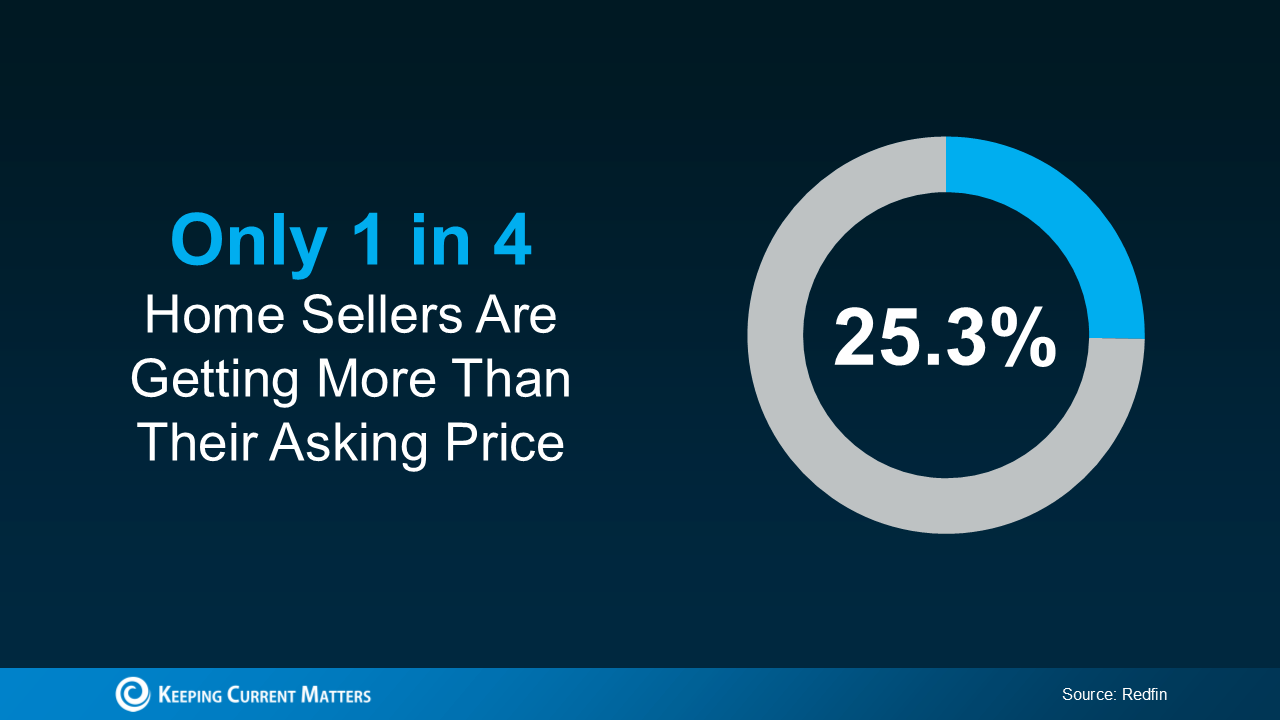
Today, 8 in 10 sellers expect to get their asking price or more—but the data tells a different story. Redfin reports that only 1 in 4 sellers (25.3%) are actually getting above list price.
A few years ago, you could list high and still attract multiple offers. But today’s buyers have more choices, and they’re being picky. If your home is even slightly overpriced, they’ll skip right past it.
Some sellers end up pulling their listings altogether—when all they really needed was a small price adjustment.
According to HousingWire, the average price reduction right now is just 4%.
That’s it. Just 4%.
If those sellers had priced 4% lower from day one, they may have already sold their home—smoothly and successfully.
Before you list, talk with your agent about how homes in your area are performing. The right agent will help you land on a competitive price that attracts buyers while still protecting your equity. And if you’ve owned your home for a while, your equity likely gives you the flexibility to price smartly and still come out ahead—something many sellers overlook.
2. Don’t Expect Overnight Results
Another common mistake: thinking your home will sell in a single weekend.
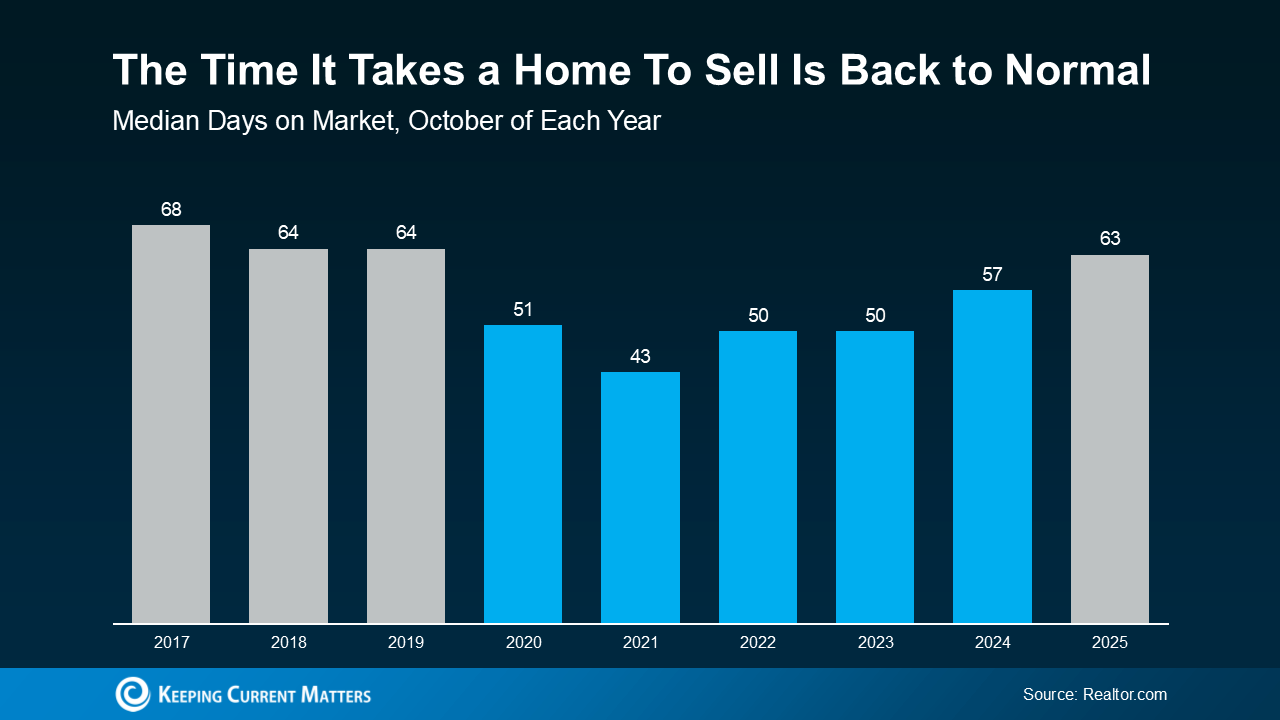
A lot of sellers still compare today’s market to the frenzy of 2020–2021, when homes were selling within hours. But those days are gone.
Right now, it takes around 60 days from listing to closing—that’s normal. It only feels slow because we’re comparing it to an unusually fast period in real estate.
Buyers today are more thoughtful and intentional. They’re taking their time to compare homes, explore options, and make confident decisions—which is actually a sign of a healthier market.
So if your home doesn’t go under contract immediately, don’t panic. It doesn’t mean it won’t sell.
To make your home stand out sooner rather than later, ask your agent about the best strategies—like staging, decluttering, professional photos, or strategic pricing—to attract serious buyers quickly.
Bottom Line
If you’re planning to sell, don’t let the headlines worry you. Let the market be your guide.
The listings that didn’t sell this year weren’t failures—they just started with the wrong strategy.
With the right price, the right timing, and a trusted local agent, you can position your home to succeed.
Because in today’s market, winning isn’t about waiting for things to change—it’s about setting the right expectations from day one.
The Housing Market Is Gaining Momentum Heading Into 2026

After years of high mortgage rates and cautious buyers, the housing market is finally showing signs of renewed momentum. Sellers are returning, buyers are re-engaging, and for the first time in a while, there’s real movement again.
No, it’s not a surge—but it is a meaningful shift that could set the tone for a stronger market in 2026.
Here are three key trends driving the comeback:
1. Mortgage Rates Are Trending Down
Rates will always fluctuate, especially with today’s economic uncertainty, but the bigger picture is what matters. Overall, mortgage rates have been trending down for most of the year—and the past few months have brought the best rates of 2025.
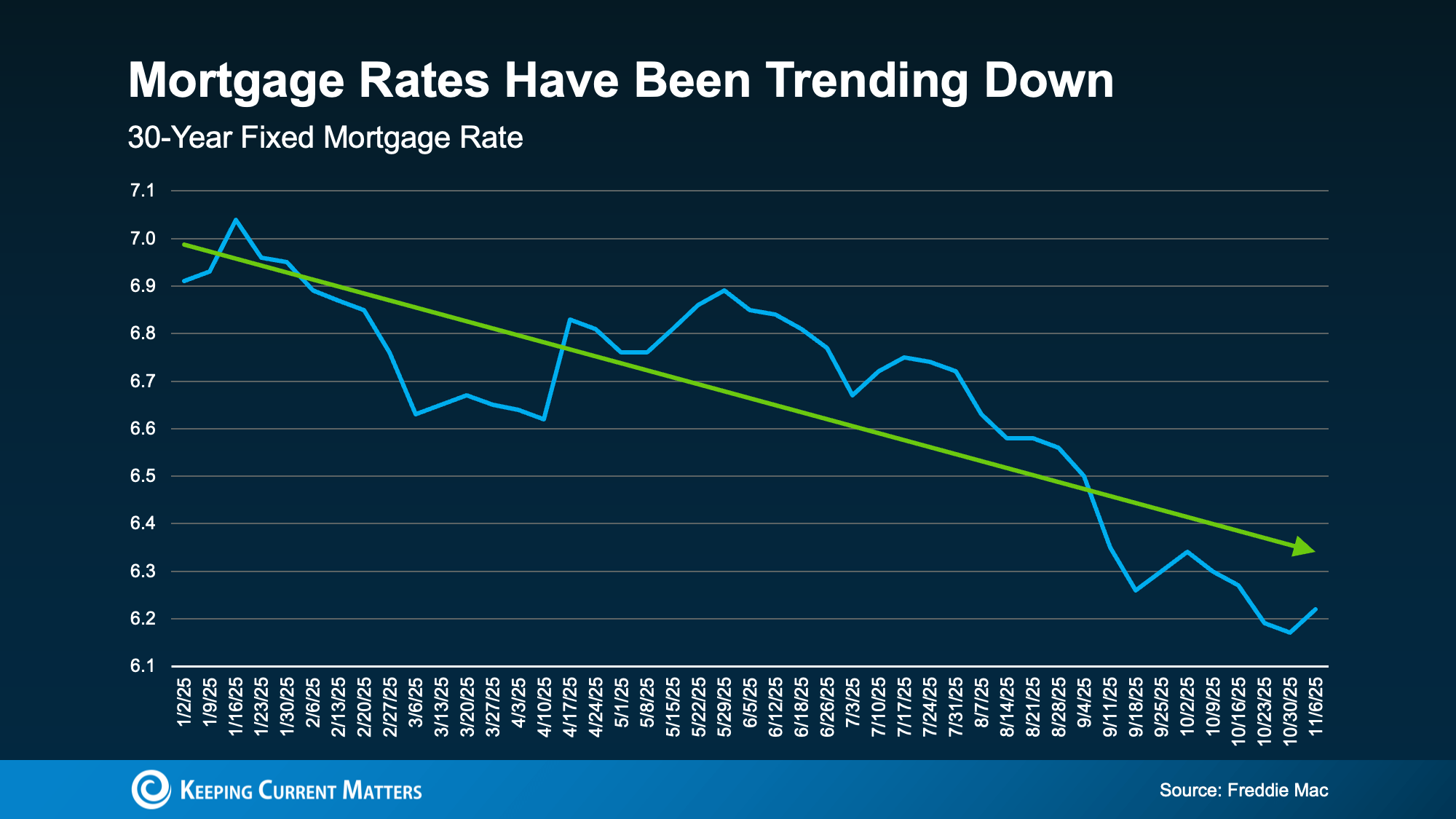
As Sam Khater, Chief Economist at Freddie Mac, notes:
“On a median-priced home, this could allow a homebuyer to save thousands annually compared to earlier this year, showing that affordability is slowly improving.”
Lower rates mean more buying power. Redfin data shows that a buyer with a $3,000 monthly budget can now afford about $25,000 more home than they could a year ago. That’s one of the reasons activity is picking up.
2. More Homeowners Are Listing Again
For years, many homeowners stayed put because they didn’t want to give up their low mortgage rate—creating the “lock-in effect.” But as rates ease, more homeowners are choosing to move for life-driven reasons, and it’s boosting inventory.
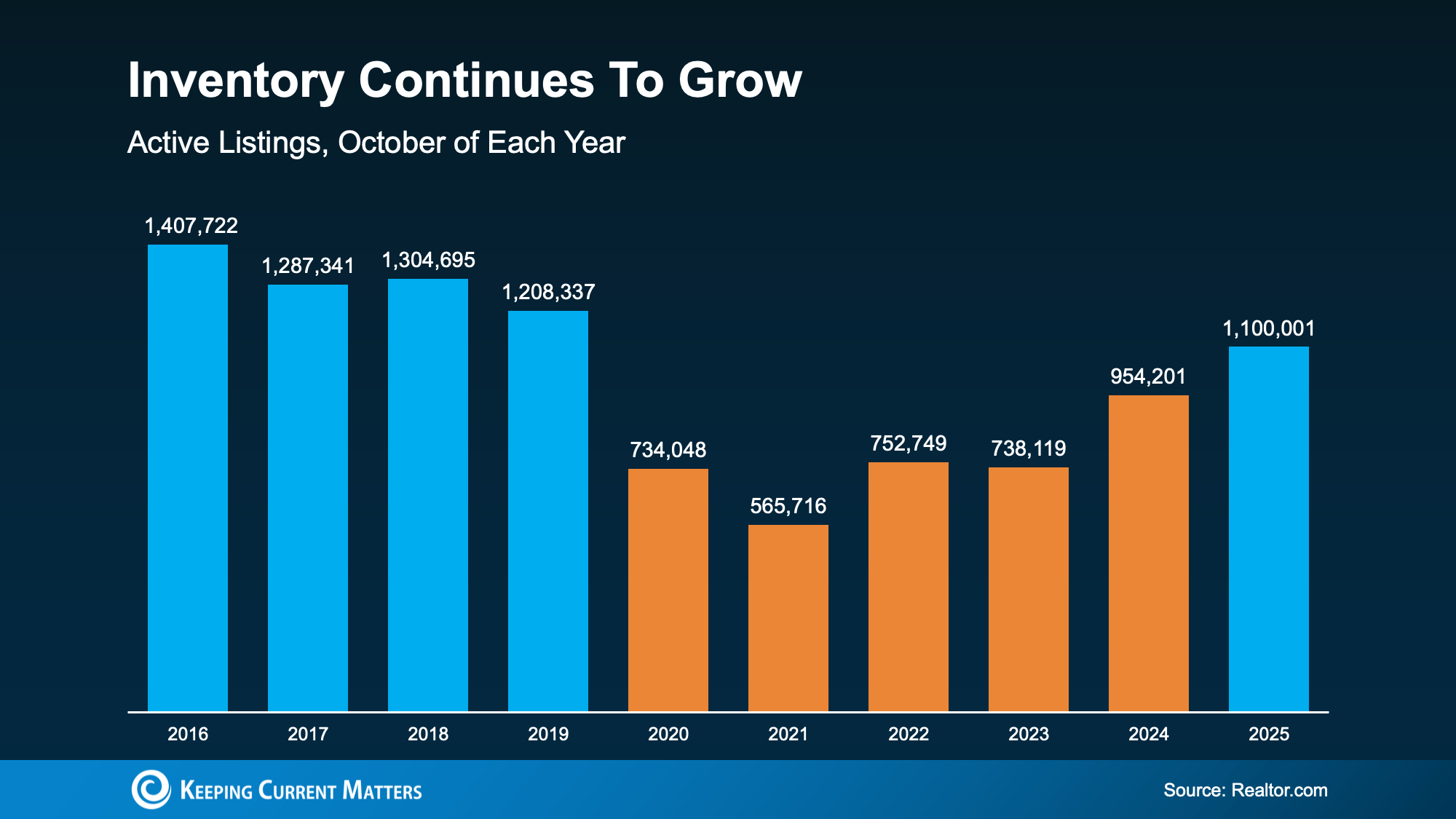
Realtor.com data shows inventory has grown significantly and is approaching levels not seen in six years. This is great news for buyers who’ve had limited options for too long, and it brings the market closer to balance.
3. Buyers Are Coming Back
With more homes to choose from and slightly improved affordability, buyers are returning as well. The Mortgage Bankers Association reports that purchase applications are up over last year—clear evidence that demand is building.
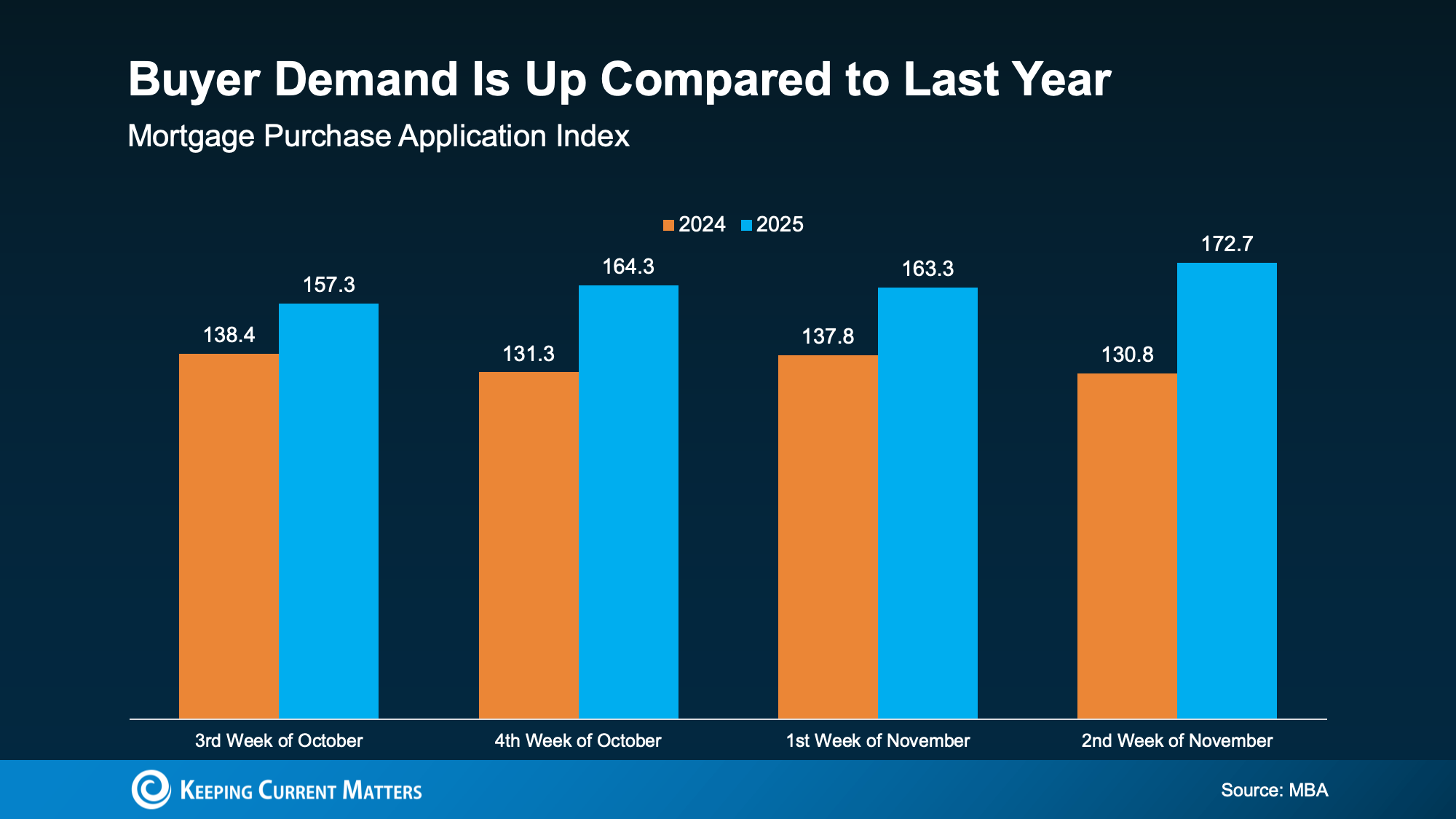
Economists from Fannie Mae, MBA, and NAR all expect moderate sales growth as we move toward 2026.
Bottom Line
After several slower years, the market is finally turning a corner. Falling mortgage rates, rising inventory, and growing buyer demand all point to steady progress ahead.
If you’re thinking about buying or selling, now is a great time to connect with a local real estate agent and plan for what’s coming in 2026.

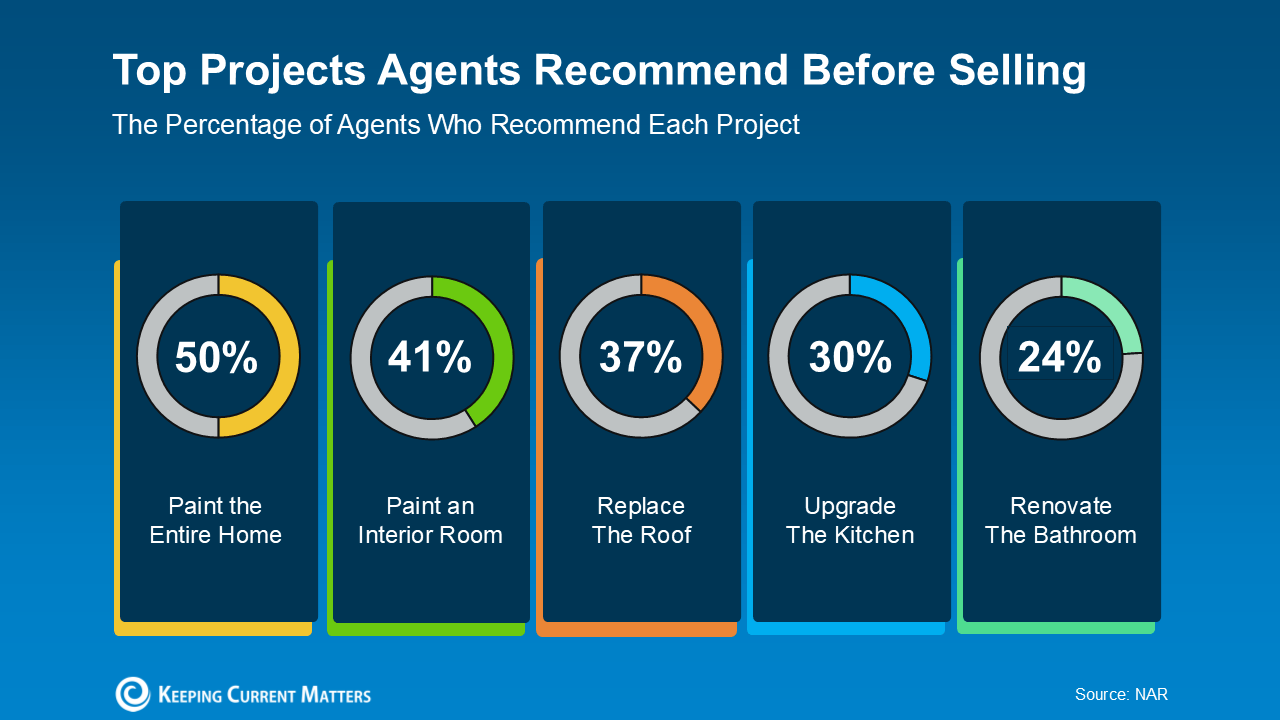
Thought the Market Passed You By? Think Again.

If you stepped back from your home search over the past few years, you’re not alone – and you’re definitely not out of options. In fact, now might be the ideal time to take another look. With more homes to choose from, prices leveling off in many areas, and mortgage rates easing, today’s market is offering something you haven’t had in a while: options.
Experts agree, buyers are in a better spot right now than they’ve been in quite a long time. Here’s what they have to say.
Affordability Is Finally Improving
Lisa Sturtevant, Chief Economist at Bright MLS, says affordability is finally starting to turn the corner:
“Slower price growth coupled with a slight drop in mortgage rates will improve affordability and create a window for some buyers to get into the market.”
Mortgage rates have eased from their recent highs, price growth has slowed, and that one-two combo is making homes more affordable than they’ve been in months.
There Are More Homes on The Market
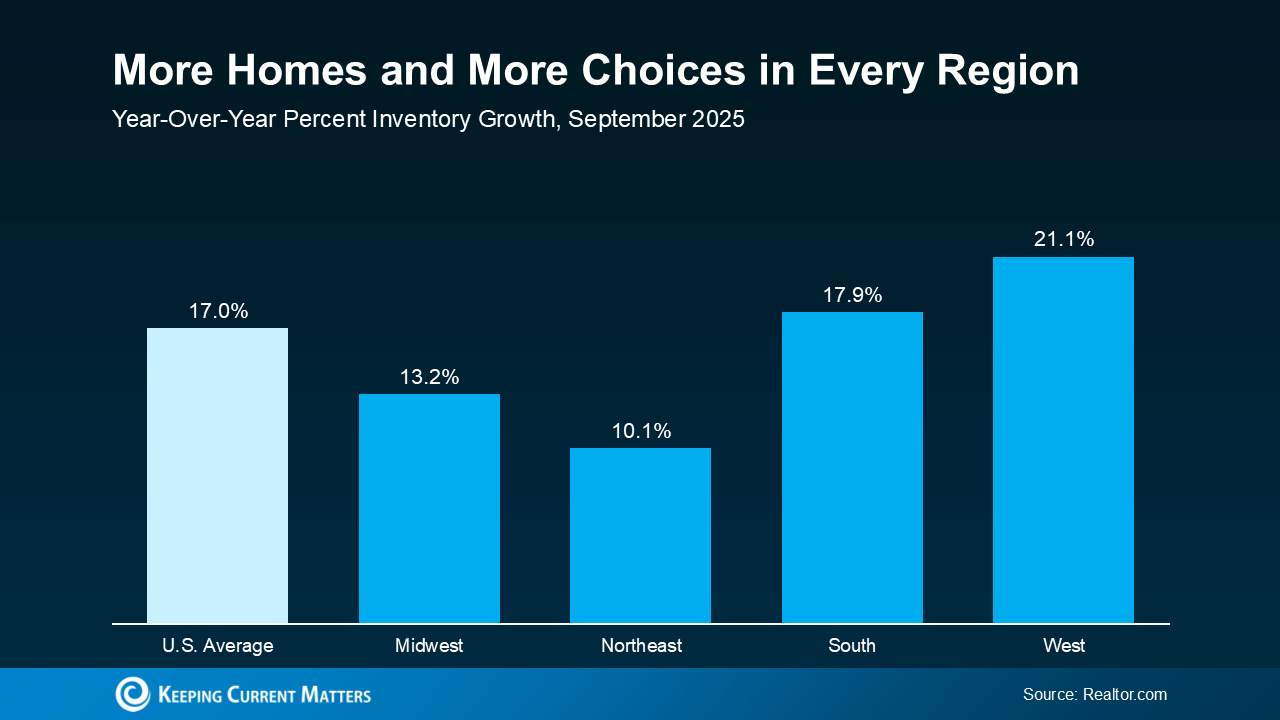
And a big reason prices are easing is because there are more homes on the market. According to the latest from Realtor.com, there are 17% more homes for sale today than there were at this time last year. That means more options, less competition with other buyers, and a chance to find the space that actually works for you.
Lawrence Yun, Chief Economist at the National Association of Realtors (NAR), shares:
“Homebuyers are in the best position in more than five years to find the right home and negotiate for a better price. Current inventory is at its highest since May 2020, during the COVID lockdown.”
Take a look at the numbers.
As Yun notes, inventory is up everywhere. Compared to this time last year, every region of the country has more homes on the market than at this time last year (see graph below):
 That translates to more homes to choose from, whether you’re looking for a bigger backyard, a shorter commute, or finally ditching your rental.
But not all markets are the same…
When you compare current inventory growth to pre-pandemic norms (2017–2019), the picture changes a bit, depending on where you are (see graph below):
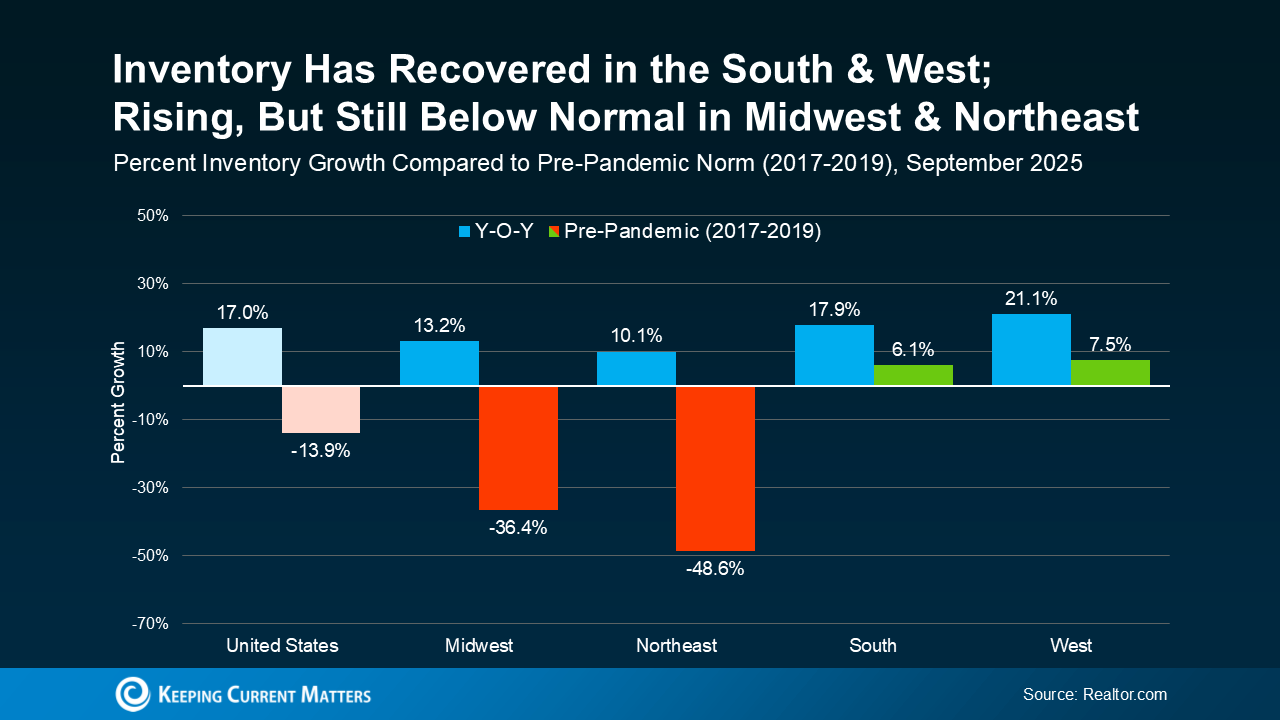 The green bars show where inventory has fully recovered (and even grown above pre-pandemic levels) in the South and the West. Supply, however, is still tighter in the Northeast and Midwest, as shown in the red bars, where inventory is still below normal.
And here’s why that’s still a win everywhere.
When you step back and look at the bigger picture, with inventory up in every region, that means more choices everywhere, even if some areas have more homes for sale than others.
And with fewer buyers in the market and more homes for sale, sellers are willing to negotiate to get a deal done.
All of that adds up to a win for today’s buyers.
And it’s also why working with a local expert really makes a difference. What’s happening in your zip code or neighborhood might look different than the national or regional trend. But the overall takeaway is clear: with more homes on the market, buyers have more leverage than they did a year or more ago.
So, if you stepped away from your search because things felt too competitive, too pricey, you were worried about finding a home, or it was all just too much to process, this could be your moment to take another look.
And if you’re not quite ready to go all in, that’s okay too. You can start by planning ahead. That means working with a trusted agent who can help you break down your budget, narrow your search, and make sure you’re prepped and ready when the right home hits the market.
Bottom Line
Want to know what’s happening in your local market? Reach out to a trusted real estate agent and ask for a custom overview of what’s available right now, so you can learn how to be ready when the timing is right for you.
Because this isn’t 2021.
This isn’t even 2023 or 2024.
This is a new market – and you might be surprised by what you find.
The Reason Homes Feel Like They Cost So Much (It’s Not What You Think)

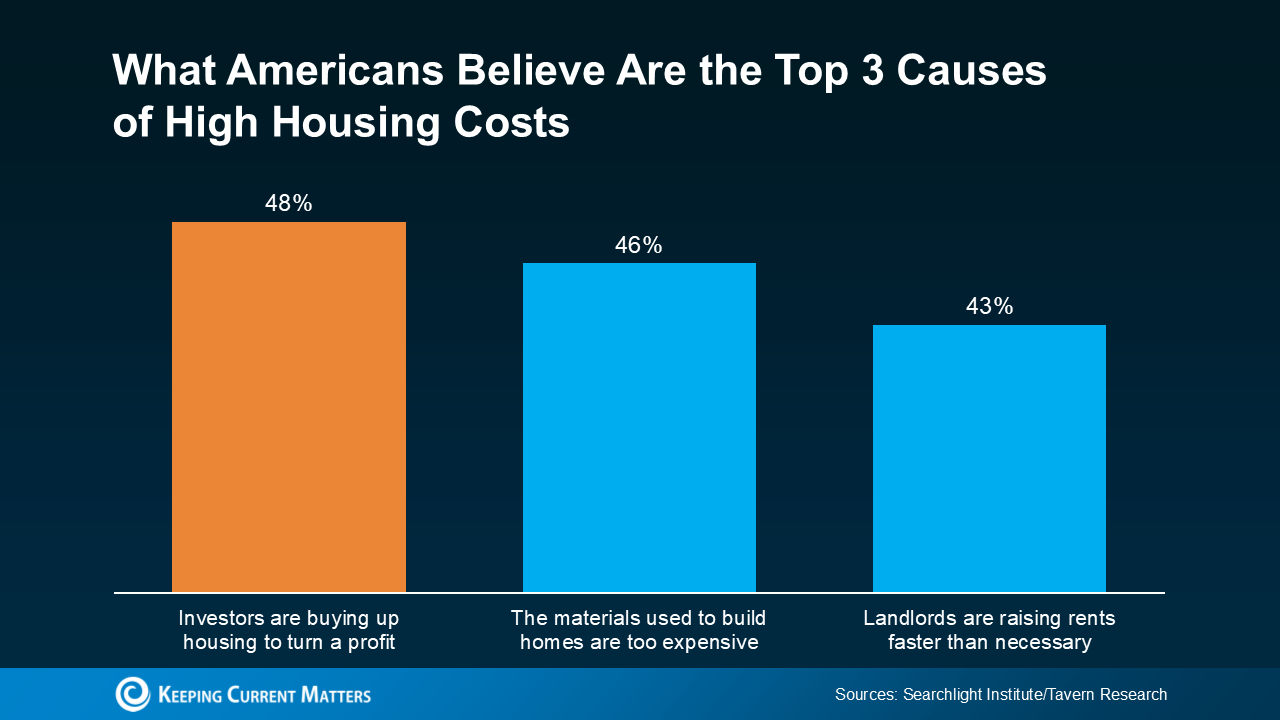
Scroll through social media and you’ll see plenty of blame being thrown around about why homes are so expensive. According to a recent national survey, many people point the finger at big investors.
However, the numbers tell a different story. Nearly half of Americans surveyed (48%) believe investors are the main reason housing costs so much — but the data doesn’t back that up.
The Real Story About Investors
While investors do play a role in the housing market — especially in certain areas — they aren’t buying up all the available homes as many online posts suggest.
Realtor.com found that large investors (those who own more than 50 properties) made up only 2.8% of all home purchases last year. That means about 97% of homes were bought and sold by everyday buyers and sellers, not big corporations.
As Danielle Hale, Chief Economist at Realtor.com, puts it:
“Investors do own significant shares of the housing stock in some neighborhoods, but nationwide, the share of investor-owned housing is not a major concern.”
What’s Actually Driving Home Prices
If investors aren’t the main reason, what is? The real issue is simple — there aren’t enough homes.
Robert Dietz, Chief Economist at the National Association of Home Builders (NAHB), explains:
“It’s been popular among some to blame investors, but the economics don’t support that. The main factor behind rising housing costs is the shortage itself — there’s a mismatch between the number of households and the available housing supply.”
In other words, the lack of inventory — not investor activity — is what’s keeping prices high across the country.
Bottom Line
It’s easy to assume investors are behind today’s housing challenges, but the truth is, the market just needs more homes. The good news? More listings are finally starting to appear, which could make buying feel a bit more achievable again.
If you’re thinking about buying or selling, connect with a local real estate agent to get the latest insights on what’s happening in your area.
2026 Housing Market Outlook

After a few years where the housing market seemed stuck in neutral, 2026 could finally be the year things pick up again. Experts are predicting that more people will be ready to move — and that could create new opportunities for you, too.
More Homes Expected To Sell
Over the past few years, many potential movers hit pause because of affordability challenges. But that pause can’t last forever — life happens, and people still need to relocate. Experts believe more of those moves will start happening in 2026 (see graph below):
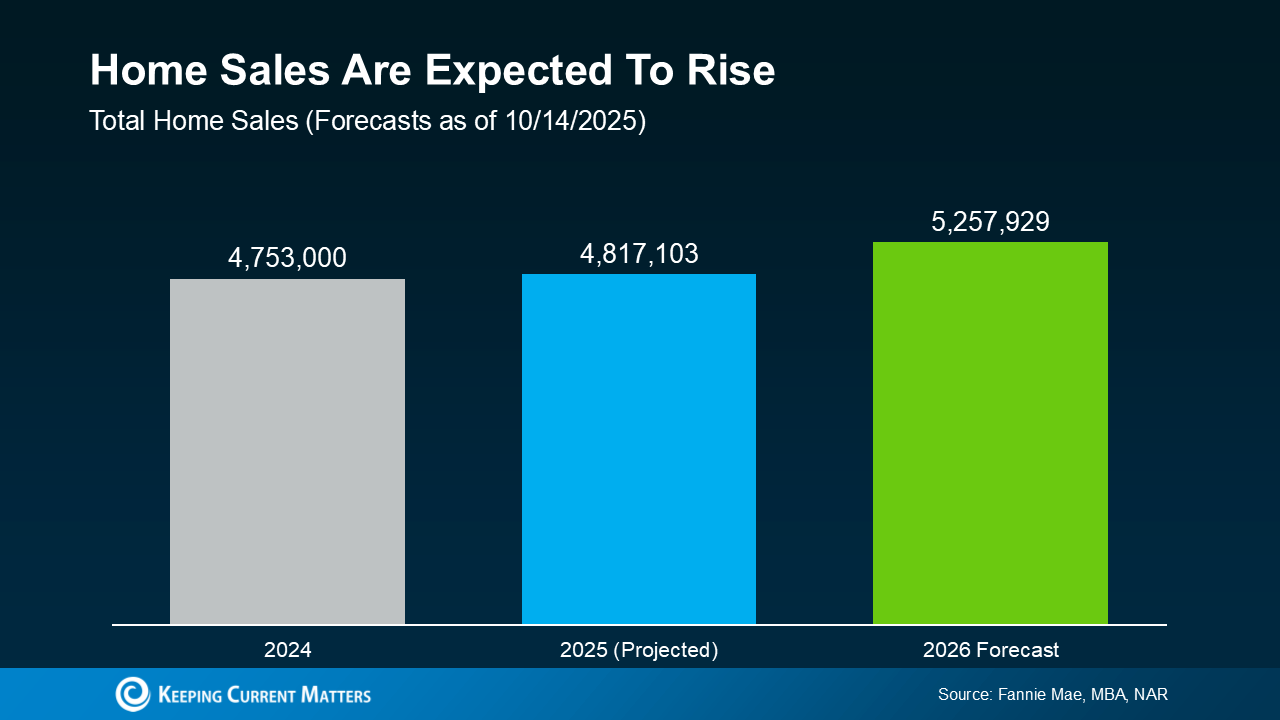
What’s driving this change? Two major factors: mortgage rates and home prices. Let’s take a look at what experts are forecasting for both.
Mortgage Rates May Continue To Ease
One thing nearly every buyer has been hoping for is lower mortgage rates. After peaking around 7% earlier this year, rates have already started to come down — and that trend may continue into 2026 (see graph below):
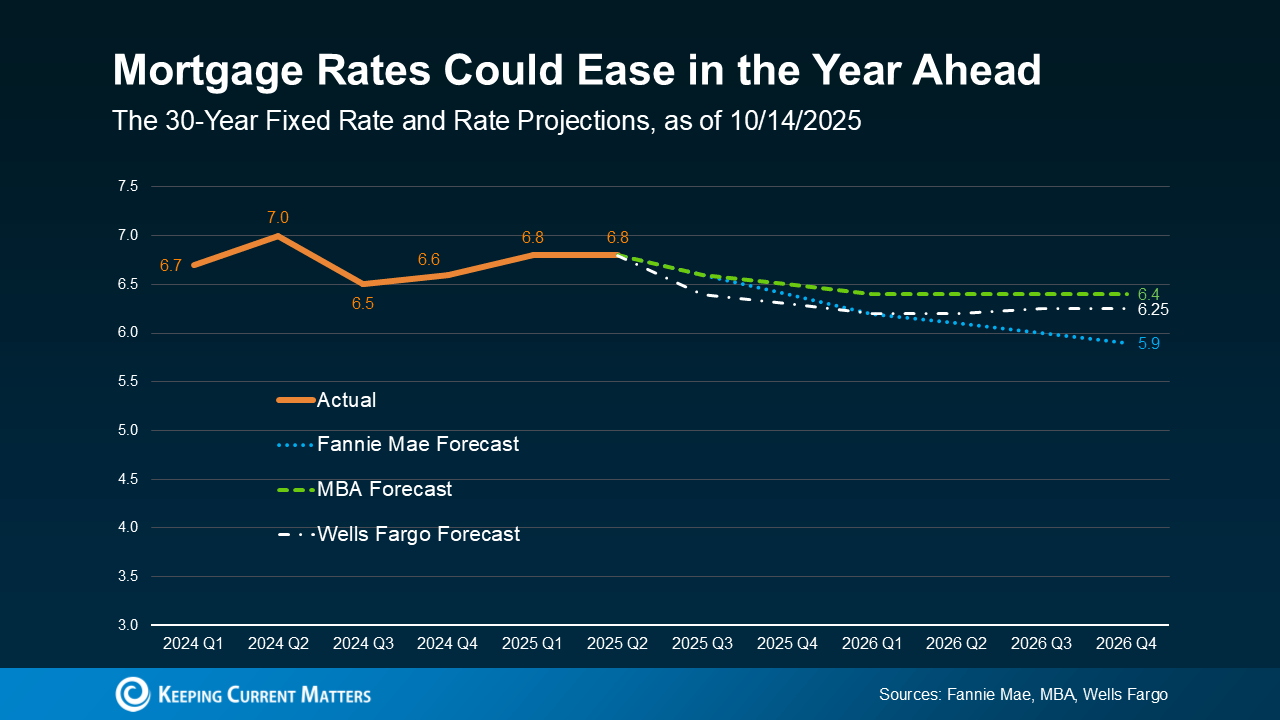
As the saying goes: when rates go up, they take the escalator — but when they come down, they take the stairs. In other words, the path to lower rates will be gradual and sometimes uneven. Expect slight, steady improvements through next year, with some ups and downs along the way as new economic data comes out.
Even modest declines can make a noticeable difference. Compared to when rates were around 7%, today’s lower rates already mean hundreds of dollars in monthly savings for many buyers. That can make a real impact on affordability.
Home Prices Will Rise at a Steady Pace
What about home prices? Nationally, they’re projected to keep rising — just at a more moderate rate. With mortgage rates easing, more buyers will re-enter the market, which will keep demand strong enough to prevent major price drops.
While a few markets may experience slight declines, there’s no sign of a major crash. In fact, even areas seeing small dips are still up compared to several years ago.
Price trends will vary by location, depending on local inventory and demand, but overall, experts expect modest national appreciation (see graph below):
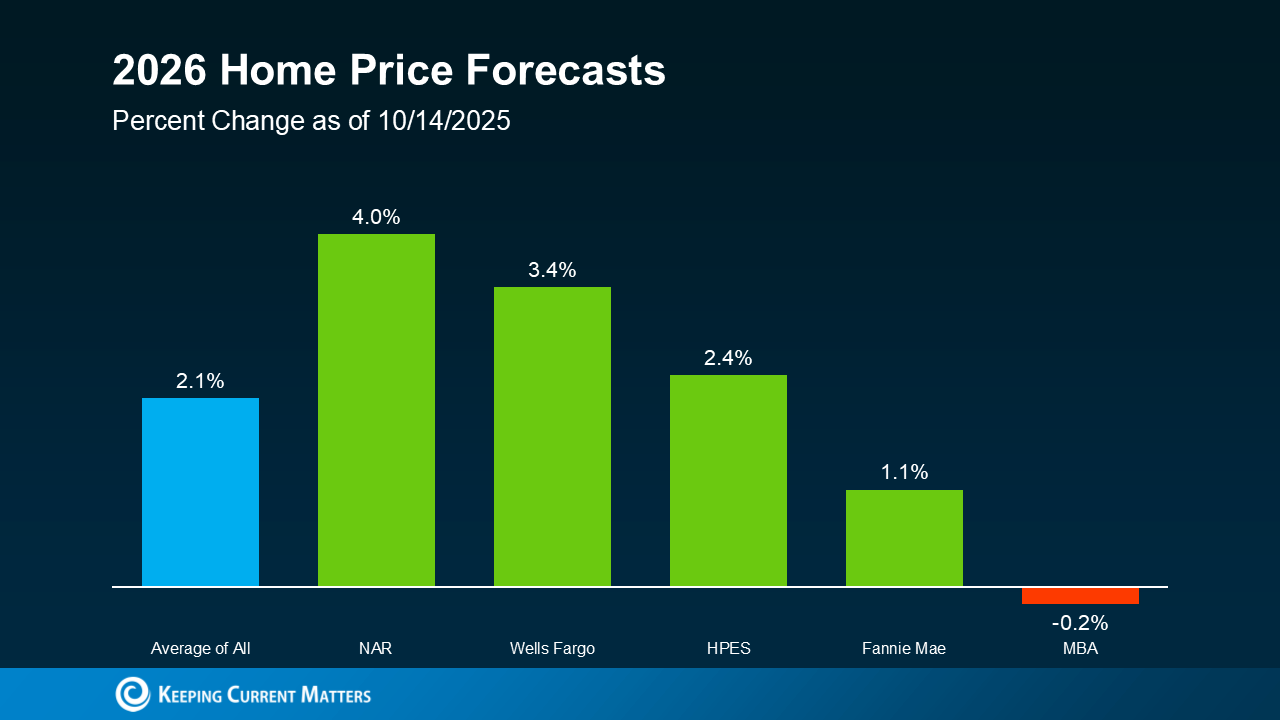
This moderation is actually good news. A steadier, more predictable rate of price growth makes it easier for buyers to plan — and gives more confidence that prices won’t spike overnight.
Bottom Line
After a slower stretch, 2026 is shaping up to be a year of renewed movement and opportunity. With sales likely to increase, mortgage rates easing, and price growth leveling out, the housing market could be headed toward a healthier balance.
So, the real question is: will 2026 be your year to make a move?
Connect with a trusted agent now to start preparing.
Why More Buyers Are Turning to New Construction This Year?

There’s a trend taking hold in real estate right now: more buyers are choosing newly built homes. And it’s not just about getting the latest technology or modern floorplans. It’s because they may be able to get a better deal.
Builders are offering serious incentives today, and people are jumping on them. In fact, new home sales just hit their highest level in over two years.
Why Builders Are Throwing in Perks
There are more newly built homes for sale right now than there have been in years. And as a buyer, that can help you in two big ways. It gives you more options to choose from on the market, and it motivates builders to sell their inventory before they build more.
That’s exactly why more buyers are scoring incentives like these:
- Mortgage rate buydowns to shrink your monthly payment
- Price cuts that make homeownership more attainable
- Help with closing costs and even upgrades in some communities
The best part is, a lot of builders are offering these perks right now. According to Zonda, nearly 6 out of 10 new home communities are doing incentives on to-be-built homes. And over 75% are doing the same for quick move-ins, which are homes that are already built and ready to move into. As real estate analyst Nick Gerli explains:
“. . . builders are adjusting to the realities of the current housing market. They’ve cut prices 13 percent from peak, and are giving generous mortgage rate buydowns on top of that.”
The big takeaway is: builders are motivated to sell. So, you could snag a lower price and maybe even a lower mortgage rate if you buy new. If you’ve been feeling priced out, these offers might be your way back in.
You Have More Brand-New Options Than Normal
Since there are more new homes on the market than usual, that gives you more options than you’ve had in years. Whether you’re looking for something turnkey or want to personalize a build, odds are there’s more available near you than you may realize.
Even though the number of new homes for sale is up throughout the country, there are pockets where you have an even better chance to find a better price. According to Census data, here’s a high-level look at which parts of the country are seeing the biggest boost in newly built homes.
Both the South and West have more new homes available, so you may find builders are even more willing to negotiate in these regions.
Just know that this opportunity won’t last forever. Recent data shows builders are slowing down their production efforts. And a lot of that is to avoid having too many homes for sale. As Robert Dietz, Chief Economist at the National Association of Home Builders (NAHB), explains:
“The slowdown in single-family home building has narrowed the home building pipeline. There are currently 621,000 single-family homes under construction, down 1% in July and 3.7% lower than a year ago. This is the lowest level since early 2021 as builders pull back on supply.”
Moving forward, the number of new options may start to shrink as builders focus more on selling what’s already built before they add more. So, the best time in years to buy a new home may actually be right now.
Bottom Line
With builders cutting prices and maybe even helping you score a lower monthly payment, that’s not something to overlook.
If you want to see how active builders are in your target area and what they’re offering, here’s your power move: before you even begin looking, connect with your own agent.
That way, you have someone to help you compare incentives from multiple builders and negotiate on your behalf, making sure you get the best deal possible.
Why Experts Say Mortgage Rates Should Ease Over the Next Year

You want mortgage rates to fall – and they’ve started to. But is it going to last? And how low will they go?
Experts say there’s room for rates to come down even more over the next year. And one of the leading indicators to watch is the 10-year treasury yield. Here’s why.
The Link Between Mortgage Rates and the 10-Year Treasury Yield
For over 50 years, the 30-year fixed mortgage rate has closely followed the movement of the 10-year treasury yield, which is a widely watched benchmark for long-term interest rates
When the treasury yield climbs, mortgage rates tend to follow. And when the yield falls, mortgage rates typically come down.
It’s been a predictable pattern for over 50 years. So predictable, that there’s a number experts consider normal for the gap between the two. It’s known as the spread, and it usually averages about 1.76 percentage points, or what you sometimes hear as 176 basis points.
The Spread Is Shrinking
Over the past couple of years, though, that spread has been much wider than normal. Why? Think of the spread as a measure of fear in the market. When there’s lingering uncertainty in the economy, the gap widens beyond its usual norm. That’s one of the reasons why mortgage rates have been unusually high over the past few years.
But here’s a sign for optimism. Even though there’s still some lingering uncertainty related to the economy, that spread is starting to shrink as the path forward is becoming clearer.
And that opens the door for mortgage rates to come down even more. As a recent article from Redfin explains:
“A lower mortgage spread equals lower mortgage rates. If the spread continues to decline, mortgage rates could fall more than they already have.”
The 10-Year Treasury Yield Is Expected To Decline
It’s not just the spread, though. The 10-year treasury yield itself is also forecast to come down in the months ahead. So, when you combine a lower yield with a narrowing spread, you have two key forces potentially pushing mortgage rates down going into next year.
This long-term relationship is a big reason why you see experts currently projecting mortgage rates will ease, with a fringe possibility they’ll hit the upper 5s toward the end of next year.
Here’s how it works. Take the 10-year treasury yield, which is sitting at about 4.09% at the time this article is being written, and then add the average spread of 1.76%. From there, you’d expect mortgage rates to be around 5.85%.
But remember, all of that can change as the economy shifts. And know for certain that there will be ups and downs along the way.
How these dynamics play out will depend on where the economy, the job market, inflation, and more go from here. But the 2026 outlook is currently expected to be a gradual mortgage rate decline. And as of now, things are starting to move in the right direction.
Bottom Line
Keeping up with all of these shifts can feel overwhelming. That’s why having an experienced agent or lender on your side matters. They’ll do the heavy lifting for you.
If you want real-time updates on mortgage rates, reach out to a trusted agent or lender who can keep you in the loop and help you plan your next move.
Should You Still Expect a Bidding War?

If you’re still worried about having to deal with a bidding war when you buy a home, you may be able to let some of that fear go.
While multiple-offer situations haven’t disappeared entirely, they’re not nearly as common as they used to be. In fact, a recent survey shows agents reported only 1 in 5 homes (20%) nationally received multiple offers in June 2025.
That’s down from nearly 1 in 3 (31%) just a year ago – and dramatically lower than in June 2023 (39%)
This trend means you should face less competition when you buy. That gives you more time to make decisions and the ability to negotiate price or terms.
It Still Depends on Where You’re Buying
Of course, national trends don’t tell the full story. Local dynamics matter, a lot. This second graph uses survey data from John Burns Research & Consulting (JBREC) and Keeping Current Matters (KCM) to break things down by region to prove just how true that is. It shows, while the share of homes getting multiple offers has dropped pretty much everywhere, some areas are still seeing more offers than others:
In the Northeast, 34% of homes (roughly 1 in 3) are still receiving multiple offers. That’s more than the national average. But in Southeast, that number drops to just 6%.
What’s behind the difference? In general, the areas still seeing bidding wars tend to have lower-than-normal inventory. That imbalance between buyers and available homes keeps pressure on prices and competition. But markets with more listings are seeing conditions cool – and that means fewer bidding wars.
Sellers Are More Flexible Than You Might Think
Here’s another shift to show you just how much things have changed. According to a Redfin report, almost half of sellers are offering concessions, like covering their buyer’s closing costs or dropping their asking price to get their house sold.
That’s a clear sign this isn’t the same ultra-competitive market we saw a few years ago. Back then, sellers rarely compromised. And buyers often waived their inspection or appraisal to try to make their offer stand out. Now, things are different.
But again, how often this is happening is going to vary based on where you’re looking to buy. And that’s why you need a local agent’s expertise.
Bottom Line
If concerns about bidding wars have been holding you back, it may be time to take another look. Nationally, competition is down. In some markets, it’s down significantly. And with more sellers offering concessions, buyers today have more power and flexibility than they’ve had in a long time.
Want to find out what the market looks like where you’re buying? Connect with a local agent.
Do You Know How Much Your House Is Really Worth?
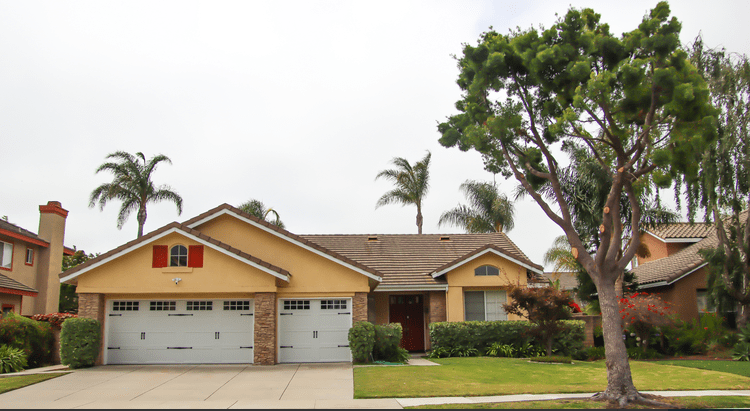
When was the last time you checked your home’s value?
If you’re like most homeowners, probably not as often as you should. And here’s why that matters: your home is likely the biggest financial asset you own — and it’s been quietly growing your wealth in the background.
What’s Home Equity?
Home equity is the difference between what your house is worth today and what you still owe on your mortgage. For example: if your home is worth $500,000 and you owe $200,000, you’ve got $300,000 in equity. That’s real wealth you can use.
In fact, the average homeowner today has around $302,000 in equity, according to CoreLogic.
Why You Probably Have More Than You Think
Home prices have soared. Over the past five years, prices are up nearly 54% nationwide. Even with some recent market shifts, long-time homeowners are still sitting on big gains.
People are staying put longer. The typical homeowner stays in their home for about 10 years. That’s a decade of paying down your loan and watching your home’s value climb.
The result? On average, homeowners have gained $201,600 in wealth over the past 10 years just from rising prices.
What Can You Do with Your Equity?
Move Up: Use it as a down payment (or even all cash) for your next home.
Renovate: Upgrade your space and add even more value.
Invest in Your Dreams: Start a business, pay for education, or boost your retirement savings.
👉Bottom Line
Your house isn’t just where you live — it’s a wealth-building tool. If you’re curious about how much equity you have, reach out to a trusted local agent. You might be surprised at how much your home is really worth.