Facebook
 X
X
 Pinterest
 Copy Link

You’ve probably seen headlines saying home prices are cooling. While that’s true on a national level, it doesn’t tell the whole story. Real estate is local, and what’s happening in one market can be very different from another.
Some areas continue to experience steady home price appreciation, while others have leveled off or even seen slight declines. So what’s driving the difference?
Inventory Is the Biggest Factor
The answer comes down to one key thing: the number of homes available for sale.
When more homes are on the market, buyers have more choices. That means less competition for each property, giving buyers more negotiating power and making it harder for sellers to push prices higher.
On the other hand, when inventory remains limited, buyers compete for fewer available homes. Increased competition often leads to stronger prices and continued appreciation.
This trend is playing out across the country today.
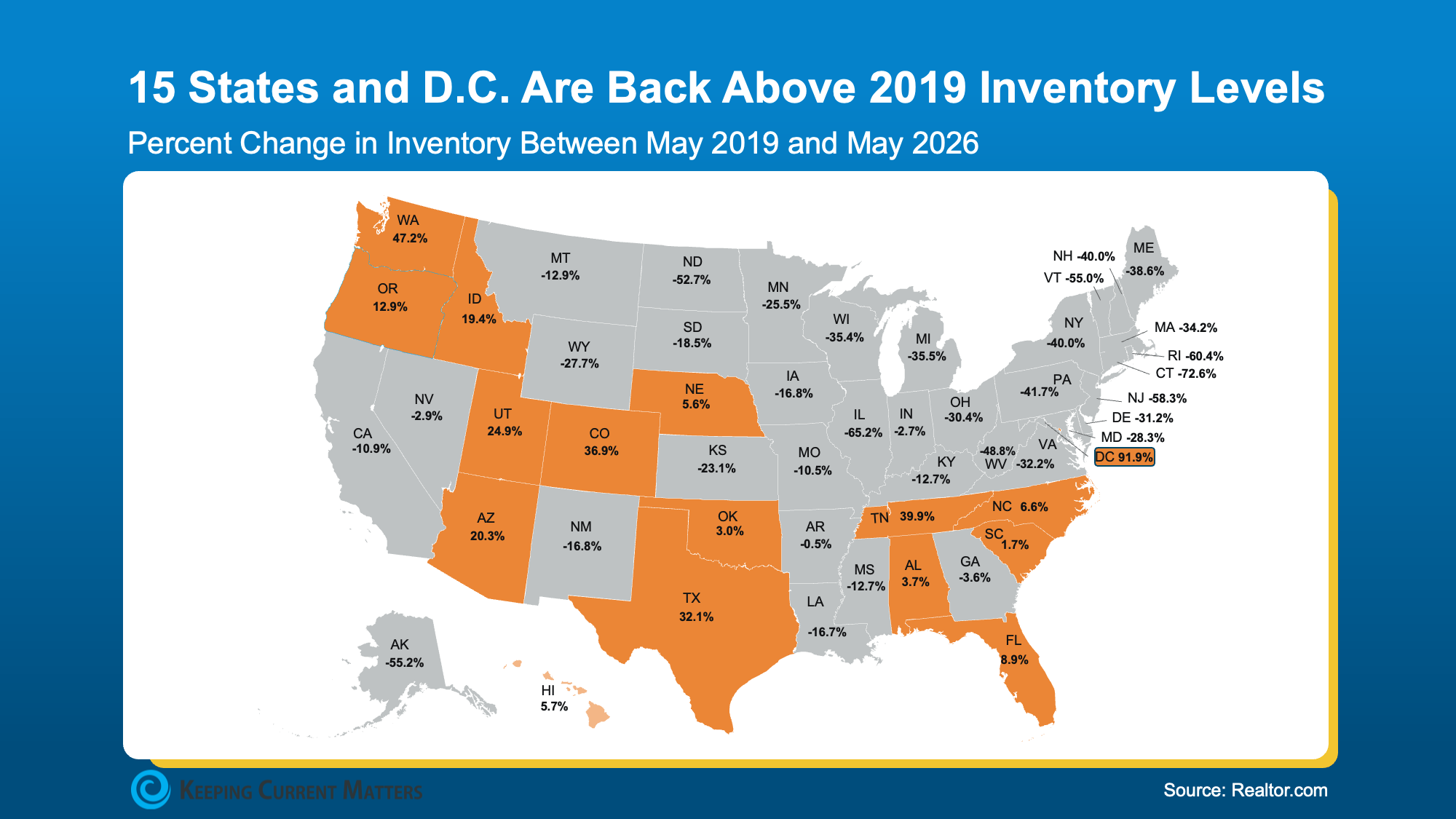
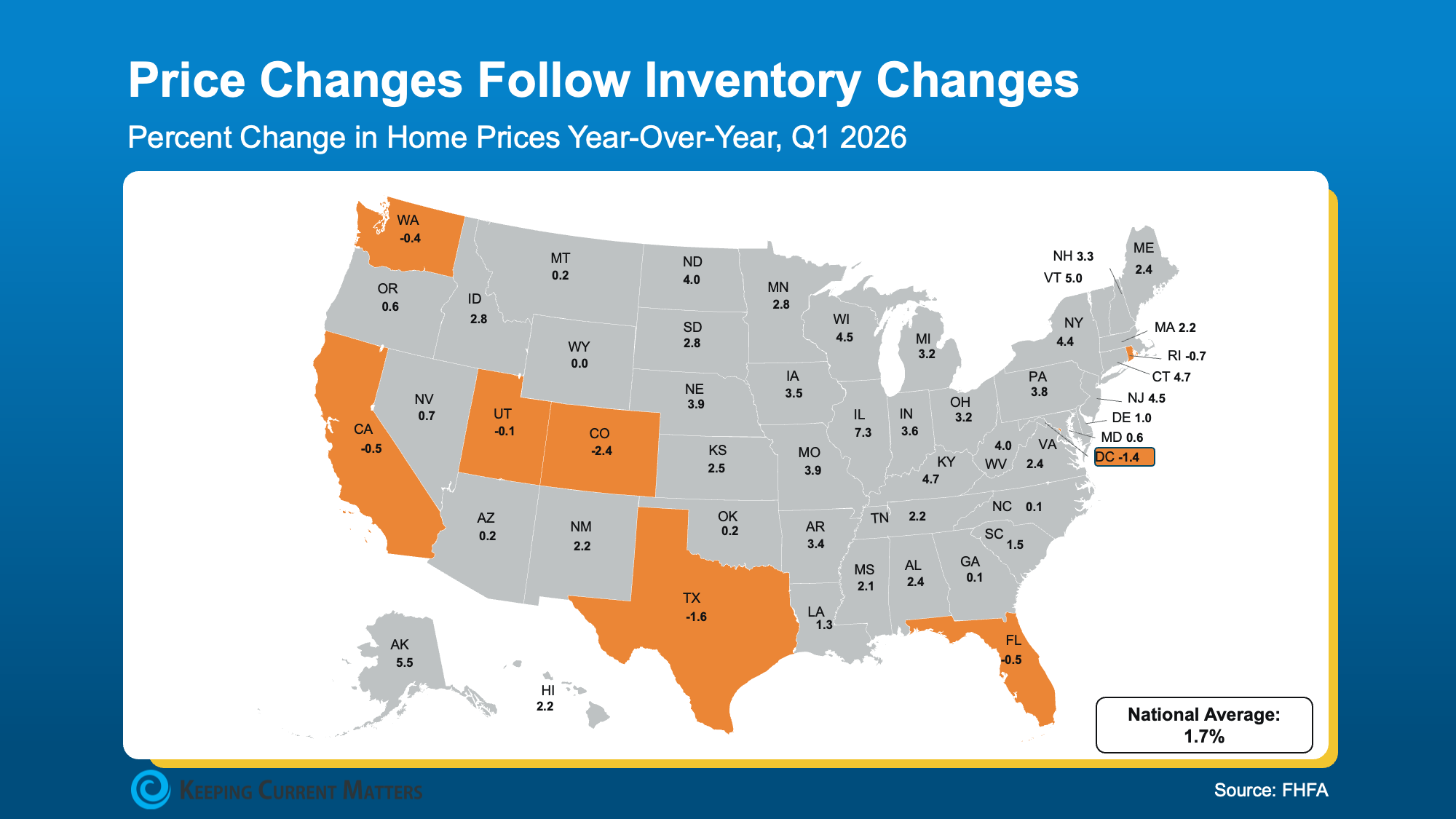
Markets where inventory has returned to—or even exceeded—pre-pandemic levels are generally seeing slower price growth or modest price declines. Meanwhile, areas where housing supply is still well below 2019 levels continue to experience price increases.
According to industry experts, many communities throughout the Northeast and Midwest still have limited inventory, helping support home values. In contrast, parts of Texas, Florida, and Colorado have seen inventory rise above pre-pandemic levels, leading to flatter pricing or slight price adjustments.
Inventory and Prices Go Hand in Hand
Recent housing data shows that most states still have fewer homes available than they did before the pandemic. That’s one reason prices continue to climb in many markets, even if the pace is more moderate than in recent years.
However, several states—including parts of Texas, Florida, Colorado, and Washington, D.C.—now have more inventory than they had in 2019. Those same areas are also the ones experiencing slower appreciation or mild price declines.
This isn’t a coincidence. As inventory rises, buyers gain more leverage, which naturally reduces upward pressure on home prices.
While the national average may show home prices increasing by around 1.7%, that figure combines markets with slight declines and many others where prices are still moving higher.
What Buyers and Sellers Should Know
If you’re buying a home, your local market matters more than ever. In areas where inventory has grown, you may find more available homes, less competition, and sellers who are willing to negotiate. In markets where inventory remains tight, buyers should still expect competition and limited choices.
If you’re selling, pricing your home correctly from the start is essential. In markets with higher inventory, overpricing can cause your home to sit on the market longer and may ultimately result in a lower sale price. In lower-inventory markets, demand remains strong, but strategic pricing is still the key to attracting qualified buyers quickly.
That’s why working with a local real estate agent is so valuable. They understand current inventory levels, pricing trends, and buyer demand in your neighborhood, helping you make informed decisions whether you’re buying or selling.
Bottom Line
National housing headlines only tell part of the story. The real picture depends on what’s happening in your local market.
Whether you’re planning to buy or sell, partnering with a local real estate agent can help you understand your area’s trends and create a strategy that works for today’s market.