Facebook
 X
X
 Pinterest
 Copy Link

You might not want to press pause on your homebuying plans this winter. While many people assume spring is the best time to buy, recent data suggests that January may actually offer the greatest advantage for buyers focused on their budget.
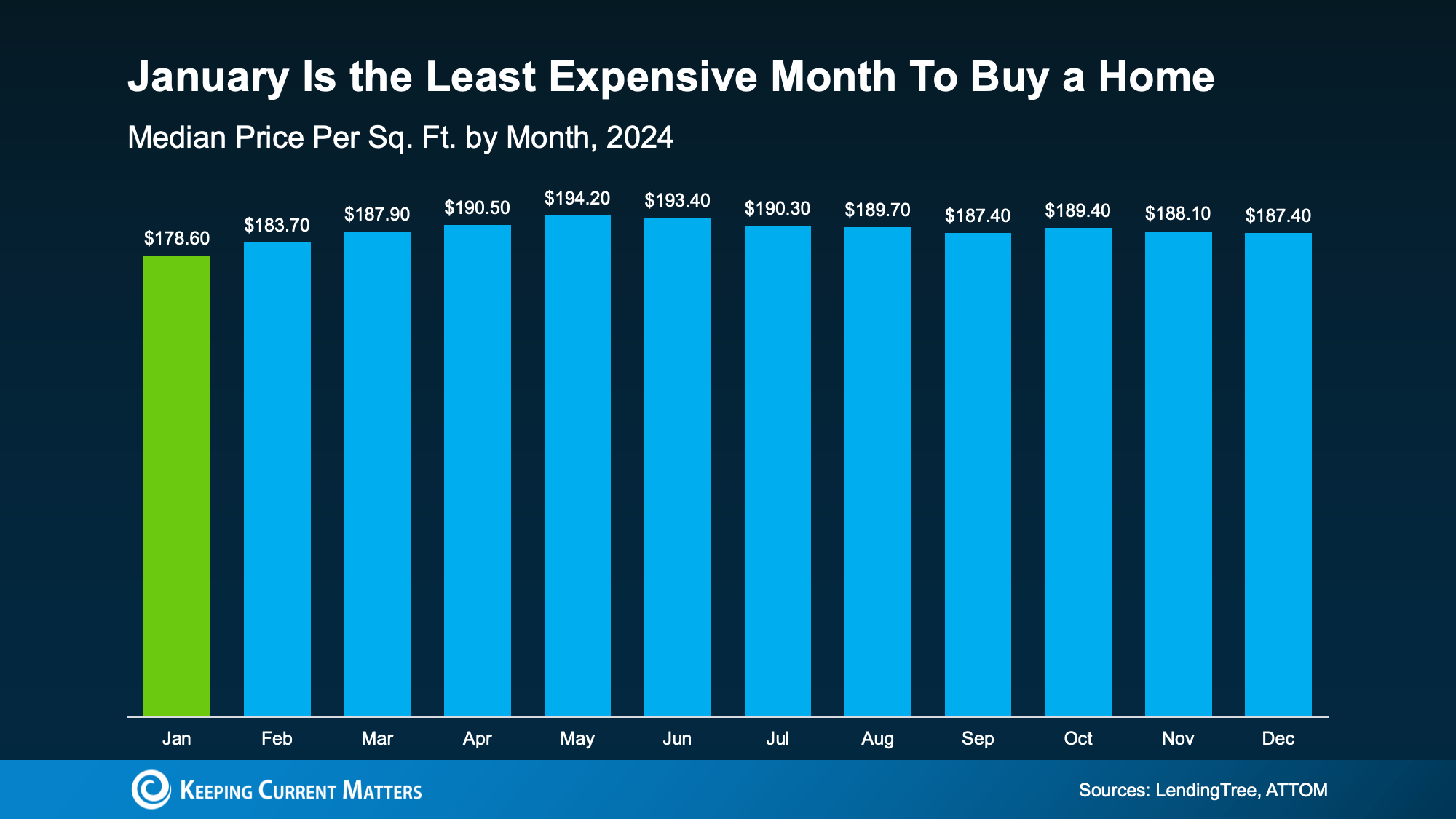
Surprising? Here’s why January is worth a closer look.
-
Prices Are Often Lower This Time of Year
According to LendingTree, January is typically the least expensive month to buy a home. Historically, it posts some of the lowest price-per-square-foot figures of the year. By contrast, spring is when buyer demand — and home prices — usually reach their peak. This isn’t guesswork; it’s a consistent pattern backed by years of market data.
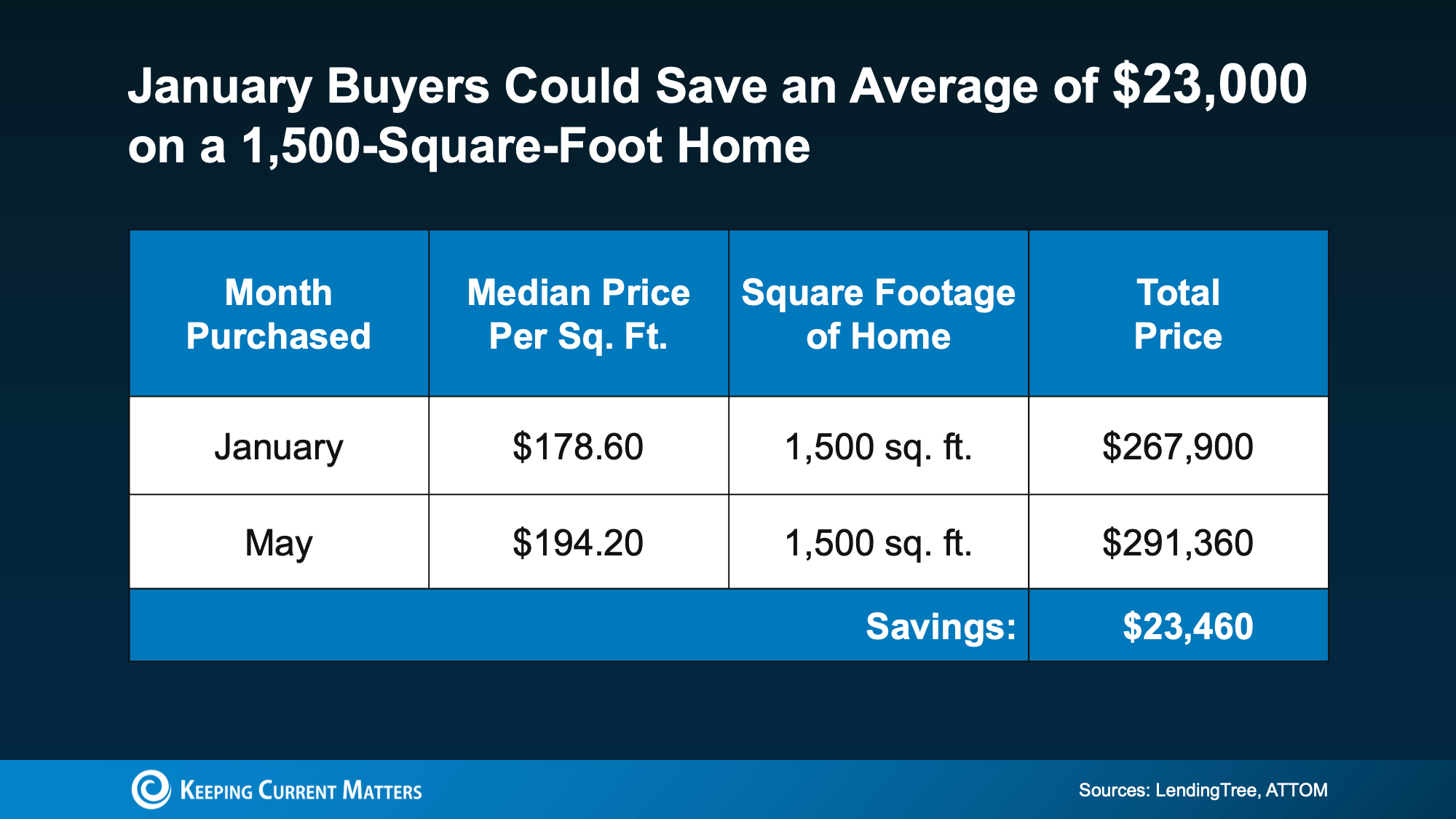
So what does that mean in real dollars? Based on the most recent full year of data, buyers who purchased a typical 1,500-square-foot home in January paid about $23,000 less than those who bought in May. While exact savings depend on location, home size, and price range, the overall trend remains clear: January often delivers meaningful savings, especially at a time when affordability remains a concern for many buyers.
-
Fewer Buyers and More Motivated Sellers
Winter is traditionally one of the slowest seasons in real estate. Many buyers and sellers step back, assuming it’s better to wait until spring. As a result:
There’s less competition from other buyers
Multiple-offer situations are less common
Sellers are often more open to negotiation
You can shop more deliberately without feeling rushed
Fewer active buyers also mean that sellers on the market in winter are often those who truly need to move. With less demand, they’re more likely to consider offers seriously and negotiate terms. As Realtor.com notes, reduced competition can lead to fewer bidding wars and more opportunities to negotiate closing cost credits, repair concessions, home warranties, or other incentives — savings that can add up quickly.
This doesn’t guarantee discounts on every home, but it does improve your chances of negotiating favorable terms.
Should You Wait for Spring?
Here’s the key takeaway: removing the urgency and competition of the spring market can make it easier to secure a home that fits both your needs and your budget.
Waiting until spring means entering a busier market with more buyers, higher prices, and increased stress. While timing is always a personal decision, it’s worth questioning the assumption that warmer weather automatically brings better opportunities.
Buying in January often means less competition, potentially lower prices, and more motivated sellers — advantages that tend to disappear once spring demand heats up.
Bottom Line
If you’ve been considering your next move, this season may offer more opportunity than you expect.
Interested in seeing what buying in January could look like for you? A local agent can help you explore your numbers and review the homes currently available in your market.